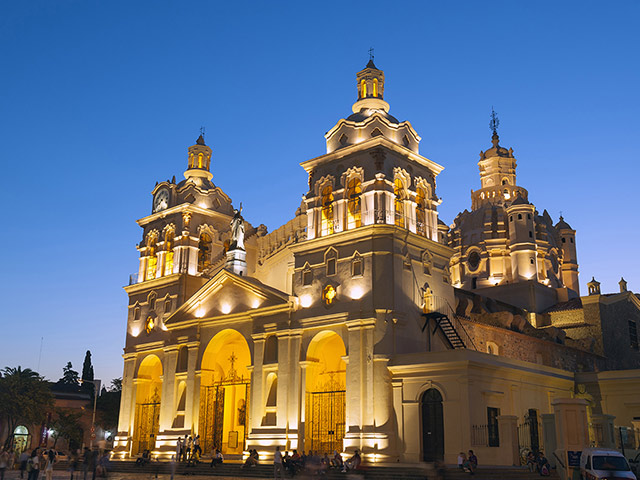
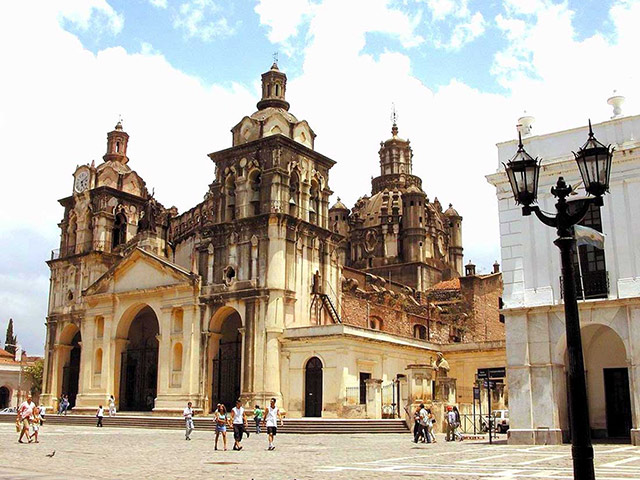
Cordoba is the capital of Cordoba Province and the second-largest city in Argentina after the autonomous city of Buenos Aires.The city has many historical monuments preserved from the Spanish colonial rule, especially buildings of the Roman Catholic Church.
In this tour, we will discover that Cordoba has reigning nature, old architecture, latent history, modernity and economic growth in each of its corners. The culture and history remain on the streets materialized in old buildings, churches, museums, providing a route that visitors can tour without restrictions.
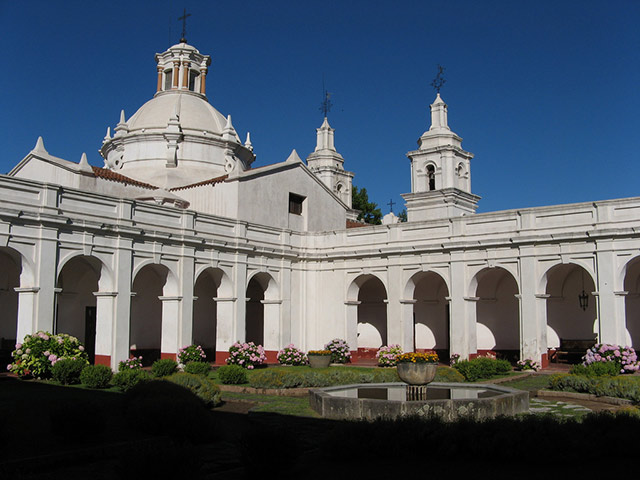
After the city tour, we will visit the Manzana Jesuitica (the Jesuit Block), declared in 2000 as a World Heritage Site by UNESCO, which consists of a group of buildings dating from the 17th century including the Compania de Jesus church, the Nuestra Senora de Lourdes chapel, the old principalship of the University, current UNC History Museum, and the traditional School of Monserrat.
Languages
Spanish and English
Others
It's recommended to bring water with you, especially during the summer season and wear warm clothes during winter.
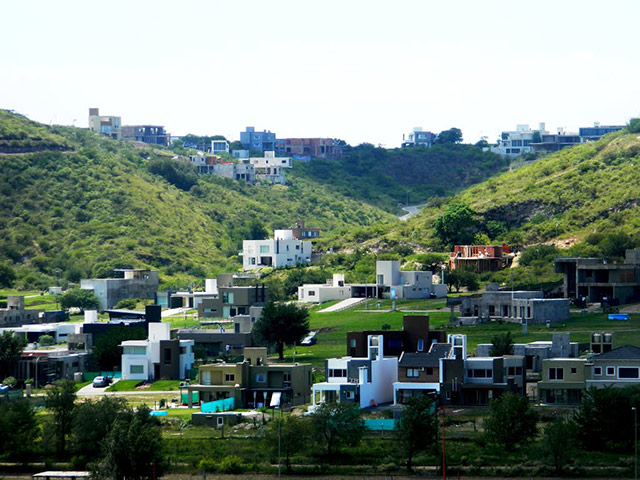
We leave Cordoba through the provincial route E-55 sightseeing La Calera, the Hydroelectric Power Plant and the San Roque Dam, which is the oldest in the province. Then we take the Camino de las Cien Curvas (the road of the hundred curves) which runs along the lakefront, to arrive at Villa Carlos Paz which is the most important tourist center of the province, where we will tour its commercial center and the residential neighborhoods.
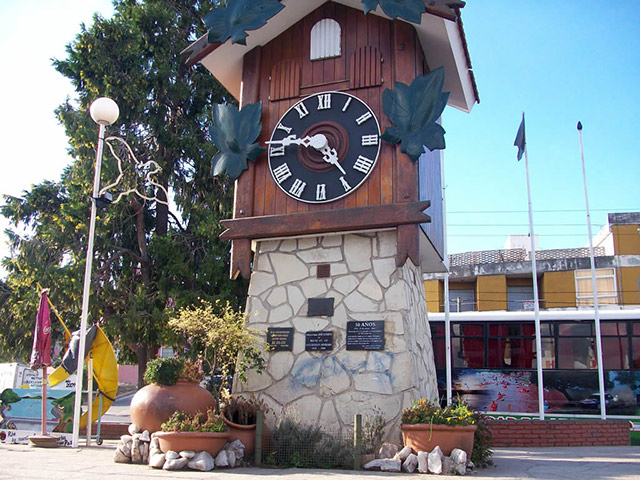
We will visit a traditional watch called the Cu-Cu, an alfajor factory (an alfajor is a typical Argentinian sweet) and the chairlift (optional, not included in the tour). We will return to Cordoba through the Justinian Allende Posse Highway.
Languages
Spanish and English
Others
It's recommended to bring water with you, especially during the summer season and wear warm clothes during winter.
We will start our tour with a pick-up from your hotel in the center of the city at 8:30 a.m. to go to a real Central European village located in the heart of the Sierras Cordobesas. During the whole tour until we reach our destination, we will enjoy panoramic views and the landscape with forests and mountains of the Calamuchita Valley.
We will pass by the cities of Alta Gracia, La Bolsa, Villa los Aromos, La Serranita and Villa Ciudad de America before reaching the first attraction: Los Molinos Lake Reservoir. Once there, we will appreciate its panoramic view and meters ahead of its location, we will make a stop to observe the impressive view of the reservoir, Champaqui Hill and Black Hill.
We will continue the tour through the Sierras Grandes and thus arrive at La Cumbrecita, the only pedestrian town in the country located at 1450 meters above sea level and declared a multipurpose reserve. In this area, we will walk through the traditional circuit, which will allow us to visit the Olla, the Ecumenical Church, the Waterfall and the circuit "The Wooden Sculptures". During this time, we will visit a village that seems to be a fairy tale.
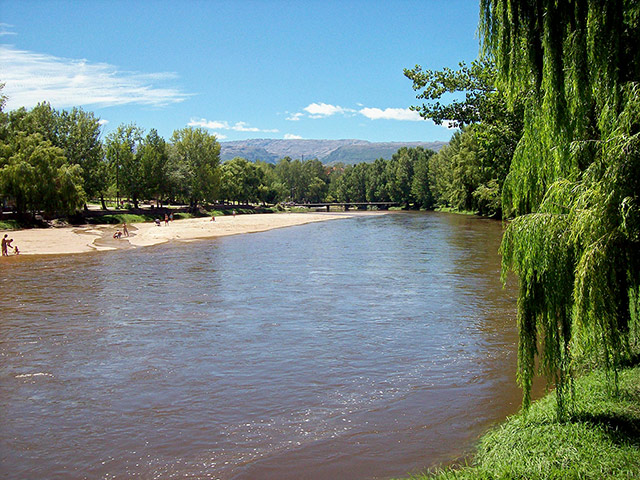
Around noon, we will have free time for lunch (lunch not included), and you will be able to choose whether you want to enjoy the local cuisine or a picnic on the banks of the Rio del Medio.
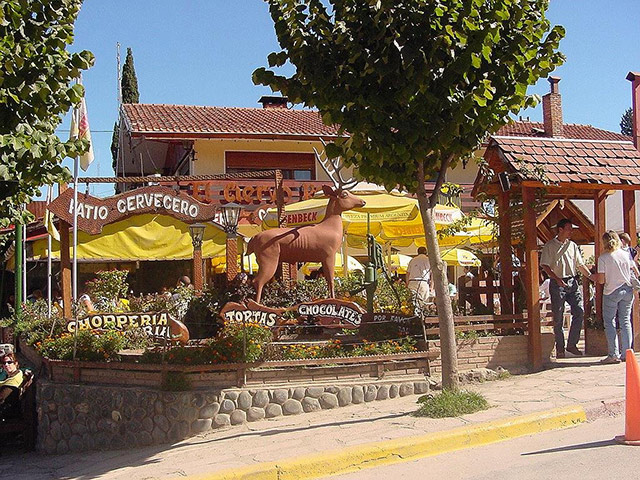
After the free time, we will meet at the entrance of the village and continue with the itinerary towards Villa General Belgrano. This is a city that was born from the fusion between immigrants and natives, which is characterized by its German cuisine, its Tyrolean architectural style and the elaboration of handmade beer. In this place, we will make a descent of approximately one hour, to know its streets and corners as well as to make a visit to a factory of artisan beer or one of chocolates.
Finally, after 10 hours, we will return to the city and leave you at your downtown hotel.
Languages
Spanish and English.
Others
It's recommended to bring water with you, especially during the summer season and wear warm clothes during winter.
Cordoba is the capital of Cordoba Province and the second-largest city in Argentina after the autonomous city of Buenos Aires. The city has many historical monuments preserved from the Spanish colonial rule, especially buildings of the Roman Catholic Church.
In this tour, we will discover that Cordoba has reigning nature, old architecture, latent history, modernity and economic growth in each of its corners. The culture and history remain on the streets materialized in old buildings, churches, museums, providing a route that visitors can tour without restrictions.
Languages
Spanish and English
Others
It's recommended to bring water with you, especially during the summer season and wear warm clothes during winter.
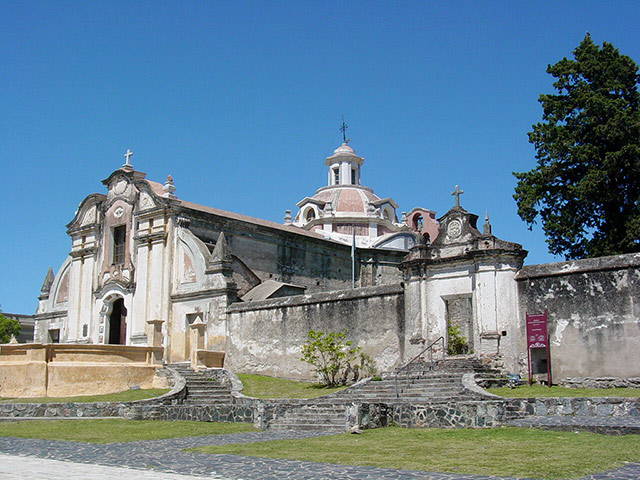
We will leave Cordoba through the provincial route ndeg 5 by passing the monument of Miryam Stefford, heading to Alta Gracia. Once we reach the city, we will see the most important testimonies of its rich cultural heritage: The Tajamar, an old artificial lake built by the Jesuits.
The Jesuit Estancia Alta Gracia (Virrey Liniers House Historical Museum), Nuestra Senora de la Merced Church, the house where Ernesto "Che" Guevara lived during his childhood, the museum of the famous musical composer Manuel de Falla and the Virgen de Lourdes Grotto. We return to Cordoba.
Languages
Spanish and English.
Others
It's recommended to bring water with you, especially during the summer season and wear warm clothes during winter.
We leave Cordoba through the provincial route ndeg E-55 sightseeing La Calera Hydroelectric Power Plant and the San Roque Dam which is the oldest in the province. We will pass Bialet Masse and Santa Maria de Punilla up to Cosquin, the National Folklore Capital.
We go through Valle Hermoso to La Falda where we are going to cross the classic Eden Avenue and the mall. We cross the town of Huerta Grande and Villa Giardino to arrive to Capilla del Monte at the base of the mystical Uritorco hill. We continue visiting Los Cocos (the chairlift is optional and is not included), Cruz Grande, Cruz Chica and La Cumbre with its European-style mansions. Last we will arrive at Villa Carlos Paz tourist center in the late hours of the evening before returning to Cordoba.
Languages
Spanish and English
Others
It's recommended to bring water with you, especially during the summer season and wear warm clothes during winter.
We leave Cordoba through the National Route Ndeg20 through the picturesque towns of Villa Carlos Paz, San Antonio de Arredondo, Mayu Sumaj, Icho Cruz and Cuesta Blanca. Then we start to transit the Camino de las Altas Cumbres, enjoying its stunning panoramic views and visiting various points along the way as the waterfall Tear of Indio, Fundacion el Condor, la Pampa de Achala and the birth of Mina Clavero river.
In Mina Clavero we are going to know the Balneario of the Elephants and the mall. In Villa Cura Brochero we will see the church where the Brochero Gaucho Priest used to preach. We will continue by Nono, by sighting the typical Nunos hills and the Polifacetico Rocsen museum. We return to Cordoba through Bosque Alegre trail overlooking the Estacion Terrena and the National Observatory.
Languages
Spanish and English
Others
It's recommended to bring water with you, especially during the summer season and wear warm clothes during winter.