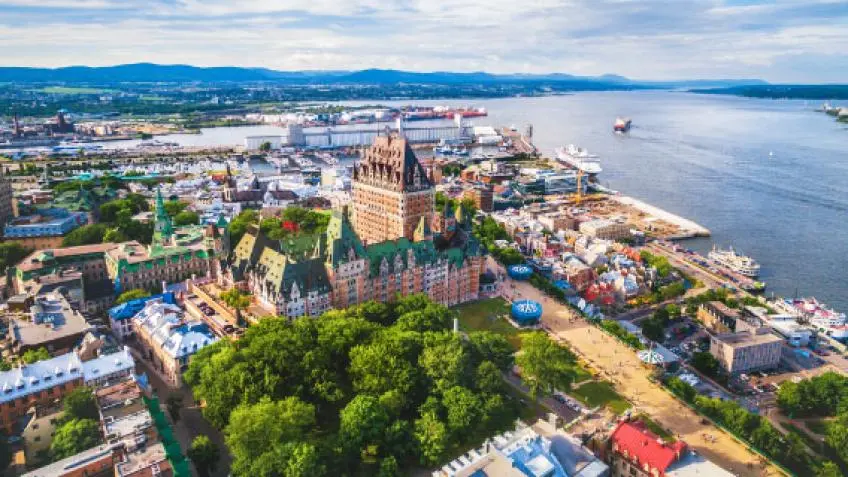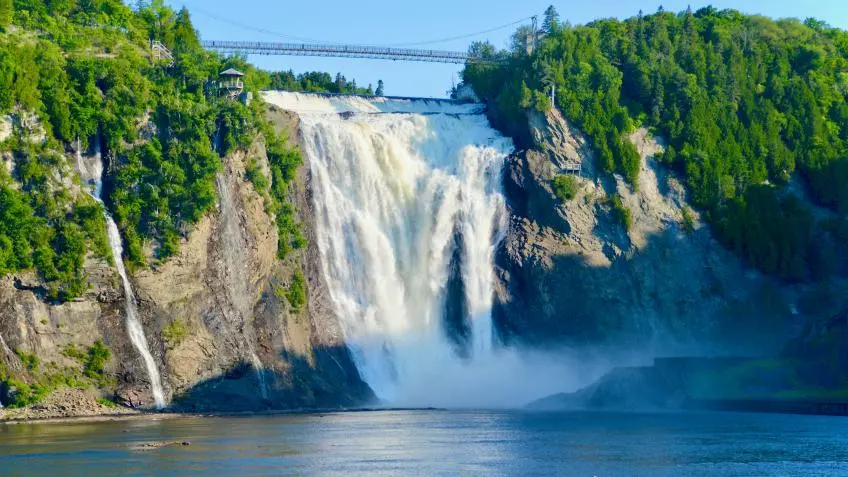
Quebec City tours and vacation packages centre on Old Quebec — a UNESCO World Heritage Site since 1985, and the only walled city in North America north of Mexico. The Château Frontenac stands above the ramparts, and Montmorency Falls, 99 feet higher than Niagara, is a short drive east. Winter routes add the Ice Hotel and the Carnival; spring routes stop at a maple syrup farm. Most trips arrive from Montreal, Toronto or New York. Hotels, transport and a guide are included on multi-day trips.
Montreal is the only departure close enough for a day tour. From Toronto and New York, Quebec City is one stop on a longer eastern Canada route rather than a trip on its own. Pick a departure city to see the routes that leave from it, prices and how many days you'll need.
| Trip | Days | You'll see | From | Best for |
|---|---|---|---|---|
| Day trips | 1 Day | Old Quebec and Montmorency Falls from Montreal, back the same evening | $29 | The old town in a day |
| Short trips | 2-4 Days | Quebec City with Montreal, Ottawa and the Thousand Islands on one loop | $142 | A first trip east |
| Vacation packages | 5+ Days | Longer eastern Canada routes adding Niagara Falls, Halifax and Prince Edward Island | $405 | All of eastern Canada |
Old Quebec runs on two levels. The Upper Town sits behind the ramparts on the cliff, with the Château Frontenac on its edge; the Lower Town drops to Place Royale and the river below. Montmorency Falls is 12 km east and open year-round. The Ice Hotel stands half an hour north at Valcartier, and only from January to mid-March — it is built from snow each winter and melts in spring.
Old Quebec is the only walled city in North America north of Mexico, and a UNESCO World Heritage Site since 1985. It is smaller and older than Montreal — founded in 1608 — and the historic core is compact enough to cover on foot. Montreal is the larger city and the transport hub. Most itineraries take in both, with Quebec City as the further point east.
The old town itself takes a day. From Montreal that works as a day tour, with Montmorency Falls on the way in. From Toronto or New York, Quebec City is one stop on a longer eastern Canada route — those run three days and up and add Montreal, Ottawa and the Thousand Islands. Staying a night in the old town is worth it if the itinerary allows.
Old Quebec runs on two levels. The Upper Town sits on the cliff behind the ramparts and holds the Château Frontenac, the Citadel and the boardwalk along the river edge. The Lower Town is below, around Place Royale, where the city began in 1608. A funicular connects the two, and there is a staircase for anyone who prefers to walk. Tours usually cover both.
Quebec City is in Quebec, Canada, so travelers arriving from the United States need a valid passport, and entry requirements differ by nationality and by US immigration status — green card and visa holders should confirm their own before booking. Routes arriving from New York cross the border, so keep your documents with you rather than in a bag in the hold. Otherwise: shoes for cobblestones and hills, and a warm layer whatever the month.
Summer has the widest choice of routes and the terraces are open. Late September into early October brings fall colour to the countryside around the city. Winter is when Quebec City is most itself: the Ice Hotel is rebuilt at Valcartier from January, and the Winter Carnival runs in February. Spring is short, and the sugar shacks open for the maple run in March and April.
Old Quebec is cobblestone and built on a cliff, so there are hills and uneven ground. The funicular between the Upper and Lower Town removes the worst of the climb, and the boardwalk along the Upper Town is level. At Montmorency Falls a cable car runs to the top, so the 487-step staircase is optional. In winter the streets ice over, so grip matters more than warmth on the feet.
Meal stops are usually at cafeterias and food courts rather than set restaurants, so travelers order their own and vegetarian options are available at every stop. Stricter requirements such as Jain or halal depend on what each stop carries, so raise them before departure rather than on the day. Quebec City is smaller than Montreal and the choice inside the walls is narrower, so raise dietary needs before departure rather than expecting to find something on the day.
Choose a departure city and a date, and book online. Your confirmation gives the pickup point and time — these are set by the route rather than chosen at checkout. Day tours leave from Montreal; longer routes arrive from Toronto or New York. Prices are per person and change by season.
No. Quebec City is more French-speaking than Montreal and signage is in French, but the hotels, restaurants and attractions in and around Old Quebec operate in English as well. Your guide handles anything that needs French. Outside the old town French is more dominant, which is worth knowing if you plan to wander on your own.
In winter, yes. The Hôtel de Glace is rebuilt from snow and ice each January at Valcartier, half an hour north of the city, and melts in spring — it is open roughly January to mid-March, with exact dates confirmed in December. You do not have to stay overnight; day visits cover the Grand Hall, the ice chapel and the sculpted suites. Tours that include it say so on the tour page.
Routes arriving from New York cross the border, and the crossing is checked in each direction. Everyone on board needs documents valid for both countries. Requirements differ by nationality and by immigration status, so confirm your own before booking rather than at the border. Routes from Montreal and Toronto stay within Canada.