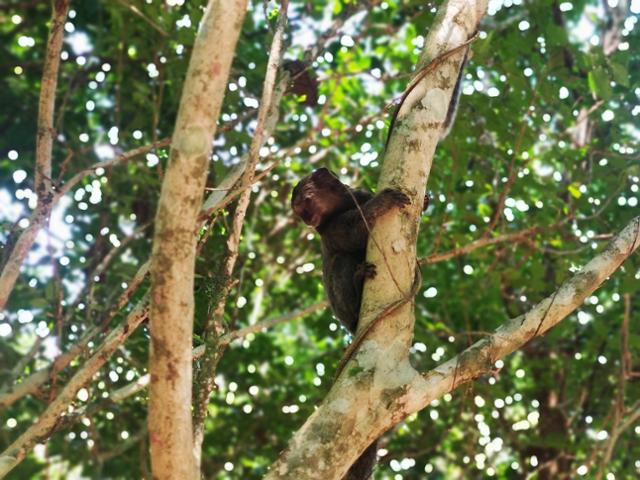
Located at the foot of Corcovado Hill is the stunning Parque Lage, boasting more than 52 hectares of lush green forests, imperial palm trees, European-style gardens, fountains and benches to soak up the picturesque scenery, and architecture.
After the visit to Parque Lage, head towards Rio's Botanical Garden (admission not included), which was founded more than 200 years ago and is a space for contemplation and peace amidst the hustle and bustle of the city. The cultivated area today houses over 9,000 botanical specimens belonging to around 1,500 species.
The Park also contains exhibitions and a research institute, as well as a museum with the personal possessions of maestro Tom Jobim.
Languages
English, Spanish and Portuguese (multilingual guide)
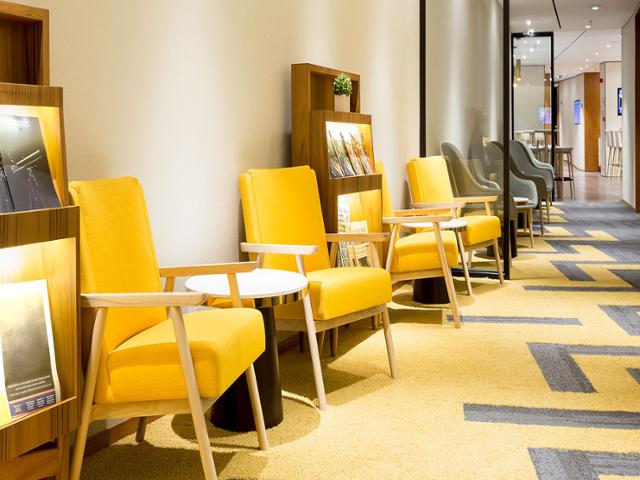
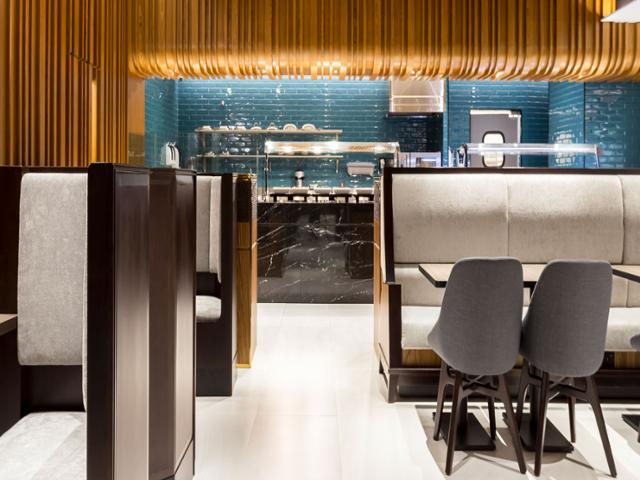
Plaza Premium Lounge (Arrivals, Terminal 2) helps you to escape from the hustle and bustle of the busy airport, you are invited to experience a relaxing atmosphere where you can unwind or get work done, while waiting for your onward flight. Uniquely designed to provide the tranquility that will help you work, refresh yourself, or simply relax and unwind. Built with the business travellers and holiday makers in mind, the lounge offers the best and quality service, relaxation and comfort.
This lounge is located in the non-restricted area on Level 2 of the car park building in Terminal 2. The space of lounge is approx. 4,700 square ft. Equipped with shower rooms, private relaxation suites, VIP room and meeting room. It is ideal for travellers, who need a power nap or catch up on some work while waiting for their flight.
The lounge offers comfortable seating with a bar offering delectable snack, soft drinks and alcoholic beverages.
The lounge is also equipped with TV, free Wi-Fi, Charging Station, News Paper, Magazine, Flight Information, Lounge Bay, Shower facility, etc
The opening time is 24 hours daily, providing amenities and services to ease your tiredness after long haul travel as well as to enhance your physical well-being and rejuvenate your senses in preparation for your next destination.
Please note that Food & Beverages are not available at this lounge between 22:00 and 0600 daily.
LOCATION
Level 2, Carpark Building, Terminal 2, Rio de Janeiro RIOgaleao - Tom Jobim International Airport
Other Remarks :
A valid Boarding Pass is needed for passengers to access to the lounge. Please must present printed voucher at the reception. Your duration of stay is at most 3 hours .
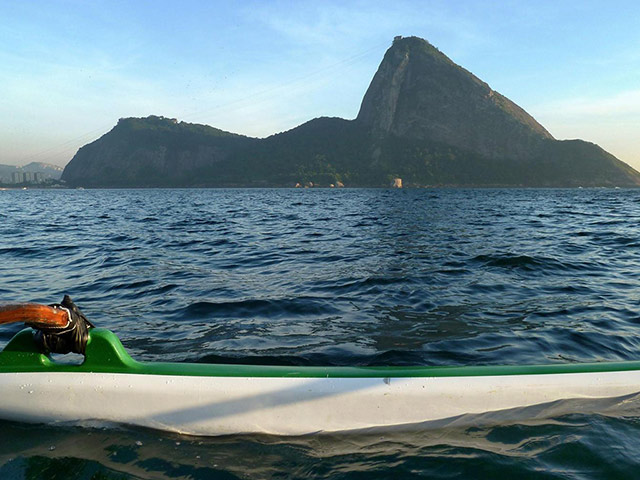
Rio de Janeiro has a singular coast with beautiful mountains, rainforests, beaches and wild islands. If you want to see this from a different perspective, our hawaiian canoe (also knows as polynesian canoe) tour is the perfect choice. Starting at Urca Beach, we are able to visit many points of interest inside Guanabara Bay. With ideal conditions, we will head to open sea and visit Fora Beach, just beneath the amazing Sugar Loaf mountain, where we will stop to cool down and swim for a while. Great exercise and unforgettable experience.
Others
Canoeing duration is approximately 1.30h and is considered a moderate exercise.
Begin the tour with a visit to the Casa Roberto Marinho Institute, located at the foot of the Christ the Redeemer Statue and close to the Tijuca Forest.
The Institute is over 10.000 m2 in size and is where the renowned journalist Roberto Marinho lived for 60 years of his life. The stunning neocolonial building was built in 1939 and surrounded by its beautiful Burle Max gardens, designed by the largest landscaper in Brazil.
The house houses impressive pieces of modern Brazilian art and is considered one of the largest private art collections in Brazil open to the public in Rio de Janeiro.
After the visit, continue the tour to Santa Teresa, the "Montmartre Carioca", a neighbourhood known for its warm and relaxed atmosphere and artistic spirit, hence the reference to the famous Parisian neighbourhood. The view from Santa Teresa and its architecture makes it unmistakable in the Carioca scene.
Pass by landmarks such as Largo dos Guimaraes, the gastronomic and central area of Santa Teresa, and Parque das Ruinas (park of the ruins), where you see the ruins of a large house that was once the meeting point of Brazilian modernism and where socialite Laurinda Santos Lobo once lived.
Languages
English, Spanish and Portuguese (multilingual guide)
On this walking tour, you will get to know the history of the neighborhood, its historical and cultural importance to the city, as well as its main attractions,Copacabana is the most famous neighborhood in Rio de Janeiro.
The waves depicted on its sidewalk replicate the design of Rocio Square in Lisbon, and have become a kind of "informal logo" of the city. This tour will show these and more curiosities, as well as historical facts that had Copacabana as a setting.
One of the highlights of the tour is the visit of the Copacabana Fort with its beautiful view of the 4 km of waterfront and the Petit Colombo, a branch of the Confeitaria Colombo inside the Fort.
Languages
English and Spanish, Portuguese (bilingual guide)
Gain an introduction to the history of Rio de Janeiro. The tour focuses on architecture and multicultural traditions, which defines a unique way of being as well as living the "carioca", a true architectural jewel that unites the passion for literature and a piece of history between Brazil and Portugal.
See the Real Gabinete Portugues de Leitura (the Royal Portuguese Reading Room), one of the highlights of the tour. You will also find out about the curiosities and "legacies" left by the Europeans in the city centre, and take a "delicious" walk through the city centre with a visit to two of the most traditional pastry shops in Rio: Confeitaria Colombo and Casa Cave.
Walk along Rio's Downtown area to learn more about Brazil's history and the city's post-olympic legacy. Visit the Valongo Wharf, the Olympic Boulevard (new harbor area) with the Kobra Mural and the Museum of Tomorrow, the Monastery of Saint Benedict, the Olympic Cauldron, Praca XV, and the Confeitaria Colombo (closed on Sundays).
Begin your tour being pickup from your hotel to discover the many hidden gems in Rio's Downtown area with a tour guide. Start at the Valongo Wharf - the latest Unesco World Heritage site in the city - and learn more about the African influence in Brazil.
Then head to the Kobra Mural - one of the largest graffiti walls in the world - created by the Brazilian artist Eduardo Kobra, to admire the five ethnic groups portrayed in a colorful geometric background. After a few pictures, you will walk along the Olympic Boulevard towards the Museum of Tomorrow - a modern and technological science museum dedicated to explore and question all the possibilities for constructing the future of the planet and of mankind - and its remarkable architecture. You will enter the Museum of Tomorrow and pay a visit in the most visited museum in Brazil!
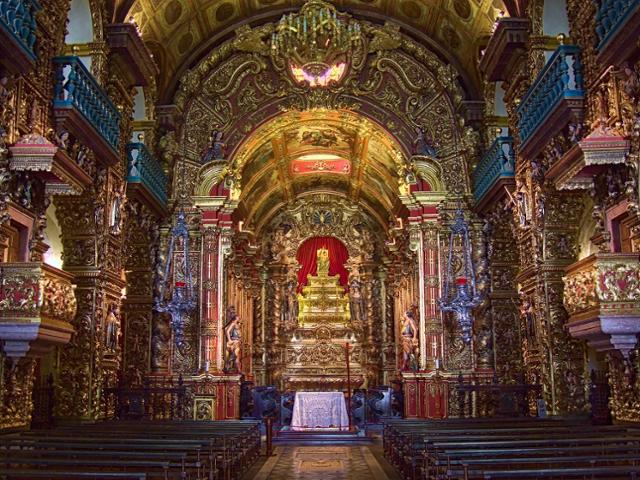
After exploring the future, travel to the past in the Monastery of Saint Benedict, where you will experience the contrast of the simple facade with the interior covered with the golden ornaments, a heritage from the Baroque period.
Before heading towards the historical streets of Rio, you will see Rio 2016 Olympic Cauldron created by the American artist Anthony Howe. You will notice the reflective-kinetic-sphered-structure as a reminder of the Games.
At the Praca XV, you will see one of the former headquarters of the Brazilian empire and learn more about important facts of Brazilian history that happened in the area.
Your last stop will be at Confeitaria Colombo (closed on Sundays), a permanent member of all "must-see cafes" rankings around the world. Enjoy the opulent art nouveau decorated with huge stained glass, tiles, and mirrors imported from France, Portugal, and Belgium. You can finish your tour tasting one of the Brazilian traditional snacks - such as the coxinha de frango ('little chicken thigh') - or desserts - such as the brigadeiro ('brigadier') in one of Rio de Janeiro's most prestigious places at the beginning of the 20th century.
Parasailing in Rio is certainly one of the most enjoyable activities you can find here. Imagine how it would be soaring over the Atlantic Ocean and enjoying all the beauty of our coastline with a privileged view of the beaches and mountains. If you're looking for a fun experience during your vacation in Rio de Janeiro, this unforgettable parasailing adventure is for you.
You'll board a boat with a few other people, giving you more time in the air. Then you will strap safely into your harness and rise up into the air on an exciting single or tandem flight. Admire spectacular views as you soar over the Ocean along the coast of Copacabana and Ipanema at your chosen height of 100 feet 250 feet.Take-off and landing are dry and take place on the boat, not on the water or beach, making this a safe and comfortable experience.
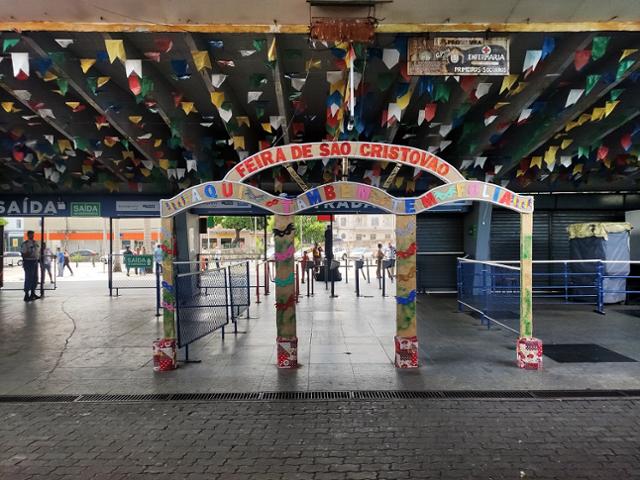
Get to know Rio de Janeiro's locals diversity within this tour, where you will discover the Sao Cristovao Fair, a bohemian market with food and handicrafts made by people from Brazil's northeast.
After hotels pick ups, you will head to the Sao Cristovao fair, a very traditional market of north-eastern handicrafts and foods. You will be able to explore their culture and products, such as food, condiments and handicrafts browsing through the more than 700 stalls on the two stages of the pavilion. You can also try the Forro, a traditional dance and music from north-eastern Brazil. And of course, don't hesitate to try delicious north-eastern gastronomy, one of the most admired in the whole country. Good suggestions are the Baiao de Dois, Sarapatel or Carne de Sol with Aipim, offered at various restaurants at the fair.
After that, tourists will be dropped off at their hotels.
Plaza Premium Lounge (Domestic Departures, Terminal 2) helps you to escape from the hustle and bustle of the busy airport, you are invited to experience a relaxing atmosphere where you can unwind or get work done, while waiting for your onward flight. Uniquely designed to provide the tranquility that will help you work, refresh yourself, or simply relax and unwind. Built with the business travellers and holiday makers in mind, the lounge offers the best and quality service, relaxation and comfort.
This lounge is conveniently located in the restricted area on Level 1 in Terminal 2, after the boarding pass check and security, situated on the busy passageway towards the gates.
Spanning over 10,000 square ft., this lounge offers over 220 seats for travellers to rest in a spacious and comfortable environment.
The lounge offers comfortable seating with a bar offering delectable snack, soft drinks and alcoholic beverages.
The lounge is also equipped with TV, free Wi-Fi, Charging Station, News Paper, Magazine, Flight Information, Lounge Bay, Shower facility, etc
Open Monday to Sunday: 24 hours. Providing amenities and services to ease your tiredness after long haul travel as well as to enhance your physical well-being and rejuvenate your senses in preparation for your next destination.
Travellers can access this lounge by taking the escalators right after the duty free shops to Level 1
Meeting point instructions
Level 1, Domestic Departures, Terminal 2, Rio de Janeiro RIOgaleao - Tom Jobim International Airport
Take the escalators right after the duty free shops to Level 1.
Important information
A valid Boarding Pass is needed for passengers to access to the lounge. Please must present printed voucher at the reception. Your duration of stay is at most 3 hours .
Far from the city area, Grumari Beach and Prainha are incredible options for those looking for a quiet moment on a less crowded beach.
It is a preserved wildlife ecosystem and is usually very empty and you can experience some privacy and tranquility surrounded by native vegetation. You can also surf because it is a very good place to practice sports.
Hike to the top of Morro Dois Irmaos and take in breathtaking panoramic views of Rio, its beaches and the ocean.
Then, we will visit the Vidigal Favela and interact with locals for a cultural experience you won't forget! This is not an extreme hiking, therefore, you do not need to be used to heavy hikings in order to take this one.
Get to know Grumari, a secluded beach paradise off the beaten track. You will also discover the summit of the stunning Telegraph Stone. Get stunning views and take your best pictures on this amazing tour.
After pick up at the hotels, you will be taken to the west zone of the city. You'll climb for around 40 minutes among some of Rio's most outstanding landscapes. But the endpoint is worth the effort - when you get to the Telegraph Stone you'll enjoy some of the best views in the city.
After that, you will head to Perigoso Beach, where you'll have free time to swim or climb up to the summit of Pedra da Tartaruga, where another stunning view awaits you!
From there you'll return to the vehicle by foot, and once back aboard you'll head to the Rio de Janeiro coastline. You'll have an hour of free time to have lunch (not included).
At last, tourists will get back to the bus that will take them to their respective hotels.
VLT (Light Rail Vehicle) Ride with Candelaria, Municipal Theater, National Library and Cinelandia - A ride with a historical focus is fundamental to knowing the monuments and the originality of a culture that makes the city of Rio unique.
The Sao Bento Monastery, a Brazilian colonial art heritage and a Unesco World Heritage Site, is one of Rio's greatest architectural treasures. The Morro de Sao Bento, where the church is located, is an island of silence in the bustle of the city center.
We can also observe the Centro Cultural do Banco do Brasil, the most active and refined cultural centre city.
Further ahead, we have the VLT - Light Rail Vehicle station, the legacy of the Rio 2016 Olympic Games, in a short walk, one can observe the Candelaria Church and Cinelandia, with an external view of the Municipal Theater and the National Library.
Others
On Sundays, the Monastery of Sao Bento holds a conventual mass with Gregorian chant.
Languages
English, Spanish and Portuguese (multilingual guide)
Discover Rio's natural beauty on this incredible full-day tour Jeep tour to the least known and most beautiful beaches in Rio.
If you are an adrenaline junkie, nature lover, or love to see more than the bustling resort, hop aboard a jeep, explore the area and enjoy a panoramic tour, few tourists get the time to see!
Feel the wind in your hair as you travel around Barra da Tijuca, Reserva beach, Recreio dos Bandeirantes, and Macumba beach. Take a break at Prainha Municipal Natural Park where you will have the time to soak up the scenery and capture the beauty of the park, before stopping at Abrico beach, where you will have 1 hour to sit and relax on the beach, top up your tan, cool off in the refreshing waters or explore the surroundings before enjoying some time at Grumari beach.
Languages
English, Spanish and Portuguese (multilingual guide)