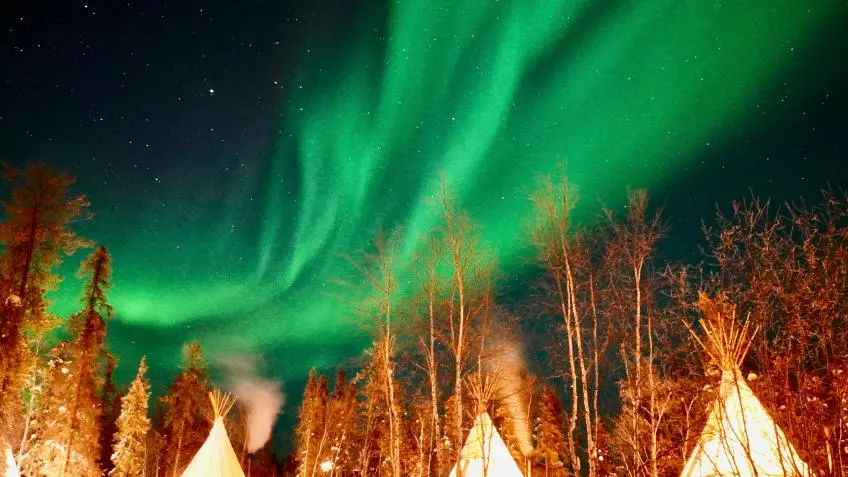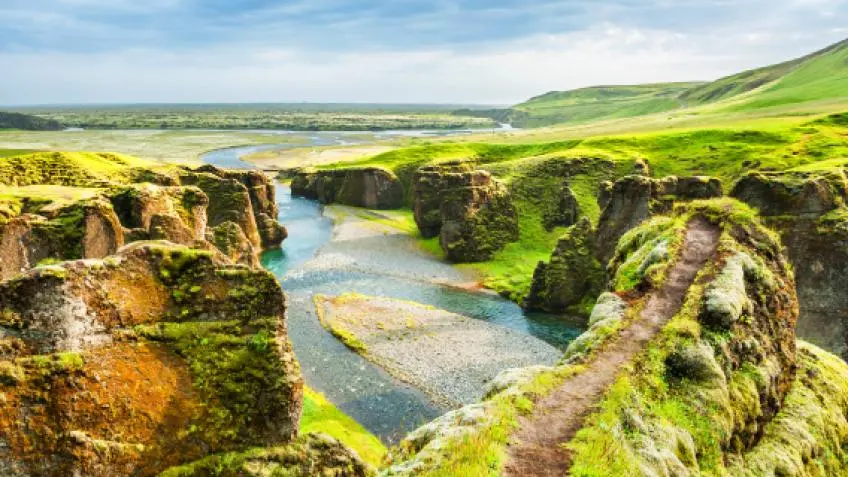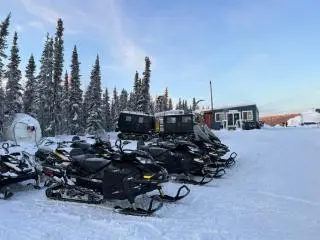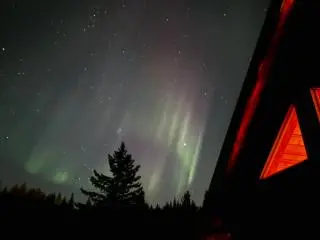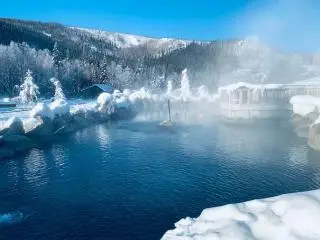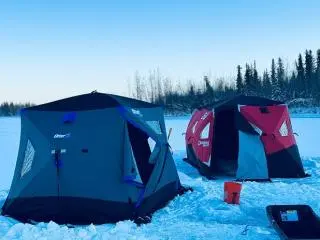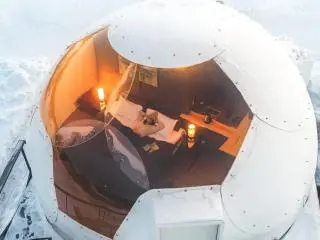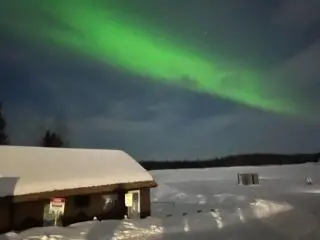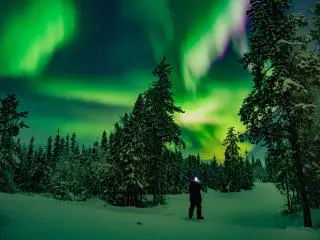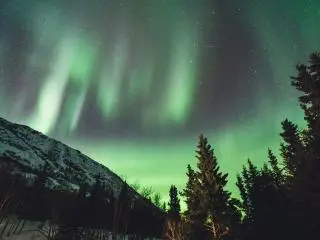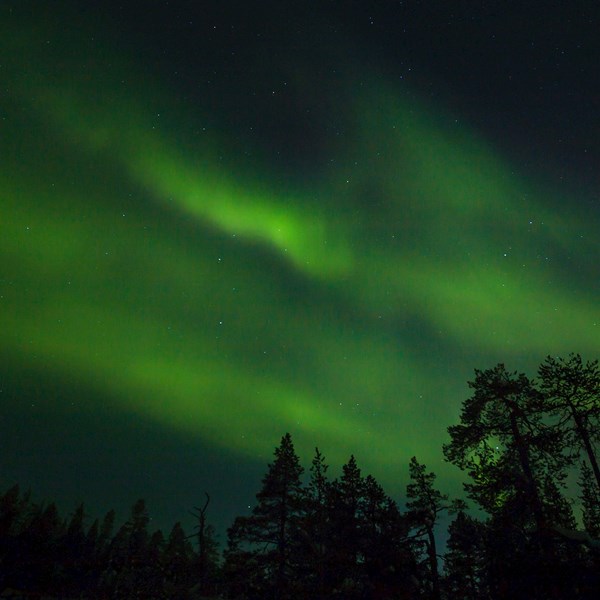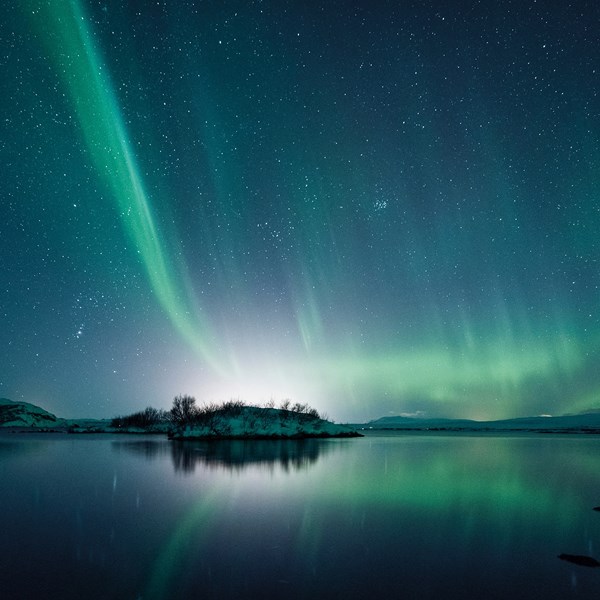
The season runs the same length across North America, so what decides the trip is where you go rather than when. Alaska and Yellowknife sit inside the auroral oval in dry continental air and produce displays on the most nights, with Chena Hot Springs, dog sledding and ice fishing during the day. Whitehorse is milder and flies direct from Vancouver. In Europe, one 10-day route runs from Finnish Lapland across Arctic Norway to Oslo, with seven nights above the Arctic Circle. No tour can promise the aurora, so packages include consecutive viewing nights.
Alaska and Yellowknife sit inside the auroral oval and are where most travelers go. The 10-day Scandinavian route gives the most Arctic nights of any trip on this page. Whitehorse is the mildest of the North American bases. The North American season runs late August to April; Scandinavian departures run October to March.
| Base | Viewing nights included | January average low | Getting there | Suits |
|---|---|---|---|---|
| AlaskaFairbanks and Anchorage | 2 to 3 nightsacross two lodges | around −27°CFairbanks, where the nights are | Direct from Seattle to Fairbanks, and widely from the US mainland to Anchorage. | Days filled as well as nights — hot springs, the Arctic Circle, the ice museum |
| YellowknifeNorthwest Territories | 2 to 3 nightson 4 to 8 day routes | around −27°C | Connect through Calgary, Edmonton or Vancouver. | The most nights under the oval, for travelers who will dress for it |
| WhitehorseYukon | 2 to 3 nightsfrom a heated cabin | around −20°C | Direct from Vancouver, where several packages also start. | Older travelers and families, and anyone adding Vancouver to the trip |
| Finland & NorwayIvalo, Alta, Tromsø | 7 nights above the Arctic Circleon one 10-day route | −20°C to −6°Cinland Ivalo to coastal Tromsø | Open-jaw: fly into Helsinki, out of Oslo. | The most Arctic nights of any trip here, with North Cape, a Sámi camp and a husky farm |
North American trips park you at one base for two or three nights. The Scandinavian route moves you across the Arctic for seven, from Finnish Lapland to the Norwegian coast. Fairbanks and Yellowknife sit inside the auroral oval in dry continental air and are the coldest, around −27°C in January. The Scandinavian route covers both extremes in one trip: around −20°C inland at Ivalo, where the skies are clearest, and around −6°C on the coast at Tromsø, where the Gulf Stream keeps it mild but brings more cloud.
Viewing is outdoors or from an unheated vehicle, so the January column is what you will be standing in. Alaska, Yellowknife and Whitehorse routes generally lend a parka and boots; the Scandinavian route asks you to bring your own Arctic clothing. Check the tour page before you pack.
|
||
Thank you for signing up for the TakeTours.com newsletter. |