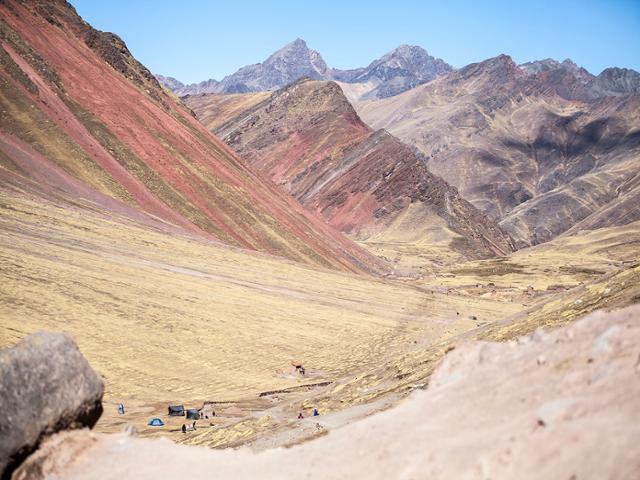
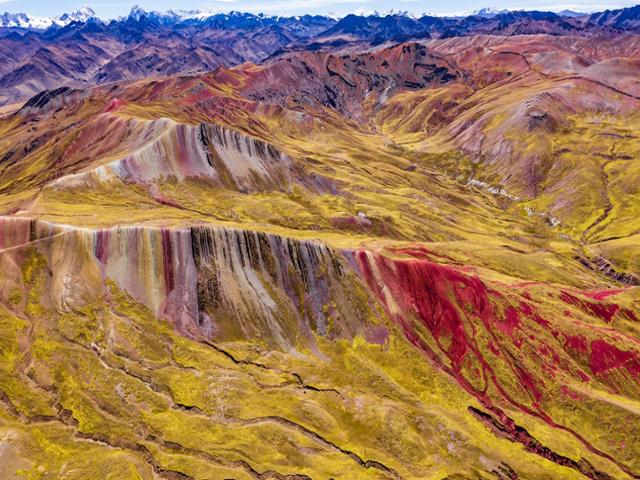
Around 100 km southeast of Cusco, rests one of the most beautiful wonders of nature: the 7-Colour Mountain. This place, also known as Rainbow Mountain, has an altitude of 5,200 metres above sea level.
You are picked up from the hotel early in the morning and transferred to Cusipata, where the hike begins. The trek is surrounded by beautiful sceneries of the Andes and guarded by the majestic Ausangate Mountain, one of the most important mountains of Cusco, considered a sacred entity since the times of the Incas. Once you reach the viewpoint of the 7-Colour Mountain, appreciate the surroundings from up high.
After some minutes, begin your descent to Cusipata, from where you are transferred back to your hotel.
Highlights
Perfect introduction for first-time visitors.
Marvel at Coricancha religious complex
Unearth the riches of the Inca Empire with this tour.
Head uphill to the mega fortress of Sacsayhuaman.
Learn about Cusco history with this activity.
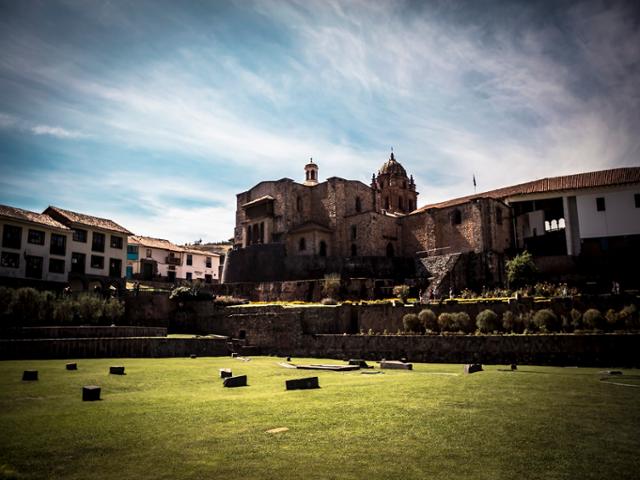
Enjoy a guided tour of this charming city, which was the capital of the Inca Empire. The tour starts with a visit to Santo Domingo Convent, a large Renaissance-baroque complex, which was built over the Inca Coricancha temple. It was one of the most important temples dedicated to worshipping of the sun, and its foundations are still prominent at the base of the convent.
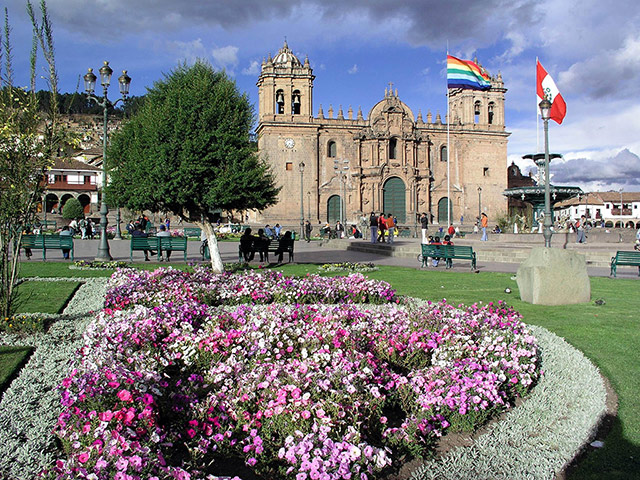
Ancient chronicles say the temple was covered in gold leaf. Then, visit the Cathedral at the Main Square. Head to the hills above Cusco to visit the remains of the fortress of Sacsayhuaman, whose imposing ramparts offer a stunning panoramic view of Cusco, and the ruins of the temple and amphitheatre of Qenqo, where it is believed the Incas practised agricultural rituals.
Admire Qenqo and then visit Puka Pukara ('Red fortress' in Quechua) an Inca military complex located on a prominent hill. Finally, visit Tambomachay. Afterwards, return to your hotel.
You will start the tour at the Sacsayhuaman fortress, one of the emblematic Inca constructions (located a few minutes away from the built-up area), built by Inca Pachacutec in the 15th century. It is a huge fortress made of very large stones, and how they were transported and cut is still a mystery. The Inti Raymi Festival, which worships the Sun, is reenacted on June 24 of each year, during the winter solstice.
You will then go to Qenqo, located four kilometres away from Cusco city, which is a mainly religious archaeological complex where it is believed that propitiatory agricultural rituals were carried out.
You will continue to Puka Pukara, located seven kilometres away from Cusco. Puka Pukara, which means "red fortress", was an architectural complex presumably used for military purposes; it has many rooms, squares, bathrooms, aqueducts, walls and towers, and it is believed that the Inca's entourage used it while he rested at Tambomachay.
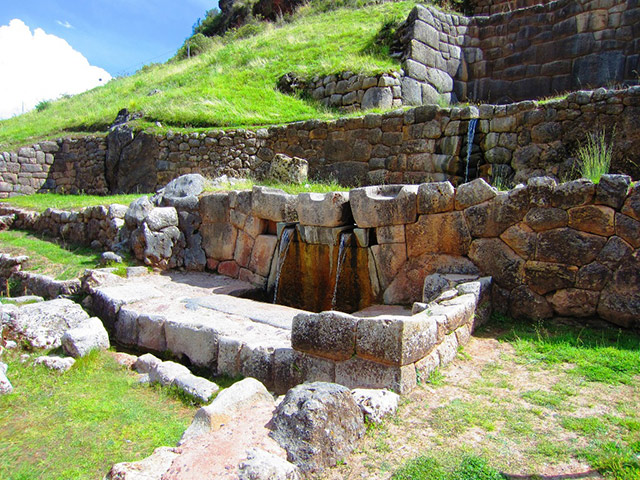
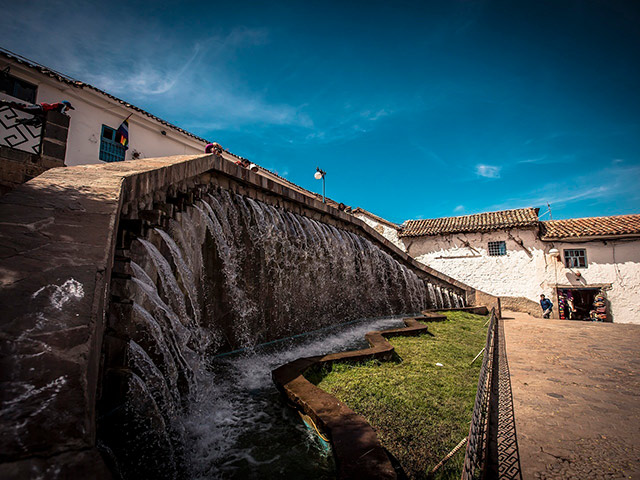
Next, you will explore the fountains of Tambomachay, a construction that has fine stone finishings and a high command of hydraulic engineering, with aqueducts that continue supplying clear water to this place. This archaeological complex is located eight kilometres away from Cusco City. Also known as the "Inca Bath", Tambomachay was probably the leisure place for the Inca and his entourage. The construction seems to have a special interest in water, which it worshipped, and fine aqueducts fed on groundwater aquifers and neighbouring hot springs.
Important information
The BTC tourist ticket is a pass that facilitates visits to historical sites, museums and monuments, thereby promoting the conservation and sustainable development of Cusco's heritage. This ticket is ideal for travellers eager to discover the majesty of the Inca civilisation and is a must-have for a complete experience in this fascinating city.
Please note that this ticket is not included and must be paid for by the client on-site.
This exciting five-hour tour offers a glimpse into how great the capital of the Incas was and just how much was lost when it was conquered.
Highlights
Perfect introduction for first-time visitors.
Marvel at Coricancha religious complex
Unearth the riches of the Inca Empire with this tour.
Head uphill to the mega fortress of Sacsayhuaman.
Learn about Cusco history with this activity.
The tour starts with a visit to Santo Domingo Convent, a large Renaissance-baroque complex, which was built over the Inca Coricancha temple. It was one of the most important temples dedicated to worshipping the sun, and its foundations are still prominent at the base of the convent. Ancient chronicles say the temple was covered in gold leaf. Then, visit the Cathedral at the Main Square.
Head uphill to the mega fortress of Sacsayhuaman, which was built from large polished rocks and protected the entrance to the city. Continue to the ritual sites of Kenko, where sacrifices are believed to have taken place, and Tambomachay, where water was worshipped as a sacred element.
Then finally visit Puka Pukara (Red fortress in Quechua) an Inca military complex located on a prominent hill. Its dwellings, squares, bathrooms, aqueducts, walls, and towers can still be appreciated.
Art & culture, Outdoor activities & Adventure+1 more
Morning
Safe2Stay
Highlights
Explore stunning Inca sites within the Sacred Valley at leisure.
Step back in time through the cobblestone streets, ruins and quaint shops of Ollantaytambo.
The inhabitants of Ollantaytambo still maintain traditions inherited from their Inca ancestors.
The word Ollantaytambo derives from the Quechua word 'Ulla-nta-wi' which means "place to see down"
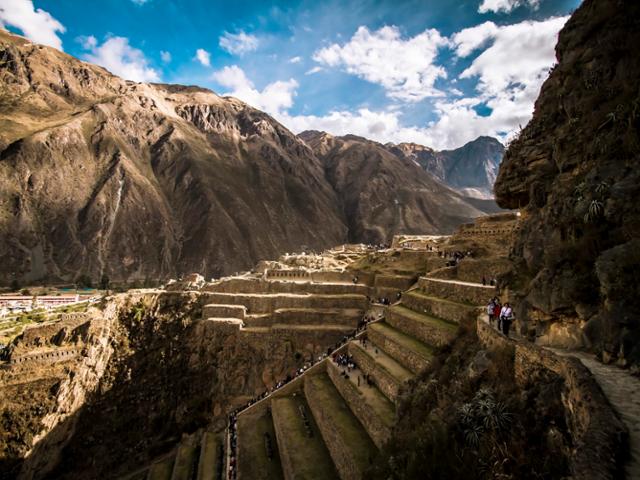
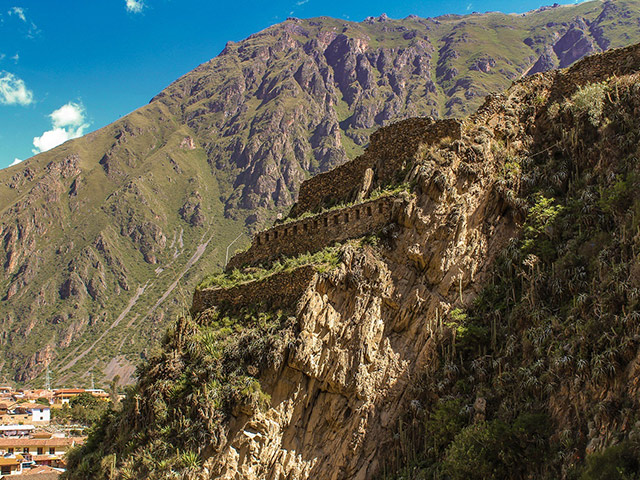
The Ollantaytambo archaeological complex was a religious, military and agricultural center.
Accompanied by your guide, today you will venture to climb the 150 steps that separate the summit from the low part of the Ollantaytambo fortress, in which the Temple of the Sun (formed by six huge monoliths of pink granite, with a weight of more than 50 tons) and the Terrace of the Ten Niches stand out. The half day excursion ends with a short visit to the Ollantaytambo town, a typical example of the urban planning of the Incas, whose residents still live in accordance with their old traditions.
Highlights:
* Visit the bohemian and artistic San Blas neighborhood.
* Admire its narrow and cobbled streets. In addition to its colonial houses that house many of the best workshops and art shops.
* See some of its top attractions, including San Blas Church.
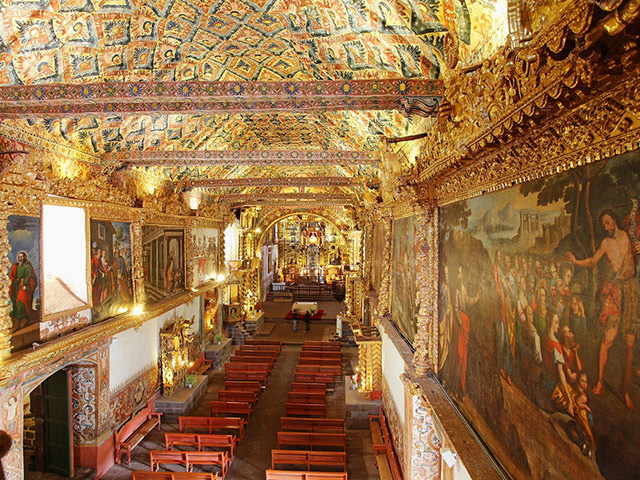
* The main attraction of the church of San Blas is the pulpit that is carved from cedar with a Spanish Churrigueresque style.
* Learn about Cusco history with this activity.
A tour to stretch your legs. San Blas quarter was originally used as dwellings for the Inca nobles, which built impressive stone constructions at a short distance of what used to be Huacaypata and it is the current place of the Main Square. It is still possible to see the unmistakable rigor of the Inca walls at the base of many constructions. Today the quarter is a conglomerate of charming small cobblestone streets that are very popular among craftspeople, who sell their works on the street. Among its top attractions is the San Blas Church, a temple that houses a pulpit that is a priceless work of art, a wood carving performed by a masterly indigenous woodcarver.
- Unearth the riches of the Inca Empire with this tour.
- Relax in the main square of Cusco, surrounded by the Cathedral, La Compania de Jesus, shops and restaurants.
- Head towards the San Blas neighborhood, between the cobbled streets of the city. Be sure to see the famous Twelve Angle Stone during your walk.
- Appreciate the main square of the San Blas neighborhood, today known for hosting workshops by renowned local artists.
Your tour will begin with a visit to the Coricancha, also known as the "Temple of the Sun", the construction of which was ordered by Inca Pachacutec (1438-1471) and was used as base for the construction of the Santo Domingo Convent upon the arrival of the Spaniards. This is when the Sun (Inti, in Quechua) was worshipped during the Inca Empire and at one time it was full of golden artifacts.
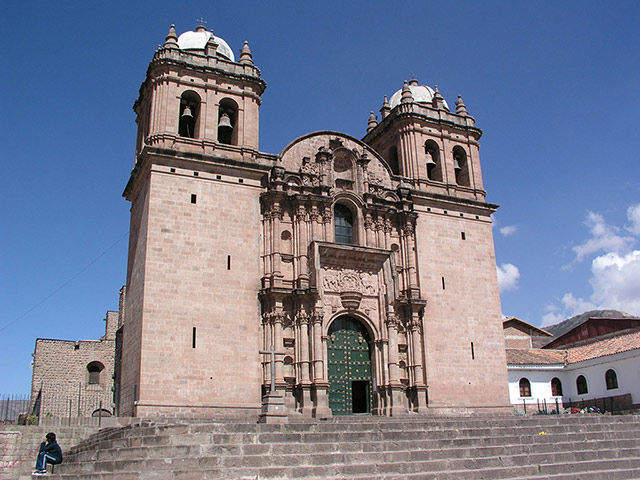
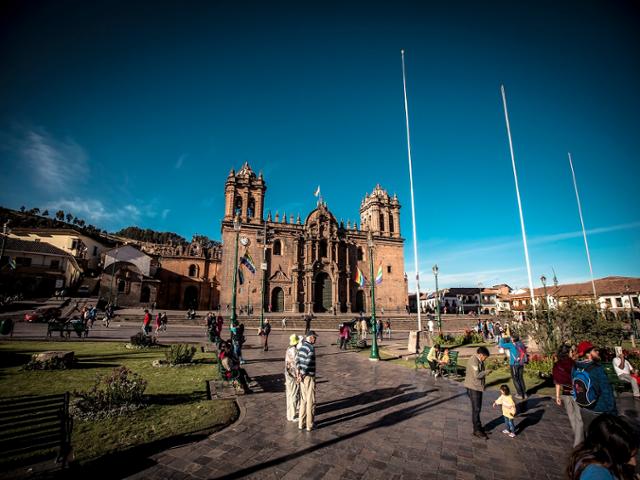
You will then go to the Cathedral, the most impressive building on the Main Square. and one of the most splendid Spanish colonial churches in America, which is shaped as a Latin Cross and houses about 400 colonial paintings from the Cusco art school, and impressive goldsmith, silversmith and precious stones works.
Its construction lasted almost a century, it started in 1560 and ended in 1654. The Ecclesiastical Chapter ordered to extract and transport hundreds of stones from the Sacsayhuaman fortress for this purpose, with the hard work of thousands of Indians.
You will finally go the San Blas quarter, originally used as dwellings for the Inca nobles, which built impressive stone constructions at a short distance of the Main Square. Today the quarter is a conglomerate of charming small cobblestone streets and the San Blas Church is at its center. Built in 1544 over an Inca sanctuary, it houses the San Blas Pulpit, a filigree work carved in cedar by a craftsman from Cusco.
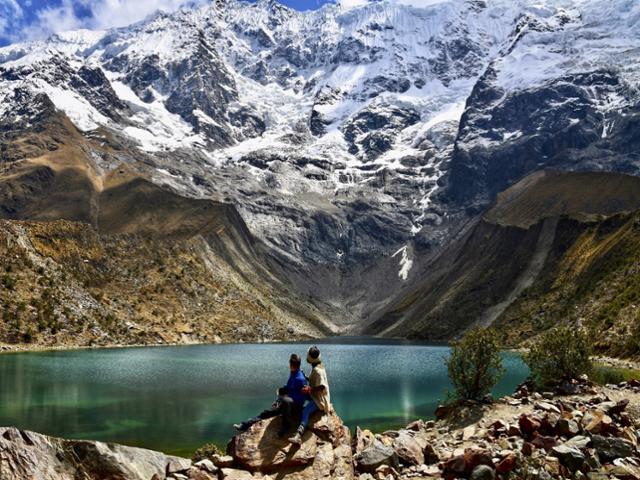
Humantay Lake, a hidden gem of the Peruvian highlands, lies at 4,200 meters above sea level (13,779 ft), cradled by snowcapped peaks and a striking glacier. Its emerald waters are breathtaking, reflecting its sacred significance to the Incas, a tradition still honored by shamans today. Visitors often leave an offering, or apacheta, on its shores--a ritual your guide will share.
Reaching the lake involves a short but challenging trek through rugged high-altitude terrain, with the stunning view revealed only upon arrival. For fewer crowds, consider visiting during the off-season months: March, April, September, or October, when the weather is favorable and tranquility reigns.
We will depart from Cuscoat approximately 4:40am, heading south of the city on a scenic journey of about 2 hours and 30 minutes, covering a distance of approximately 100 km (62 miles) until we reach the town of Cusipata (3,310 m / 10,860 ft). Upon arrival, we will enjoy a nutritious breakfastto fuel up for the adventure ahead.
After a brief briefing with our guide, we will continue our journey, passing through the picturesque town of Pitumarca. From there, we will make our way to the entrance of the Palcoyo Rainbow Mountains, located at an altitude of approximately 4,900 m (16,076 ft). Unlike the more challenging Vinicunca trek, Palcoyo offers a shorter and easier hike, ideal for those seeking breathtaking landscapes with minimal physical exertion.
From the Palcoyo Viewpoint, you will witness the stunning sight of three colorful mountains in all their splendor. The hike is relatively easy, taking about 30 to 45 minutes to reach the viewpoint with a gradual ascent. The area is known for its vibrant mineral-rich soil that creates a rainbow-like effect on the mountains.
Just a few minutes away, you will find the unique Stone Forest, a fascinating geological formation with towering rock pinnacles. Visiting the Stone Forest is optional, but highly recommended for those interested in geology or simply looking for extraordinary photo opportunities.
After spending approximately 20 to 30 minutes enjoying the view and capturing memories with photos, we will return to our transportation and head back to Cusipata, where a delicious local lunch awaits us. Following lunch, we will begin our journey back to Cusco, arriving at approximately 4:30pm. This marks the end of a memorable day filled with breathtaking landscapes and unforgettable experiences in the Peruvian Andes.