Day 1 Mexico City
Day 2 Guadalupe Shrine - Teotihuacan Pyramids (39 km)
Day 3 Mexico City - Tuxtla Gutierrez (702 km)
Day 4 Tuxtla Gutierrez - Canon del Sumidero - Chiapa de Corzo - Zinacantan - San Juan Chamula - San Cristobal de las Casas (69 km)
Day 5 San Cristobal de las Casas - Ocosingo - Agua Azul - Salto de Agua - Palenque (177 km)
Day 6 Palenque - Campeche (359 km)
Day 7 Campeche - Merida (186 km)
Day 8 Merida - Izamal - Chichen-Itza - Rio Lagartos (224 km)
Day 9 Rio Lagartos - Valladolid - Cancun (250 km)
Day 10 Cancun Free Day
Day 11 Cancun
Day 1:
Mexico City
Today, we will be picked up from Mexico City Benito Juarez International Airport and then transfer to our hotel.
Day 2:
Guadalupe Shrine - Teotihuacan Pyramids (39 km)
Breakfast: Included|Lunch: Excluded|Dinner: Excluded
After breakfast, we will visit the Square of the Three Cultures, where the past and the present mix. We will also get to visit the Basilica of Our Lady of Guadalupe before proceeding to the impressive archaeological area of Teotihuacan to admire the monumental Pyramids of the Sun and Moon, the Temple of Quetzalpapalotl, the Citadel, and the Avenue of the Dead. We will also visit a local arts and crafts center. Afterwards, we will return to our hotel and have the remainder of the day free to spend at our own leisure.
-
Teotihuacan, MX
An ancient Mesoamerican city located in a sub-valley of the Valley of Mexico, known today as the site of many of the most architecturally significant Mesoamerican pyramids built in the pre-Columbian Americas.
Plaza de las Tres Culturas
The Plaza de las Tres Culturas ("Square of the Three Cultures") is the main square within the Tlatelolco neighbourhood of Mexico City. The name "Three Cultures" is in recognition of the three periods of Mexican history reflected by buildings in the plaza: pre-Columbian, Spanish colonial, and the independent "mestizo" nation.
Basilica de Guadalupe
is a Roman Catholic church, basilica and National shrine of Mexico in the north of Mexico City. The shrine was built near the hill of Tepeyac where Our Lady of Guadalupe is believed to have appeared to Saint Juan Diego Cuauhtlatoatzin.
Pyramids of the Sun
Located on the east side of the undead boulevard of teotihuacan ,it is the third largest pyramid in the world and the largest building in teotihuacan.
Pyramids of the Moon
The Pyramid of the Moon is a structure of seven pyramids built on top of each other. In the many buildings of teotihuacan, the sun pyramid have been a powerful witness to the glorious period of the city, which began in 100 A.D.
The Temple of Quetzalpapalotl
The name of the Temple of Quetzalpapalotl is given to the building by later archaeologists,Kratos Mr Walcott, which comes from the Aztec language of the "feathered serpent god ".The feathered snake on the western wall is the most distinctive features of the building, in order to highlight the feather snake like, people just named it as "Temple of Quetzalpapalotl".
The avenue of the Dead
The avenue of the Dead through the ancient city from north to south is about 3 kilometers long and 40 meters wide,and the buildings on both sides are well-proportioned,the slope of the streets is clever, every few meters there are six steps and construction of a platform, which gives people the sense towards the sky.
Citadel
Further down the Avenue of the Dead, after a small river, is the area known as the Citadel, containing the ruined Temple of the Feathered Serpent Quetzalcoatl. This area was a large plaza surrounded by temples that formed the religious and political center of the city. The name "Citadel" was given to it by the Spanish, who believed it was a fort.
Day 3:
Mexico City - Tuxtla Gutierrez (702 km)
Breakfast: Included|Lunch: Excluded|Dinner: Excluded
Transfer to the airport to take the flight to Tuxtla. Reception at
the airport in Tuxtla Gutierrez, free afternoon.
-
Tuxtla Gutierrez, MX
The capital and the largest city of the Mexican southeast state of Chiapas. It is the most developed, populated and therefore the state's most important municipality.
Day 4:
Tuxtla Gutierrez - Canon del Sumidero - Chiapa de Corzo - Zinacantan - San Juan Chamula - San Cristobal de las Casas (69 km)
Breakfast: Included|Lunch: Excluded|Dinner: Excluded
We depart for Sumidero Canyon, where we will board a boat to
navigate the impressive canyon, which is almost 1 km deep and 14 km long.
Afterward, we will take a walk through Chiapa de Corzo, a colonial site of
tradition and culture. We will visit beautiful indigenous communities of the
Tzotzil ethnic group; first visiting Chamula to learn and understand the
fusion of contemporary traditions and ancestral Mayan characteristics that
characterize this place. Afterward, we will continue to Zinacantan, where we
will observe the women working the backstrap loom and admire the beautiful
dresses worn by the women, as well as small shops and handicraft
workshops. We will visit San Juan Chamula, which will surprise us with its
impressive church that mixes Christianity and pre-Columbian traditions in its
rites. At the end of the visit, we will drive to San Cristobal de Las Casas and
spend the rest of the day at leisure to enjoy this beautiful colonial city
founded in 1528
-
Canon del Sumidero, MX
A deep natural canyon located just north of the city of Chiapa de Corzo in the state of Chiapas, in southern Mexico. It has vertical walls which reach as high as 1,000 metres (3,300 ft), with the river turning up to 90 degrees during the 13-kilometre (8.1 mi) length of the narrow passage. The canyon is surrounded by the Sumidero Canyon National Park.
-
Chiapa de Corzo, MX
Chiapa de Corzo is a small city situated in the west-central part of the Mexican state of Chiapas. It is a important city because the earliest inscribed date, the earliest form of hieroglyphic writing and the earliest Mesoamerican tomb burial have all been found here.
-
Zinacantan, MX
Zinacantan is a municipality in the southern part of the Central Chiapas highlands in the Mexican state of Chiapas.
-
San Juan Chamula, MX
San Juan Chamula is a municipality and township in the Mexican state of Chiapas. It is situated some 10 km (6.2 mi) from San Cristobal de las Casas
-
San Cristobal de las Casas, MX
San Cristóbal de las Casas is a town located in the Central Highlands region of the Mexican state of Chiapas. This is a lovely and lively town in Southern Mexico, largely inhabited by indigenous people, which adds an interesting cultural flair.
Day 5:
San Cristobal de las Casas - Ocosingo - Agua Azul - Salto de Agua - Palenque (177 km)
Breakfast: Included|Lunch: Excluded|Dinner: Excluded
A stage of beautiful mountain landscapes in the interior of
Chiapas, inhabited by communities that have maintained their language and
traditions of Mayan origin. We will have a stop in Ocosingo, the regional
capital. After that we will continue to Agua Azul, the National Park, we will
have a stop to enjoy lunch and time to walk or swim among the more than
50 waterfalls between 3 and 30 meters high. We will continue to Misol-HA,
an impressive waterfall, where you can walk along the path behind the
waterfall. Afterward, we will head to Palenque to enjoy a delicious dinner.
Note: In the Ocosingo region there are occasionally roadblocks (due to social tensions in the area). Should this occur, an alternative route would be taken, eliminating the stops in Ocosingo, Agua Azul, and Misol and instead visiting the city of Villahermosa and the ecological reserve of Yumka.
-
Ocosingo, MX
Nestled in the Lacandon Jungle, Ocosingo is your gateway to Mayan wonders like Tonina's towering pyramids. Explore vibrant indigenous culture, coffee plantations, and the stunning Agua Azul waterfalls nearby. A perfect blend of adventure and tradition in southern Mexico!
-
Agua Azul, MX
The Cascadas de Agua Azul are a series of waterfalls found on the Xanil River in the southern Mexican state of Chiapas.
-
Salto de Agua, MX
Salto de Agua is a town and one of the 119 Municipalities of Chiapas, in southern Mexico.
Misol-Ha Waterfalls
The Cascada de Misol-Ha is a waterfall located in the Municipality of Salto de Agua, 20 kilometers from Palenque by the road that leads towards San Cristobal de las Casas.
-
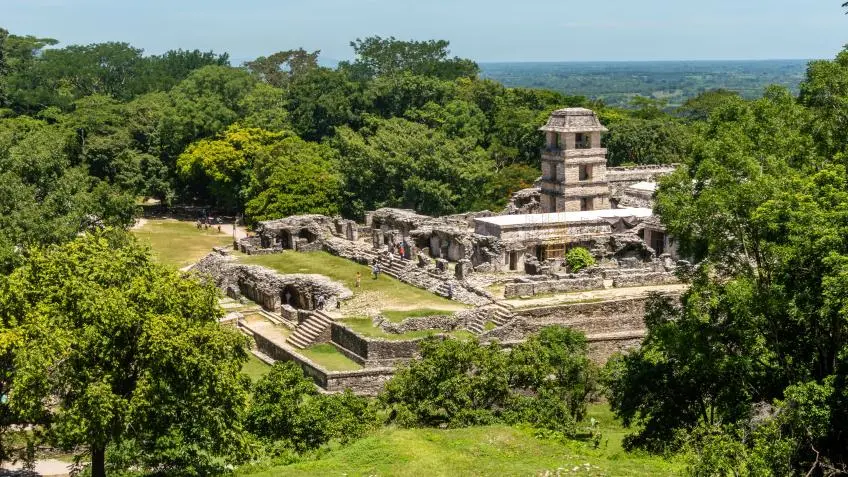
Palenque, MX
Palenque is an ancient mayan city site in Chiapas. It was declared a World Heritage Site by UNESCO in 1987.
Day 6:
Palenque - Campeche (359 km)
Breakfast: Included|Lunch: Excluded|Dinner: Excluded
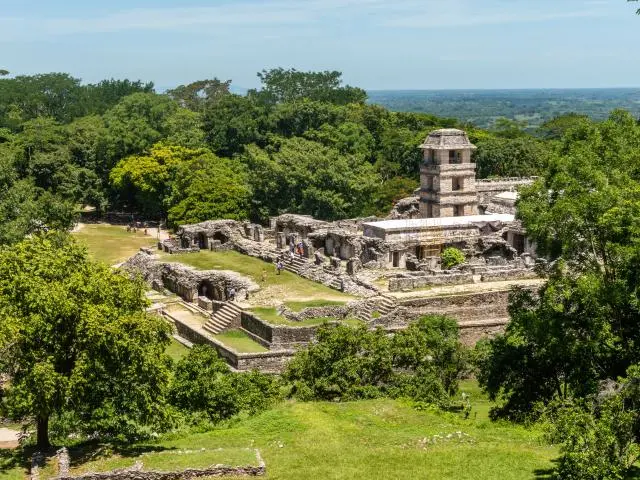
We will visit the impressive archaeological site of Palenque, a
Mayan city surrounded by jungle, where we will see its temples, pyramids,
and ball games. Afterward, we will head towards the Gulf of Mexico through
the state of Tabasco to Campeche, a city known for its colonial buildings and
its 16th-century fortifications, famous for the constant pirate attacks that
have left it surrounded by forts and walls
-
Palenque, MX
Palenque is an ancient mayan city site in Chiapas. It was declared a World Heritage Site by UNESCO in 1987.
Temple of the Inscriptions
The temple of inscriptions is situated at the foot of the northern hills of Mexico's chiapas mountains, a site of the ancient city of palenque.The underground chamber is below the high platform, above which is the temple, called the palenque temple, which contains the shape of a drum and a tablet of two stone tablets, with hieroglyphics.
-
Campeche, MX
Campeche is a historical fairyland, its walled city center is a tight enclave of restored pastel buildings, narrow cobblestone streets, fortified ramparts, and well-preserved mansions. It was added to UNESCO's list of World Heritage sites in 1999.
Day 7:
Campeche - Merida (186 km)
Breakfast: Included (Child does not include breakfast)|Lunch: Excluded|Dinner: Excluded
Departure to the state of YUCATAN, and in just over two hours,
we arrive in Merida. Visit the city, the vibrant capital of the state that
treasures a rich colonial and Mayan heritage, we know the fortified cathedral
of Merida and the limestone church of the Third Order, as well as the Casa de
Montejo, a mansion of the sixteenth-century, is an emblem of colonial
architecture plateresque. Afternoon at leisure, we suggest you visit the
Museum of the Mayan World on your own. In the evening, we include a
transfer to attend the “Representation of the Mayan ball”
-
Merida, MX
Merida is the capital of Mexico's Yucatan state.It is located in the northwest of the state, about 35 kilometers (22 miles) from the gulf of Mexico.In 2003, the city had a population of 793,000, ranking 11th in all the Mexico.
Day 8:
Merida - Izamal - Chichen-Itza - Rio Lagartos (224 km)
Breakfast: Included (Child does not include breakfast)|Lunch: Excluded|Dinner: Excluded
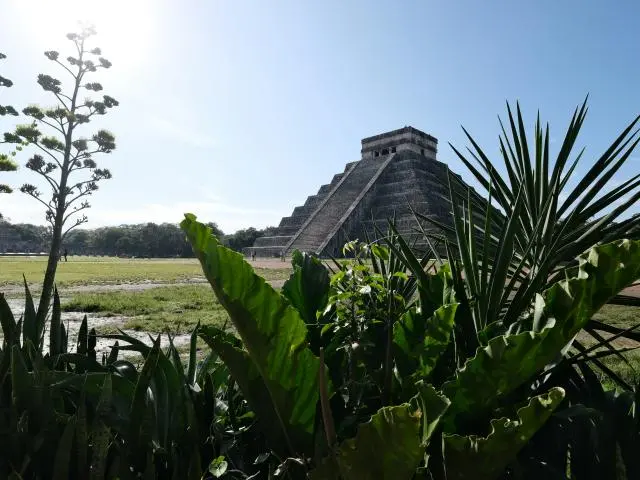
Today, we explore the state of Yucatan. Visit Izamal, one of Mexico's most beautiful "Magical Towns." In Chichen Itza, we include entry to this World Heritage Site, featuring the iconic Kukulcun Pyramid and Temple of the Warriors. Enjoy a Mayan cuisine meal. Later, head to Rio Lagartos, a fishing village in a Biosphere Reserve for the lodging.
-
Izamal, MX
Izamal, known as the "Yellow City," is a charming colonial town in Yucatán. Famous for its vibrant yellow buildings, it features the historic Convento de San Antonio de Padua and ancient Mayan pyramids, blending rich history and culture.
-
Chichen Itza, MX
Chichen Itza is the largest of the archaeological cities of the pre-Columbian Maya civilization in the Yucatan Peninsula of Mexico. It is one of Mexico's most visited tourist destinations. It was granted World Heritage Site status in 1988 by UNESCO World Heritage Site and was recently selected as one of the New Seven Wonders of the World.
El Castillo
El Castillo, or the Temple of Kukulkan, is the pyramid in the ancient city of Chichen Itza. Unfortunately, visitors are not currently allowed to climb the structure's massive steps, but merely to stand at its base awe-inspiring.
-
Rio Lagartos, MX
Rio Lagartos is a charming town in northern Yucatán, Mexico, famous for its vast pink lagoons, abundant flamingo populations, and pristine ecological reserve, making it a paradise for nature lovers and birdwatchers.
Day 9:
Rio Lagartos - Valladolid - Cancun (250 km)
Breakfast: Included|Lunch: Excluded|Dinner: Excluded
Today, we enjoy an exciting day immersed in nature. In the morning, we include a boat ride through the Biosphere Reserve, where you can spot crocodiles, mangroves, pelicans, and pink flamingos. Experience the “mud experience”, known for its exfoliating benefits. Later, we travel to Valladolid, a charming city with a historic center. In the afternoon, visit Cenote Choj Ha, featuring a dry cave and a stunning underground lake for swimming. We then continue to CANCUN, arriving in the late afternoon.
-
Valladolid, MX
Valladolid is a lovely colonial city in the state of Yucatan. It's streets and buildings retain a strong sense of the past. This peaceful town is also a great place from which to explore Yucatan state.
Cenote Choj Ha
Cenote Choj Ha, near Valladolid, is a hidden gem in the Yucatan jungle. This sacred Mayan site features a dry cave and a stunning underground lake, perfect for swimming and exploring its crystal-clear waters.
Day 10:
Cancun Free Day
Breakfast: Included|Lunch: Excluded|Dinner: Excluded
After breakfast, we will enjoy our free day or take other activities.
-
Cancun, MX
This tropical city on the northeastern coast of the Yucatan Peninsula is a vacation destination for people around the world. Its bright, sandy beaches and the crystalline blue waters of the Caribbean make it a favorite of beachgoing travelers.
Day 11:
Cancun
Breakfast: Included|Lunch: Excluded|Dinner: Excluded
After breakfast, we will transfer to the airport to board our return flight back home.


 2-Day Niagara Falls Tour from New York or New Jersey
 3-Day Niagara Falls, Washington DC, Philadelphia Tour from New York/New Jersey




 Facebook
 Google