
15-Day Wonders of Japan from Tokyo, end in Tokyo
From
US$5484 ¥37123 €4799 C$7714 Rs.529178
3% Group Discount
New customer offer
Save up to $100 on your first order
Sign up to get your coupon
Itinerary
Welcome to Japan! After completing customs procedures, you'll be transferred to your hotel by shared shuttle bus. The rest of the day is yours to enjoy at leisure. In the afternoon, you'll receive details about the start of your tour.
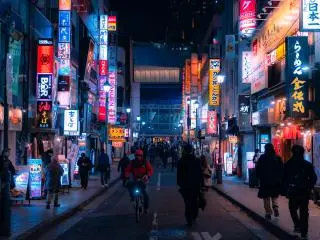
Tokyo, Japan
One of the 47 prefectures of Japan and has been the capital since 1869. The Greater Tokyo Area is the most populous metropolitan area in the world. It is the seat of the Emperor of Japan, the Japanese government and the National Diet.
In the morning, we'll take a long guided tour-about seven hours-through this simply stunning city! Its vibrant energy and cutting-edge neighborhoods coexist with areas full of peace and tranquility.We'll make a short stop at Zojoji Temple to capture the most beautiful view of the Tokyo Tower. You'll notice hundreds upon hundreds of Jizo statues, stone-carved deities considered guardians of children, adorned with knitted hats, bibs, and pinwheels.Next, we'll head to the famous Shibuya Crossing, that we will see from the bus. It is known as the busiest intersection in the world. Then we'll visit Meiji Shrine, dedicated to the spirits of Emperor Meiji and his wife.Then we'll head to Tokyo Skytree (admission included up to Tembo Deck at 350 meters high), Japan's tallest structure, where we'll enjoy an unmatched panoramic view of the city.We'll end our visit in Asakusa, where we'll explore Sensoji Temple and the famous Nakamise Street. Afterwards, we'll return to the hotel passing by Akihabara district, the "Electric City", known as the center of Japanese manga and anime culture; and Ginza district.6:30 p.m. - We'll meet our guide in the hotel lobby and take the subway (tickets included) to the Shinjuku area. From there, we'll enjoy a walk through this lively district before heading to a local restaurant for dinner (included). We'll return to the hotel by subway, accompanied by our guide.Note: The order of the visits may vary depending on the admission time for Tokyo Skytree. In case of bad weather or other exceptional circumstances, access to Tokyo Skytree may be limited. In that case, an alternative visit to another iconic city viewpoint will be offered.
Tokyo, Japan
One of the 47 prefectures of Japan and has been the capital since 1869. The Greater Tokyo Area is the most populous metropolitan area in the world. It is the seat of the Emperor of Japan, the Japanese government and the National Diet.
We travel toward the beautiful Mount Fuji area, enjoying the scenic landscapes along our route. Our first stop is Arakurayama Sengen Park, famous for its beautiful pagodas and for offering some of the most iconic and breathtaking views of Mount Fuji.We then continue to KAWAGUCHIKO, an idyllic town of charming houses, flowers, and mountains beside a stunning lake. Upon arrival, we'll visit the Fuji Sengen Shrine, a magical place surrounded by tall trees - traditionally the starting point of the pilgrimage up Mount Fuji. We'll take a moment to give thanks at the shrine for the opportunity to visit such a spiritually rich and enchanting site.Afterward, we'll enjoy a pleasant boat ride on Lake Kawaguchiko, then begin our ascent toward Mount Fuji via the road that leads to the "Fifth Station." Driving through spectacular forests and landscapes, we'll reach an altitude of 2,305 meters (7,562 feet).Note: In winter, the route to the Fifth Station is often closed due to snow or weather conditions; during those times, we'll go as far as we're permitted.We'll return to Kawaguchiko and stay overnight at a Ryokan (traditional Japanese inn), where you can relax and enjoy the Onsen (public hot spring bath). Dinner included.Note: In the planned Ryokan, some rooms are Japanese-style with tatami mats, while others are Western-style. Occasionally, accommodation may be provided in a Western-style hotel instead.
Tokyo, Japan
One of the 47 prefectures of Japan and has been the capital since 1869. The Greater Tokyo Area is the most populous metropolitan area in the world. It is the seat of the Emperor of Japan, the Japanese government and the National Diet.
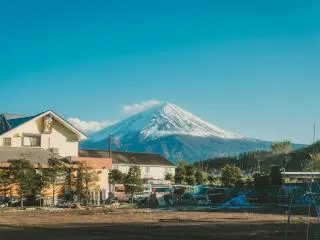
Mount Fuji, Japan
Mount Fuji is the most iconic mountain in Japan. Its snow-capped peak has become am unmistakable image in the skyline of the surrounding regions. It is an active stratovolcano, though it has not erupted since 1707.
Kawaguchiko, Japan
In the morning, we'll follow a scenic road that winds around picturesque lakes to visit Iyashi no Sato Nenba, a small village that was destroyed by a typhoon in 1966 and later restored as an open-air museum. Its traditional houses have been converted into arts and crafts shops, restaurants, and cultural exhibits, offering a glimpse into Japan's past.Next, we'll visit the breathtaking Shiraito Falls, one of Japan's most stunning natural attractions, with cascading water that spans a height of 20 meters.From there, we'll continue to Nagoya, where we'll visit the Toyota Museum (admission included), a must-see destination for car enthusiasts and those curious about automotive innovation.Finally, we'll proceed to Kyoto for our overnight stay.
Kawaguchiko, Japan
Iyashi No Sato Nenba, Japan
Iyashi no Sato stands on the site of a former farming village on the western shores of Lake Saiko. Known as âHealing Village,â the community is comprised of 22 traditional thatched roof houses that depict old-time scenery of the Showa Period (1926-1989). Each house highlights traditional Japanese culture through hands-on experiences such as crafts, sampling of local produce, and an opportunity to dress up in armor or kimono. In winter, snowfall transforms the village into a magical, fairytale-like landscape that commands a magnificent view of Mt. Fuji like no other!
Toyota, Japan
Toyota is a major industrial city in Aichi Prefecture, Japan, renowned as the headquarters of Toyota Motor Corporation. It blends modern industry with natural landscapes, offering well-developed infrastructure and cultural attractions.
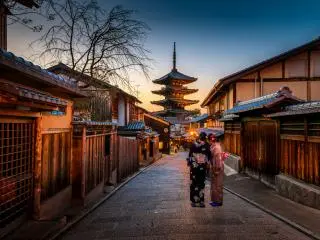
Kyoto, Japan
For over 1,000 years, Kyoto was the imperial capital of Japan. Today, its economy is based around information technology. It is home to the Nintendo headquarters, one of the world's most popular video game corporations.
We'll spend the entire day exploring Kyoto, Japan's capital from 794 to 1868 and home to the Imperial Court. Remarkably, Kyoto was the only major Japanese city spared from bombing during World War II, allowing it to retain its rich artistic heritage. Notably, the Kyoto Protocol, aimed at limiting greenhouse gas emissions, was signed here in 1997.We'll include a visit to Kyoto's most iconic landmarks. Our tour will begin in Arashiyama, where we'll admire the Togetsukyo Bridge, or "Bridge over the Moon." This spot offers a breathtaking panorama of the surrounding landscape.We'll then visit the Tenryuji Temple, one of Kyoto's "five great Zen temples" and a UNESCO World Heritage Site, followed by a serene walk through its mystical bamboo forest.Next, we'll explore the magnificent Fushimi Inari Shrine; the Imperial Palace; and the Kinkakuji Temple, also known as the "Golden Pavilion," surrounded by its spectacular gardens. (The order of the visits may vary.)After the tour, you can enjoy some time to stroll through Gion, Kyoto's vibrant traditional district, known for its lively atmosphere and geishas.
Kyoto, Japan
For over 1,000 years, Kyoto was the imperial capital of Japan. Today, its economy is based around information technology. It is home to the Nintendo headquarters, one of the world's most popular video game corporations.
We'll depart for Nara to visit Todaiji, a magnificent Buddhist temple built in 752, home to a giant Buddha statue. Here, you'll also have the chance to take photos and interact with the friendly deer that roam freely in the surrounding park. Lunch will be included.Afterward, we'll visit the Horyu-ji Buddhist Temple, a UNESCO World Heritage Site that encompasses a seminary, monasteries, and temples. Its central pagoda is one of the oldest wooden structures in the world and holds the distinction of being Japan's oldest Buddhist temple, serving as an important place of worship.Our journey will then take us to Osaka, where we'll arrive in the evening. Accommodation will be in this vibrant and modern city, known as Japan's second-largest urban area. Later, we'll visit Dotonbori, a lively and colorful district renowned for its bustling nightlife.
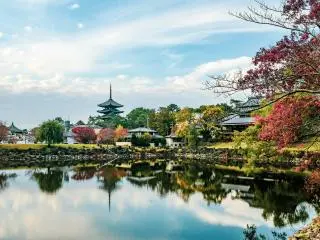
Nara, Japan
This Japanese city has a rich history. From 710 to 794 BCE, it was the country's capital. There are many deer in the area, and it is said that if you bow to them, they will return the gesture.
Osaka, Japan
Osaka is a designated city in the Kansai region of Japan. It is the capital city of Osaka Prefecture and the largest component of the Keihanshin Metropolitan Area, the second largest metropolitan area in Japan.
We'll depart for Himeji, where admission to its immense complex, showcasing the architecture of Japanese castles, will be included. After lunch at a local restaurant (included), we'll continue to Okayama, where we'll visit Korakuen, one of the most beautiful gardens in Japan, with its lakes, waterfalls, and traditional teahouses. By crossing a pedestrian bridge over the river, you'll have the opportunity to visit Okayama Castle, a sixteenth-century Japanese fortification rebuilt in 1966 after being destroyed in a World War II bombing (visit inside the castle not included). Afterward, you'll have free time to explore the city, an active provincial capital with just over 700,000 inhabitants.Note: On some dates, we may stay in Fukuyama or Kurashiki. The visit to Kurashiki may take place on the same day in the afternoon.
Himeji, Japan
A city located in Hyōgo Prefecture in the Kansai region of Japan. Originally a castle town, Himeji is home to the Himeji Castle, a UNESCO World Heritage Site.
Okayama, Japan
Okayama, known for its delicious fruit, is often called the land of sunshine and Momotaro, the "Peach Boy" is the local hero and symbol. Okayama City, It is home to the imposing, black Okayama Castle and Okayama Korakuen, one of Japan's three greatest landscape gardens.
Korakuen Garden
Korakuen is a beautiful landscape garden and Okayama's main attraction. Along with Kanazawa's Kenrokuen and Mito's Kairakuen, Korakuen is ranked as one of Japan's three best landscape gardens. It is located just beside Okayama Castle, which can be seen from the garden as "borrowed scenery".
Okayama, Japan
Okayama, known for its delicious fruit, is often called the land of sunshine and Momotaro, the "Peach Boy" is the local hero and symbol. Okayama City, It is home to the imposing, black Okayama Castle and Okayama Korakuen, one of Japan's three greatest landscape gardens.
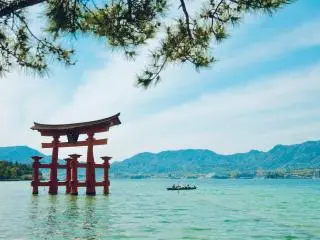
We'll set out for Kurashiki, a city renowned for its beautifully preserved historic center. You'll have time to enjoy a leisurely stroll through its charming streets, where the atmosphere of the past is still alive.Our journey will then take us to Hiroshima, a city forever marked by the atomic bomb that devastated it in 1945. We'll visit the Peace Memorial Park, the Atomic Bomb Dome, and the moving Peace Memorial Museum, where the history and resilience of this city are powerfully remembered.Seeking serenity after these reflections, we'll take a ferry to the island known as the place "where men and gods live together." Here, we'll visit the famous Itsukushima Shrine, dedicated to the guardian of the seas, and partially built over the water. You'll have time to explore the shrine, wander through the picturesque town center, and enjoy lunch.Afterward, we'll return to our hotel in Hiroshima, where dinner will be included.Note: The order of visits in Hiroshima may be adjusted without altering the overall tiinerary.
Okayama, Japan
Okayama, known for its delicious fruit, is often called the land of sunshine and Momotaro, the "Peach Boy" is the local hero and symbol. Okayama City, It is home to the imposing, black Okayama Castle and Okayama Korakuen, one of Japan's three greatest landscape gardens.
Kurashiki, Japan
Kurashiki is an area of historic buildings along an old willow-edged canal. A picturesque group of black-and-white warehouses has been converted into museums, and laneways are lined with old wooden houses and shops.
Hatsukaichi, Japan
Hatsukaichi is a city in Hiroshima Prefecture, Japan, famous for the UNESCO World Heritage site Itsukushima Shrine. It offers beautiful coastal scenery and rich cultural traditions.
Itsukushima
Itsukushima is a scenic island in Hiroshima Prefecture, famous for its iconic floating torii gate and Itsukushima Shrine, a UNESCO World Heritage site renowned for its unique architecture set over the water.
Hiroshima, Japan
The capital of Hiroshima Prefecture in Japan.As of August 2016, the city has an estimated population of 1,196,274. Hiroshima was the first city targeted by a nuclear weapon, when the United States Army Air Forces (USAAF) dropped an atomic bomb on the city at 8:15 a.m. on August 6, 1945, near the end of World War II.
Today, we'll take a ferry to Shikoku Island; a pleasant two-and-a-half-hour journey that will help us understand Japan, a country made up of numerous islands. In Matsuyama, we'll ride the cable car to visit its impressive castle. After that, we'll visit Ishiteji, a beautiful Buddhist temple and a popular pilgrimage site. Lunch will be included at a local restaurant. Later in the afternoon, we'll include admission to Dogo Onsen, a traditional Japanese bathhouse built in the 19th century.
Matsuyama, Japan
Matsuyama is the largest city on Shikoku. At the heart of the city stands Matsuyamajo, a beautiful, original castle. The city is also famed for being the setting of Natsume Soseki's popular novel, entitled "Botchan".
We'll head to Kotohira, a Shinto shrine dedicated to the God of sailors and an important pilgrimage site built on Mount Zosu, accessible by climbing 785 steps. Next, in Takamatsu, we'll visit Ritsurin, one of the most beautiful gardens in Japan. Lunch will be included at a local restaurant.Afterward, in Naruto, we'll stop at an impressive bridge that spans the sea. Here, we'll explore its remarkable construction and walk along its glass floor to observe the powerful sea whirlpools from 45 meters above. Our scenic route will then take us across stunning bridges connecting islands over the sea. Finally, we'll arrive in Kobe for accommodation.
Kotohira, Japan
A town located in Nakatado District, Kagawa Prefecture, Japan. The town is best known as the site of Shikoku's largest shrine complex, the Kotohira Shrine (popularly known as Konpira-san).
Takamatsu, Japan
The capital city of Kagawa Prefecture on the island of Shikoku in Japan. It is a port city located on the Seto Inland Sea, and is the closest port to Honshu from Shikoku island. The city's major tourist attraction is Ritsurin Garden.
Naruto, Japan
Naruto is a coastal city in Tokushima Prefecture, Japan, famous for its spectacular whirlpools in the Naruto Strait. The city features the iconic Naruto Bridge connecting Shikoku and Awaji Island, offering breathtaking ocean views and rich cultural experiences.
Kobe, Japan
The sixth-largest city in Japan and the capital city of Hyōgo Prefecture. Kobe was one of the cities to open for trade with the West following the 1853 end of the policy of seclusion and has since been known as a cosmopolitan and nuclear-free zone port city.
In KOBE, we'll visit the Earthquake Memorial Museum, which serves to honor the memory of the devastating earthquake that struck the city in 1995 and its remarkable reconstruction.We'll then continue to OSAKA, before heading to the sacred Mount Koya, the most important center of Shingon Buddhism in JAPAN. This magical pilgrimage site is home to 120 temples and monasteries. We'll visit the Okuno Mausoleum, a deeply spiritual place and vast cemetery set in nature with over 200,000 graves. We'll also visit the Kongobuji Temple, originally built in 1593.We will spend the night in a Buddhist monastery, where the monks will lead us in a Zen meditation practice (Ajikan). Dinner will be included (vegetarian meal). If you wish, you can also attend the religious ceremony at the temple before breakfast.Notes: -On certain dates, the visit to the Earthquake Museum may be replaced by a visit to the Sake Museum or a trip up Kobe Tower.-Staying at the monastery is considered a highly valuable experience. The rooms are simple, without private bathrooms, and follow traditional Japanese style with tatami mats. Bathrooms are shared.-We cannot guarantee the meditation practice during peak tourist dates. Since accommodation capacity in the temples on Mount Koya is limited, in some cases, we may accommodate groups in nearby hotels (with half board included).
Kobe, Japan
The sixth-largest city in Japan and the capital city of Hyōgo Prefecture. Kobe was one of the cities to open for trade with the West following the 1853 end of the policy of seclusion and has since been known as a cosmopolitan and nuclear-free zone port city.
Osaka, Japan
Osaka is a designated city in the Kansai region of Japan. It is the capital city of Osaka Prefecture and the largest component of the Keihanshin Metropolitan Area, the second largest metropolitan area in Japan.
Mount Koya, Japan
Mount Koya, the center of Shingon Buddhism founded by Kobo Daishi in 805, houses over 100 temples, including Kongobuji (head temple) and Okunoin (his mausoleum). Visitors can stay in shukubo (temple lodgings), experience shojin ryori (vegetarian cuisine), and join morning prayers. A key pilgrimage site and UNESCO World Heritage location.
We'll begin the day with a traditional Japanese breakfast at the temple. At first light, we'll depart for Kyoto, where you'll have a full day of free time to explore. Our guide will provide recommendations to help you make the most of your day and visit the most captivating sights in this stunning city.
Mount Koya, Japan
Mount Koya, the center of Shingon Buddhism founded by Kobo Daishi in 805, houses over 100 temples, including Kongobuji (head temple) and Okunoin (his mausoleum). Visitors can stay in shukubo (temple lodgings), experience shojin ryori (vegetarian cuisine), and join morning prayers. A key pilgrimage site and UNESCO World Heritage location.
Kyoto, Japan
For over 1,000 years, Kyoto was the imperial capital of Japan. Today, its economy is based around information technology. It is home to the Nintendo headquarters, one of the world's most popular video game corporations.
We'll set out for Tsumago, enjoying the charming countryside scenery along the way. This small village, known for its wooden houses, is considered one of the prettiest places in Japan. You'll have free time to explore, and lunch will be included. Next, we'll continue to Matsumoto, a lively tourist city where we'll visit the impressive 16th-century castle, famously known as the "The Crow." Afterward, you'll have free time to explore this bustling city at your own pace. Our journey will then take us to Nagano, where we'll spend the night
Nagiso, Japan
Nagiso is a picturesque town in southern Nagano Prefecture, Japan, renowned for its well-preserved Nakasendo post town heritage and beautiful natural scenery, offering visitors a glimpse into Edo-period history and traditional Japanese countryside.
Tsumago
Tsumago is a beautifully preserved post town on the historic Nakasendo trail, offering an authentic glimpse into Japan's Edo period with its traditional architecture and atmosphere.
Matsumoto, Japan
Matsumoto City is located in the middle of Nagano Prefecture where the 1998 Winter Olympics were hosted. It sits at the foot of the Japanese Alps, nestled between the mountains in the heart of Japan.
Nagano, Japan
Nagano is a landlocked prefecture in central Japan, famous for its majestic mountain scenery, abundant hot springs, and winter sports facilities. It gained international recognition as host of the 1998 Winter Olympics.
In NAGANO, we'll visit Zenko-ji Temple, a famous pilgrimage site that houses Japan's first Buddhist image. Our travelers will also take part in the Gomakuyo ceremony, a traditional ritual meant to attract good fortune.Afterwards, we'll venture into the stunning Japanese Alps, traveling through majestic mountain scenery to the Jigokudani Monkey Park. We'll take a walk through the forested trails, rivers, and hot springs where colonies of Japanese macaques live and bathe in the warm waters.We'll then continue through beautiful high-mountain landscapes (reaching an altitude of 2,172 meters / 7,126 feet) and pass by semi-active volcanoes. Our next stop is KUSATSU, a charming hot-spring town whose lively central square is full of activity. We'll take a pleasant stroll through the city park, which features open-air onsen (hot springs). Free time for lunch.Our journey continues to IKAHO, another picturesque hot-spring town. We'll stroll through its old center, famous for its traditional stone stairways. We'll stay overnight in a Ryokan (traditional Japanese inn), where we recommend enjoying the hot-spring baths. Traditional Japanese dinner included.Note: In autumn, depending on the availability of food in the mountains, the movement of the monkeys can be unpredictable. If the macaques do not come down to the park, it may be closed. The visit to Kusatsu may also be canceled due to weather conditions from November to April.
Nagano, Japan
Nagano is a landlocked prefecture in central Japan, famous for its majestic mountain scenery, abundant hot springs, and winter sports facilities. It gained international recognition as host of the 1998 Winter Olympics.
Kyoto, Japan
For over 1,000 years, Kyoto was the imperial capital of Japan. Today, its economy is based around information technology. It is home to the Nintendo headquarters, one of the world's most popular video game corporations.
Monkey Park
A monkey park in Kyoto's Arashiyama area where visitors can observe wild Japanese macaques up close while enjoying panoramic views of Kyoto city.
Kusatsu, Japan
Kusatsu Onsen - One of Japanâs top hot spring towns, famed for its acidic "yubatake" (hot-water field) in the town center. Soak in therapeutic sulfur-rich waters, watch traditional "yumomi" (water-kneading) performances, and relax in rustic ryokan inns.
Ikaho, Japan
Ikaho Onsen - A charming hot spring town in Gunma Prefecture, famed for its stone stairway lined with ryokan, shops, and maple trees. Soak in iron-rich "golden waters" (kogane-no-yu), try local kibi dango (millet dumplings), and visit Ikaho Shrine for autumn foliage or winter illuminations. A nostalgic getaway with retro Showa-era vibes.
We'll continue our journey to Nikko, a fantastic town where we'll visit the impressive Nikko-Toshogu Temple, known for its famous "room with the sound of a dragon." We'll also explore the Taiyuinbyo Mausoleum, a serene and awe-inspiring site. Afterward, we'll take a stroll along the Kanmangafuchi Abyss, where hundreds of Jizo statues silently watch over the riverbanks. You'll have free time to explore the town center before we head back to Tokyo, arriving at approximately 06:30 p.m.Our journey will come to an end, leaving you with wonderful lasting memories. Please check your flight time in case you require an additional night. While the departure transfer to the airport is not included, our guide will provide recommendations for the best public transportation options to suit your journey.
Nikko, Japan
A stunning mountain city famed for its UNESCO-listed shrines, including the lavish Toshogu Shrine. Surrounded by lush forests, hot springs, and scenic hikes like Kegon Falls and Lake Chuzenji, itâs a perfect blend of culture and nature. A must-visit near Tokyo!
Tokyo, Japan
One of the 47 prefectures of Japan and has been the capital since 1869. The Greater Tokyo Area is the most populous metropolitan area in the world. It is the seat of the Emperor of Japan, the Japanese government and the National Diet.
Includes & Excludes
Price Includes
Price Excludes
Additional Notes
- ARRIVAL TOKYO AIRPORT: The transfer will be waiting with a sign that says GREEN TOMATO AIRPORT SHUTTLE. In Japan, luggage compartment in the bus is reduced. We suggested you to travel with one suitcas
Policies
All purchases are subject to re-confirmation within 2-3 business days after booking. Please do not book airline tickets until you have received the confirmation.
Complete operator information, including local telephone numbers at your destination, is included on your e-ticket. You must print the e-tickets and take them along on your trip; they are your proof of purchase.
Cancellation of Orders and Penalty
Regardless of reason, cancellations result in costly charges from our travel and hotel providers covering penalties and fees incurred by canceling confirmed and pending bookings. Therefore, cancellation penalties and or fees will apply. Time of cancellation will be determined when notice is received and confirmed by our office. Notice of cancellation must be made directly to TakeTours by email or through web mail at Contact Us .
Regardless of reason, cancellations result in costly charges from our travel and hotel providers covering penalties and fees incurred by canceling confirmed and pending bookings. Therefore, cancellation penalties and or fees will apply. Time of cancellation will be determined when notice is received and confirmed by our office. Notice of cancellation must be made directly to TakeTours by email or through web mail at Contact Us .
All cancellations or changes of date must comply with the following details:
(Notification day and departure day are not counted)
118 dollars will be charged if cancel or change within or more than 31 days before departure date (not including departure date).
10% of total fee and 118 dollars will be charged if cancel or change within 30 days before departure date (not including departure date).
50% of total fee and 118 dollars will be charged if cancel or change within 15 days before departure date (not including departure date).
75% of total fee and 118 dollars will be charged if cancel or change within 7 days before departure date (not including departure date).
Absolutely NO refund on all cancellations or postponements within 1 day prior to departure (not including departure date).
The refund amount will be credited directly to your TakeTours wallet as credits for future use. Or the refund can also be forwarded directly to your credit card with a 6% handling fee.
118 dollars will be charged if cancel or change within or more than 31 days before departure date (not including departure date).
10% of total fee and 118 dollars will be charged if cancel or change within 30 days before departure date (not including departure date).
50% of total fee and 118 dollars will be charged if cancel or change within 15 days before departure date (not including departure date).
75% of total fee and 118 dollars will be charged if cancel or change within 7 days before departure date (not including departure date).
Absolutely NO refund on all cancellations or postponements within 1 day prior to departure (not including departure date).
The refund amount will be credited directly to your TakeTours wallet as credits for future use. Or the refund can also be forwarded directly to your credit card with a 6% handling fee.
Itinerary Variations
We constantly strives to improve tour itineraries and features. If such improvements can be made, or unforeseen circumstances beyond our control make changes necessary - we reserve the right to vary itineraries and to substitute hotels. At certain peak periods duplicate departures may operate, and sometimes in reverse order in which case hotels may vary from those stated on the itinerary pages.
We constantly strives to improve tour itineraries and features. If such improvements can be made, or unforeseen circumstances beyond our control make changes necessary - we reserve the right to vary itineraries and to substitute hotels. At certain peak periods duplicate departures may operate, and sometimes in reverse order in which case hotels may vary from those stated on the itinerary pages.
Tour Cancellation:
We reserves the right to cancel or re-schedule any tour departure in accordance with operating requirements or circumstances beyond its control. If cancellation is made any time prior to departure* of the tour, TakeTours' only liability will be to refund to the passenger the amount it has received for the tour booking. We will try to re-book the same or similar tour.. Please note that we are not liable for any cancellation penalties incurred on any other travel arrangements including air tickets purchased separately from customers.
We reserves the right to cancel or re-schedule any tour departure in accordance with operating requirements or circumstances beyond its control. If cancellation is made any time prior to departure* of the tour, TakeTours' only liability will be to refund to the passenger the amount it has received for the tour booking. We will try to re-book the same or similar tour.. Please note that we are not liable for any cancellation penalties incurred on any other travel arrangements including air tickets purchased separately from customers.
We are not responsible for any other travel arrangements affected due to our cancellations.
Q & A
Customer Q & As
Ask a QuestionNo one has questions about this product. Be the first one to ask questions and we will answer you within 12 to 24 hours.
Reviews
Please post your review to earn 100 points and help other travelers make confident decisions.
Photos
Upload Your Trip Photos & Earn Rewards
Upload 3 or more approved trip photos and earn 300 Loyalty
Points.
Selected photos may receive an additional 200 point bonus.
Maximum photo reward per tour: 500 points.
Please check the Loyalty Program FAQ for more information.