
5-Day Valladolid, Ek Balam, Celestun, Uxmal, Kabah, Chichen Itza & Merida, Mayan Expeditions Tour from Cancun
From
US$1508 ¥10065 €1346 C$2112 Rs.143180
US$1885 ¥12581 €1683 C$2640 Rs.178975
Offer Ends
10/31/2026
New customer offer
Save up to $100 on your first order
Sign up to get your coupon
Price a Trip, Book Now
room-based
Room, adult, and child counts are sent to the cart for final pricing, including any room-based supplement.
Age 0-11
Highlights
Visit Chichen Itza (Ball Game Court, El Caracol, El Castillo), Uxmal, Izamal, Celestun, Ek' Balam, Mani, Ticul, Valladolid.
Dates & Prices
Price in USD (per person, based on double occupancy)
Itinerary
from Cancun to Merida; on the way we will visit Valladolid as part censor
known as Buey Puluu Ku, They were replaced every 20 years and buried in
the temples of our days; this is the second largest city in the state of Yucatan
founded in 1543. At 22 kms. to the north you will make an interesting visit to
Ek'Balam; this is one of the last Mayan cities to be discovered; its name
means the -Star of the Jaguar- the city shows the monumental architecture,
walls, stelae and the so called hieroglyphic serpents and statues skillfully
carved in stone blocks. Continuation to Merida .
Valladolid, Mexico
Valladolid is a lovely colonial city in the state of Yucatan. It's streets and buildings retain a strong sense of the past. This peaceful town is also a great place from which to explore Yucatan state.
Ek' Balam, Mexico
Ek' Balam, meaning "Black Jaguar", is a classic Maya site in Yucatan famed for its towering Acropolis, exquisite stucco sculptures, and the iconic "Temple of the Jaguar". A well-preserved gem of Mayan artistry.
Excursion to Celestun to admire the pink flamingos as one of the
largest varieties of birds in the world; in this experience you will use a small
boat and have time for swimming. Return to Merida.
Celestun, Mexico
Celestun is a town in Yucatan, Mexico. It is located in the northwest corner of the state, just north of the border with the state of Campeche, on the Gulf of Mexico coast.
Departure to Uxmal, on the way you will visit the route of the churches; Mani, place where idols and Mayan books were destroyed in times of the conquest. Ticul city of the clay and leather workers. Light and sound show in Uxmal (optional).
Mani, Mexico
Mani, a historic town in Yucatan, Mexico, is known as the "Athens of the Maya World." It is infamous for the 1562 "Mani Auto-da-fe," where Bishop Diego de Landa burned Maya codices, and famous for its traditional Cochinita Pibil dish. The town features tranquil colonial architecture and deep cultural heritage.
Ticul, Mexico
Ticul, an ancient city in southern Yucatan, Mexico, is celebrated as the "Pottery Capital of Yucatan." Renowned for its centuries-old Maya ceramics and terracotta craftsmanship, it serves as a gateway to the Puuc Route archaeological sites, blending rich artisan heritage with colonial charm.
Visit to Uxmal and Kabah early in the morning. The priestess seems to worship images of snakes. These two cities were part of the "Puuc Region" characterized by the prominence of "Chaac", the god of rain, who is venerated, conjured and evoked through the magical repetition of images. We will head to Izamal to visit this picturesque colonial city where time seems to have stopped. The city's convent has the second largest atrium in the world after St. Peter's in the Vatican. Drive to Chichen Itza to enjoy the sound and light show (optional).
Uxmal, Mexico
Located in the North of Yucatan, the city is a commercial and political powerhouse.The ruins of the ancient city of Uxmal are well preserved and are considered one of the architectural masterpieces of the mayan civilization.Many of the buildings are made of well-cut stones, not putty, and the overall style is elegant and beautiful.
Kabah
A Maya archaeological site in the Puuc region of western Yucatan. The site is on Fed 261, as a popular tourism destination. Ruins extend for a considerable distance on both sides of the highway; many of the more distant structures are little visited, and some are still overgrown with forest.
Izamal, Mexico
Izamal, known as the "Yellow City," is a charming colonial town in Yucatán. Famous for its vibrant yellow buildings, it features the historic Convento de San Antonio de Padua and ancient Mayan pyramids, blending rich history and culture.
In the morning our day will start at the site of Chichen Itza. The
"Month of the Well of the Itzaes" with its impressive constructions; the splendid Castle or Pyramid of Kukulcan which is a great example of the advanced
civilization that lived there, The Ball Game, The Observatory and the Sacred
Well will take our breath away. Afterwards, return trip to Cancun and final drop off.

Chichen Itza, Mexico
Chichen Itza is the largest of the archaeological cities of the pre-Columbian Maya civilization in the Yucatan Peninsula of Mexico. It is one of Mexico's most visited tourist destinations. It was granted World Heritage Site status in 1988 by UNESCO World Heritage Site and was recently selected as one of the New Seven Wonders of the World.
Ball Game Court
The Ball Game Court at Chichen Itza is where the ancient Mayans would play a game that was very popular across early Mesoamerican civilizations. The court here is one of the largest and best-preserved of those that survive.
El Castillo
El Castillo, or the Temple of Kukulkan, is the pyramid in the ancient city of Chichen Itza. Unfortunately, visitors are not currently allowed to climb the structure's massive steps, but merely to stand at its base awe-inspiring.
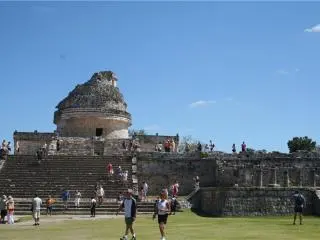
El Caracol
El Caracol, the observatory at Chichen Itza, stands as a testament to the advanced scientific minds of the ancient Mayans, a structure in which they would practice astronomy, a study in which these people were ahead of their time.
Departure & Return
- Cancun Hotel pick-up available 07:00-07:15 am. The meeting point will be confirmed at the time of booking.
Includes & Excludes
Price Includes
Price Excludes
Policies
All tour schedules are arranged in advance. NO REFUNDS will be given to any customer failing to appear on the departure day.
Peak Season During peak seasons ((like Easter, holidays, Christmas, New year, Grand Prix, Death celebration and Virgin celebration.), prices will be increased. A separate payment link will be sent if extra costs occur.
All purchases are subject to re-confirmation within 2-3 business days after booking. Please do not book the airline tickets until you received the confirmation.
Complete operator information, including local telephone numbers at your destination, are included on your e-ticket. You must print and bring e-ticket(s) on your trip, as they serve as proof of purchase.
Cancellation and Refund policy
No refund within 30-day prior to departure date. No partial refund on any unused services. In confirmed reservations to leave during the Summer, special holidays and high season, can no longer be canceled.
The refund amount will be credited directly to your TakeTours wallet as credits for future use. Or the refund can also be forwarded directly to your credit card with a 6% handling fee.
No refund within 30-day prior to departure date. No partial refund on any unused services. In confirmed reservations to leave during the Summer, special holidays and high season, can no longer be canceled.
The refund amount will be credited directly to your TakeTours wallet as credits for future use. Or the refund can also be forwarded directly to your credit card with a 6% handling fee.
Notification day and departure day are not counted
Prices may vary and are subject to availability by season, weekend, and/or holiday.
While we will make every effort to maintain a regular operation, we reserve the right to cancel a scheduled trip and issue a full refund to affected customers under special circumstances.
Q & A
Customer Q & As
Ask a QuestionReviews
Please post your review to earn 100 points and help other travelers make confident decisions.
Photos
Upload Your Trip Photos & Earn Rewards
Upload 3 or more approved trip photos and earn 300 Loyalty
Points.
Selected photos may receive an additional 200 point bonus.
Maximum photo reward per tour: 500 points.
Please check the Loyalty Program FAQ for more information.