
9-Day Great Viceregal Cities from Mexico City
5.0
1 reviews
The 9-day route linked Mexico City with colonial towns like Guanajuato and San Miguel de Allende, with something new every day. I especially enjoyed the House of the Eleven Patios in Patzcuaro and the murals in the Gertrudis Bocanegra Library.
Tonya, 2026-06-27
Read all reviews
From
US$1028 ¥6856 €921 C$1441 Rs.97854
US$1285 ¥8569 €1151 C$1801 Rs.122318
Offer Ends
10/31/2026
New customer offer
Save up to $100 on your first order
Sign up to get your coupon
Price a Trip, Book Now
room-based
Room, adult, and child counts are sent to the cart for final pricing, including any room-based supplement.
Age 0-11
Tour Overview
Highlights
Explore Mexico's wonders and heritage during this 9 days trip to Great Viceregal Cities. This tour follows the path of the Spanish Conquistadors through Mexico’s Central Highlands from Mexico City to Morelia, Patzcuaro, Guadalajara, Guanajuato and San Miguel de Allende.
Dates & Prices
Price in USD (per person, based on double occupancy)
Itinerary
Welcome at the Mexico City Benito Juarez International Airport, transfer to the hotel of your choice and accommodation.
In the morning we will leave for the City of Patzcuaro; On the
way, we will visit the typical town of Morelia, considered a cultural heritage of humanity and one of the most beautiful of the colonial era where we can admire its monumental cathedral, the Government Palace, the square of the martyrs and the typical candy market, as well as its famous aqueduct and the impressive chapel of Guadalupe. Lodging Morelia.
Patzcuaro, Mexico
A large and picturesque colonial town located in the state of Michoacan. The town was founded sometime in the 1320s.
Morelia, Mexico
In 1991, the Mexico city was declared a UNESCO World Heritage Site for its well-preserved colonial buildings and layout of the historic center.
Breakfast. Visit the House of the Eleven Patios, the cathedral of our lady of health, the Gertrudis Bocanegra Library - with its murals painted by famous muralist Juan O'Gorman - the Don Vasco de Quiroga Plaza and its typical Indian market. At indicated time, we will continue to Guadalajara, visiting en route Vicente Fernandez Ranch called "Los Tres Potrillos", the entrance is
subject to availability and permission by their guards as it is a private property; we will visit the restaurant for lunch on your own and its store considered "the world's largest cowboy store".Continue to Guadalajara. Overnight.
Patzcuaro, Mexico
A large and picturesque colonial town located in the state of Michoacan. The town was founded sometime in the 1320s.
House of the Eleven Patios
This charming colonial building, once a convent, is now a handicraft center. Its unique layout features multiple courtyards connected by corridors and small gardens. Visitors can explore traditional craft shops and enjoy the tranquil, artistic ambiance of Patzcuaro.
The Basilica of Our Lady of Health
This 17th-century basilica is the most important religious sanctuary in the Lake Pátzcuaro region. Annually, pilgrims visit to venerate the famous image of Our Lady of Health, immersing in its profound spiritual and historical ambiance.
The Gertrudis Bocanegra Library
Housed in a former monastery, this library's most stunning feature is a monumental mural by a famed artist. It vividly depicts the history of Michoacán, transforming the space into both a repository of books and a hall of art.
Don Vasco de Quiroga Square
This tree-lined main plaza is named after a pioneering bishop who dedicated himself to improving local communities. Uniquely, it features a tranquil, open space bustling with local life rather than a grand cathedral, offering a perfect spot to relax and people-watch.
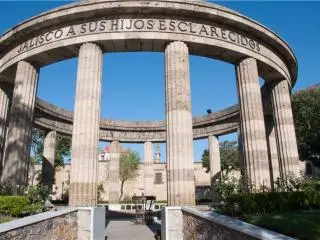
Guadalajara, Mexico
Guadalajara, which was founded in 1532, is one of Mexico's major cultural centers. It is considered the home of Mariachi music, and hosts events like the International Film Festival of Guadalajara and the Guadalajara International Book Fair.
Vicente Fernandez's Ranch
This legendary estate was the home of Vicente Fernandez, Mexico's iconic "King." Visitors can explore his private museum, admire the ornate Mexican architecture and vast ranch lands, and immerse themselves in the rich charro culture.
Located within the legendary singer's estate, this restaurant serves authentic Mexican traditional cuisine. Amidst the charro-themed ambiance, you can savor local flavors while immersed in his musical and cultural legacy.
In the morning depart to the "Tequila" region, the name of the ancient and famous Mexican drink. In the town of Amatitlan, you will visit one of the best distilleries of this drink, where you can see its production process. At the end of this visit, we will continue to San Pedro Tlaquepaque; a town near Guadalajara that today is part of the same city. The inhabitants of this place are dedicated to the manufacture of blown glass in addition to finding spectacular crafts of all kinds. Return to Guadalajara. Lodging
Tequila, Mexico
A Mexican town located in the state of Jalisco, Tequila is best known as being the birthplace of the drink that bears its name "tequila".
Amatitlan, Mexico
This lakeside town in the Jalisco highlands, known for its peaceful natural scenery and fishing, offers a serene contrast to the bustling town of Tequila. It's an ideal destination for those seeking tranquility and lakeside views.
Tlaquepaque, Mexico
A city and the surrounding municipality in the Mexican state of Jalisco.
Breakfast. The day starts at the historical district visiting the Degollado Theater, the Cathedral, the main square, the Government Palace and the Cabanas Orphanage with their famous murals painted by Orozco, which are cultural and historic heritage sites. Continue to Guanajuato and accommodation at your Hotel.
Guadalajara, Mexico
Guadalajara, which was founded in 1532, is one of Mexico's major cultural centers. It is considered the home of Mariachi music, and hosts events like the International Film Festival of Guadalajara and the Guadalajara International Book Fair.
Degollado Theater
This Neoclassical building, inaugurated in 1866, is a cultural gem of Guadalajara. Its opulent horseshoe-shaped auditorium and dome fresco are breathtaking, securing its reputation as one of Mexico's most elegant theaters.
Guadalajara Cathedral
A symbol of the city, this landmark blends Gothic, Mudejar, and Neoclassical styles. Its iconic twin spires dominate the skyline, while the interior houses the revered Our Lady of the Assumption image.
Government Palace
This majestic colonial-era building houses the government of Jalisco state. Famous for its courtyards and corridors, it contains famous murals by Jose Clemente Orozco, powerfully depicting key chapters of Mexican history like the Reform War.
Hospicio Cabanas
This magnificent Neoclassical complex is a UNESCO World Heritage Site. It houses Jose Clemente Orozco's powerful mural "The Man of Fire" in its chapel dome, considered a masterpiece of Mexican muralism.
Plaza Tapatía
This expansive pedestrian plaza serves as a cultural corridor linking key landmarks. Stretching from the Government Palace to the Instituto Cultural Cabañas, it's lined with sculptures, fountains, and shops, making it the heart of Guadalajara's urban energy.
Rotonda de los Hombres Ilustres
This Neoclassical circular colonnade is one of Guadalajara's most important memorials, dedicated to honoring the distinguished luminaries of Jalisco. The solemn atmosphere makes it a key site for understanding the region's history and culture.
Breakfast. The tour starts at the world's cultural and historic heritage town of Guanajuato, visiting the Basilica, the University, its mansions, its temples, its picturesque and narrow Colonial streets, its underground streets (former riverbeds) and the famous Callejon del Beso (The Kissing Alley). Continue to San Miguel de Allende, arrival and visit to the city recently named a world cultural and historic heritage site by UNESCO, which has beautiful Colonial mansions, colonial streets and alleys, impressive colonial churches and its new Gothic style Parish church at the main square, symbol of this beautiful City. Overnight.
Guanajuato, Mexico
The city is in a narrow valley, which makes its streets narrow and winding. Most are alleys that cars cannot pass through, and some are long sets of stairs up the mountainsides. The historic center has numerous small plazas and colonial-era mansions, churches, and civil constructions built using pink or green sandstone.
San Miguel de Allende, Mexico
A small city with a huge cultural heritage and a cosmopolitan population that preserves its true colonial feeling. In 2002, around 250,000 visitors spent about US$8.4 million at the town's attractions.
Breakfast. Departure to Queretaro, which is also a cultural and historic heritage site to visit its cathedral its convents, its mansions, its streets, squares and the alleys, and the world famous convent of the crosses. Return to Mexico City, arrival at your hotel. Overnight.
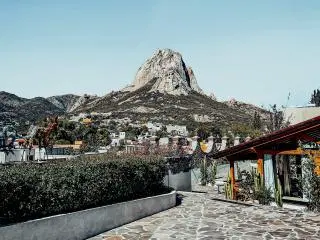
Queretaro, Mexico
The historic center of Queretaro was declared a World Heritage Site by the UNESCO in 1996. Queretaro is the host for major corporations such as Bombardier Aerospace, Kellogg's, Samsung Electronics and etc.
We will start our city tour by visiting the cultural and historic Heritage downtown district where we will find the National Palace and its beautiful murals, the constitution square or "Zocalo," the Main Aztec Temple and the Metropolitan Cathedral as well as some of the main avenues. Later, we will visit Chapultepec Park, as well as the Zona Rosa. Then we will return to the hotel and enjoy our free time.

Mexico City, Mexico
The capital of Mexico and one of the most important economic centers in the world traces its history back to the year 1351 and the Aztec empire's famous Tenochtitlan. It is a center of world history and Mexican culture.
Palacio Nacional
The National Palace is the seat of the federal executive in Mexico. It is located on Mexico City's main square, the Plaza de la Constitución (El Zócalo).
Plaza de la Constitucion
The Plaza de la Constitución (English: Constitution Square) is a plaza occupying a full square block in the heart of the civic district of Santiago, Chile. It is located in front of the northern facade of the Palacio de la Moneda and is surrounded by other government buildings such as those housing the Ministry of Finance, Ministry of Foreign Affairs, Ministry of Justice, Banco Central de Chile and the Intendencia de Santiago.
Zocalo
This is the heart of Mexico City. The Zocalo is often the site of major parades in the city including the Mexico City Alebrije Parade.
Mexico City Metropolitan Cathedral
The Metropolitan Cathedral of the Assumption of the Most Blessed Virgin Mary into Heaven is the largest cathedral in the Americas,and seat of the Roman Catholic Archdiocese of Mexico.
Chapultepec Park
Located in the western part of Mexico, Chapultepec Park is the largest park in Latin America, covering an area of 686 hectares. The park is covered with trees, flowers and lakes.Not only is it a park, but also a big cradle of culture, because it includes famous botanical gardens, zoos, and Latin American anthropology museum, the museum of modern art and revolution museum, science and technology museum and other cultural facilities.
Today we will leave from Mexico City and then transfer to the airport for our return flight back home.
What is included / what does it mean the AB, BB, AI for hotels?
AB: American Breakfast
SAI: Semi All Inclusive
BB: Buffet
AI: All Inclusive
AB: American Breakfast
SAI: Semi All Inclusive
BB: Buffet
AI: All Inclusive
Includes & Excludes
Price Includes
Price Excludes
Additional Notes
- Luggage Try to bring the most indispensable luggage just to occupy one handbag and one baggage, remember that in most cases the luggage limit capacity is 20 kilograms and the average handbag luggage is 114 cm at the amount of its three sides (long, wide, tall).
- Bring your camera or video camera
- Bring comfortable and warm clothes
- In the unlikely event of cancellation, a refund will be provided to customers for the full price of the tour constituting full settlement to the passenger. It's necessary to book with a minimum of one week of anticipation.
- Rates quoted are for 4-star hotels or similar and will be confirmed according to availability.
- This tour has a 2 passenger minimum requirement for operation and is subject to cancellation if this minimum is not met.
- Arrival time and flight number and departure time and flight number are required for this booking.
- The day of operation of the tours may vary.
Policies
All tour schedules are arranged in advance. NO REFUNDS will be given to any customer failing to appear on the departure day.
Peak Season During peak seasons ((like Easter, holidays, Christmas, New year, Grand Prix, Death celebration and Virgin celebration.), prices will be increased. A separate payment link will be sent if extra costs occur.
All purchases are subject to re-confirmation within 2-3 business days after booking. Please do not book the airline tickets until you received the confirmation.
Complete operator information, including local telephone numbers at your destination, are included on your e-ticket. You must print and bring e-ticket(s) on your trip, as they serve as proof of purchase.
Cancellation and Refund policy
No refund within 30-day prior to departure date. No partial refund on any unused services. In confirmed reservations to leave during the Summer, special holidays and high season, can no longer be canceled.
The refund amount will be credited directly to your TakeTours wallet as credits for future use. Or the refund can also be forwarded directly to your credit card with a 6% handling fee.
No refund within 30-day prior to departure date. No partial refund on any unused services. In confirmed reservations to leave during the Summer, special holidays and high season, can no longer be canceled.
The refund amount will be credited directly to your TakeTours wallet as credits for future use. Or the refund can also be forwarded directly to your credit card with a 6% handling fee.
Notification day and departure day are not counted
Prices may vary and are subject to availability by season, weekend, and/or holiday.
While we will make every effort to maintain a regular operation, we reserve the right to cancel a scheduled trip and issue a full refund to affected customers under special circumstances.
Q & A
Customer Q & As
Ask a QuestionReviews (1)
Please post your review to earn 100 points and help other travelers make confident decisions.
The 9-day route linked Mexico City with colonial towns like Guanajuato and San Miguel de Allende, with something new every day. I especially enjoyed the House of the Eleven Patios in Patzcuaro and the murals in the Gertrudis Bocanegra Library.
I recommend this tour!
Photos
Upload Your Trip Photos & Earn Rewards
Upload 3 or more approved trip photos and earn 300 Loyalty
Points.
Selected photos may receive an additional 200 point bonus.
Maximum photo reward per tour: 500 points.
Please check the Loyalty Program FAQ for more information.