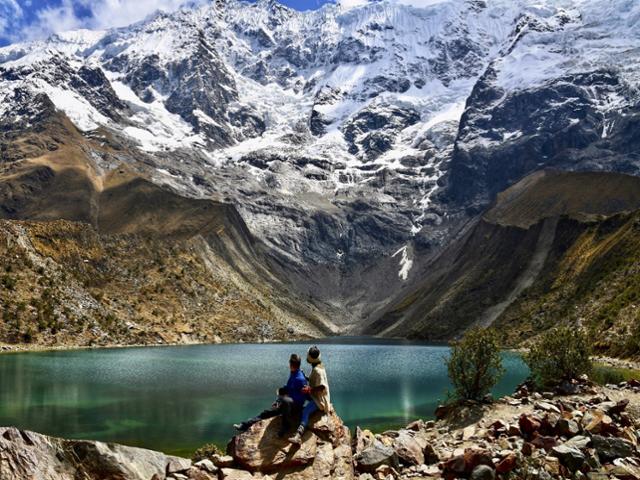
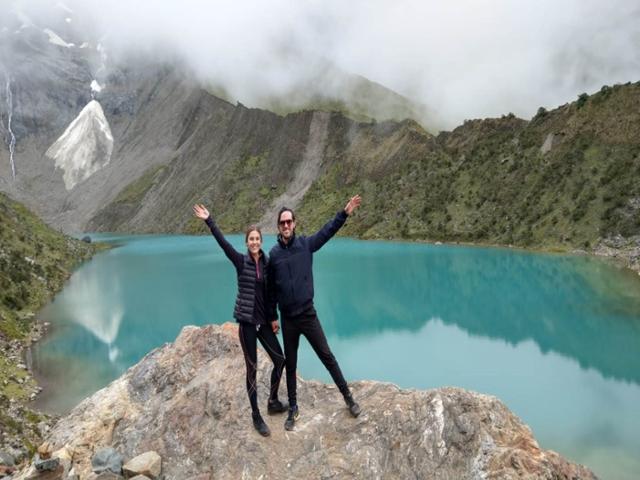
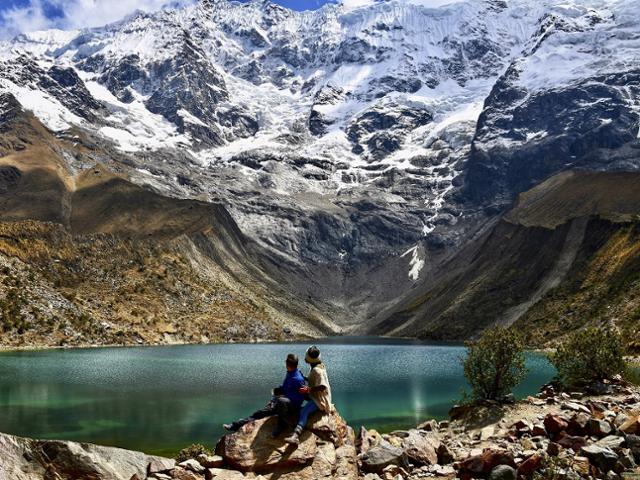
Humantay Lake, a hidden gem of the Peruvian highlands, lies at 4,200 meters above sea level (13,779 ft), cradled by snowcapped peaks and a striking glacier. Its emerald waters are breathtaking, reflecting its sacred significance to the Incas, a tradition still honored by shamans today. Visitors often leave an offering, or apacheta, on its shores--a ritual your guide will share.
Reaching the lake involves a short but challenging trek through rugged high-altitude terrain, with the stunning view revealed only upon arrival. For fewer crowds, consider visiting during the off-season months: March, April, September, or October, when the weather is favorable and tranquility reigns.
Maras and Moray are two amazing attractions located within a short distance of each other, creating the perfect half-day tour in the Sacred Valley of the Incas. Maras is famous for its salt evaporation ponds, which have been in use since at least Inca times. Moray, meanwhile, is an Inca archaeological site that looks like something straight out of a sci-fi movie. Built as an agricultural laboratory of sorts, it consists of several large terraced circular depressions that were used to test crop production in various microclimates. Together, these two sites provide one of the most fascinating spectacles in the Cusco Region.
Ccorccor (CcorCcor) is a picturesque Andean village that was once an important Inca center. Located to the northwest of Cusco, it is today known for its traditional Andean weaving techniques, and the many ancient traditions of its people. By joining us on a trip to the Ccorccor Community, you can see how these wonderful people live their lives, and admire the many skills they have inherited from their ancestors.
The Misminay Andean Community, located 90 minutes from Cusco and a 20-minute walk from the Moray archaeological site, is home to around 120 families. Perched at an altitude of 3,700 meters above sea level, this remote community preserves the traditional Andean way of life, offering visitors a glimpse into a rich cultural heritage.
Nearby, Maras and Moray stand as two captivating attractions in the Sacred Valley of the Incas, perfect for a half-day tour. Maras is renowned for its salt evaporation ponds, used since Inca times and still active today. These striking terraces, glistening with salt under the sun, provide a unique insight into ancient and sustainable practices.
Moray, on the other hand, is an extraordinary archaeological site featuring large, terraced circular depressions. Believed to have served as an agricultural laboratory, it allowed the Incas to experiment with crop production across varying microclimates. Together, these sites offer a fascinating blend of history, culture, and ingenuity, making them unmissable highlights of the Cusco region.
"El Balcon del diablo" or "Devil's Balcony", presents a perfect harmony between nature and Inca architecture, with constructions located in the rocks that seem to be one.
At the top of the cliff, a crack works as a viewpoint of the whole site.
The trek continues to Zone X, known for its natural rock labyrinths. After lunch en route, visit the Temple of the Moon; here you will learn more about the Andean cosmovision and its link with the stars and forces of nature.
Later visit the archaeological complex of Cusilluchayoc, and after exploring it, undertake the return to Cusco, following the route of the old Inca road that went to the Antisuyo. Enter the city through San Blas, a neighborhood known for its talented artisans, where the tour ends.
Tour Highlights:
* Explore and discover the great "Balcon del Diablo"
* Opportunity to know and understand the Andean cosmovision.
* Great opportunity to walk the Inca roads.
* From the Inca road, enter the city until San Blas.
* Get to know the artisan neighborhood of San Blas
Depart after breakfast from the hotel, heading along the Sacred Valley towards the archaeological site of Moray, approximately an hour and a half away.
As with many Inca ruins, its exact function remains a mystery though the design of ever-wider concentric circular terraces meant each level had a different microclimate.
Continue to Maras, where the salt ponds create a dazzling scene. The thousands of small ponds give work to and help feed many local families. During Inca times, the salt deposits were an important economic centre and of great value to the imperial economy. After the tour, transfer back to your hotel.
Tour Highlights:
* Explore Maras, a salt extraction center that has been operating since the time of the Incas.
* Discover the large deposits of salt used for exchange with other products between the regions of the empire.
* Admire Moray, an enormous construction of concentric circles that worked as an agricultural laboratory.
* Visit Moray, an agricultural research center.
Important Information - There may be restrictions
The visit to Maras is subject to changes during the months of December to March due weather reasons (rainy season).
To visit Moray, it is important that you acquire your Cusco Tourist Ticket (BTC)
You will start your tour in Chinchero, which was one of the most important populations during the Inca empire. However, it was victim of the extirpation of idolatries, action that replaced the traditional deities by Catholic ones, in order to transform popular beliefs.
Then visit Maras, an impressive complex of salt mining. They are large deposits of salt used for exchange for other products with other regions of the empire. On the other hand, the archaeological site of Moray consists of mysterious concentric circular terraces that for some investigators would be an agricultural research center. Free time for lunch and then visit Ollantaytambo, a typical example of urban planning of the Incas. The archaeological complex called fortress although it was a tambo, a resting and lodging place for long distance travellers.
Finally visit the citadel of Pisac. The market has dozens of stalls displaying and selling goods crafted by residents of the area. After the visit return to your hotel.
Tour Highlights:
* Explore stunning Inca sites within the Sacred Valley at leisure.
* Step back in time through the cobblestone streets, ruins and quaint shops of Ollantaytambo.
* Admire Moray, an enormous construction of concentric circles that worked as an agricultural laboratory.
* Explore Maras, a salt extraction center that has been operating since the time of the Incas.
* Soak up the beauty of this historical and cultural Andean treasure.
Important Information:
The visit to Maras is subject to changes during the months of December to March due weather reasons (rainy season).
To visit Moray, it is important that you acquire your Cusco Tourist Ticket (BTC)
Day Trips & Excursions, Outdoor activities & Adventure+1 more
Service date
Over 6 hours
Full day
Take one of the most spectacular hiking excursions through the Andes mountains, towards the Humantay lagoon (4180 m above sea level).
Enter the impressive landscape, the rich culture and the vast history of this area of the world.
Start the tour leaving Cusco in a vehicle to Soraypampa (3900 m asl)for approximately 3 hours. In this section appreciate the varied fauna, such as the Andean condor or swallows and observe the imposing Salkantay and Humantay snow peaks.
From Soraypampa begin the ascent of approximately two hours towards the Humantay lagoon. After exploring and photographing the place for around one hour, start the descent walk to Soraypampa (1 hour and 15 minutes). At arrival in Soraypampa, enjoy a lunch. Finally, start the return to Cusco.
Tour Highlights:
* The Humantay lagoon hike is one of the most popular and fascinating in Cusco.
* Climb up to 4,180 meters surrounded by mountains and beautiful landscapes.
* Cross the Andes discovering the local fauna such as the condor. Salkantay mountain will accompany you on your way!
* Surprise you with the lagoon turquoise waters and its location.
Humantay Lake, a hidden gem of the Peruvian highlands, lies at 4,200 meters above sea level (13,779 ft), cradled by snowcapped peaks and a striking glacier. Its emerald waters are breathtaking, reflecting its sacred significance to the Incas, a tradition still honored by shamans today. Visitors often leave an offering, or apacheta, on its shores--a ritual your guide will share.
Reaching the lake involves a short but challenging trek through rugged high-altitude terrain, with the stunning view revealed only upon arrival.
For fewer crowds, consider visiting during the off-season months: March, April, September, or October, when the weather is favorable and tranquility reigns.