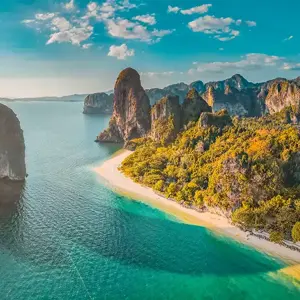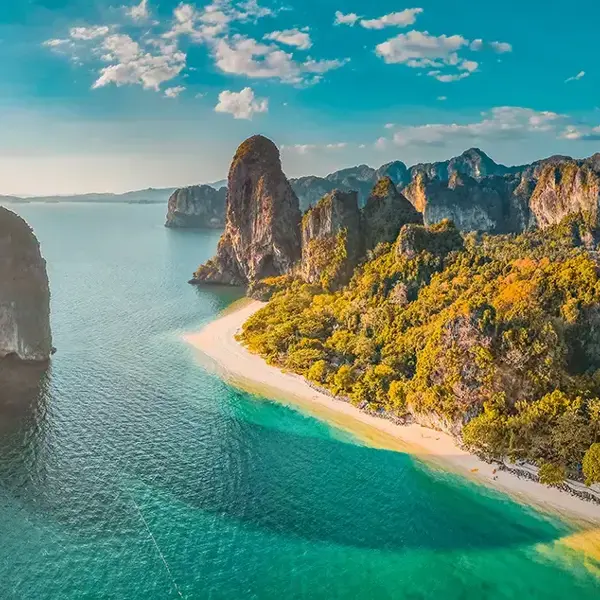
Immerse yourself in the best of Southeast Asia across four countries. Start with Bangkok's sizzling street food scene before cruising down the Mekong River through Laos and discovering the golden temples of Luang Prabang. Along the way, kayak through limestone bays, chase Kuang Si Waterfalls and soak up sunsets over rice paddies. Then finish with sunrise over the ancient temples of Angkor Wat in Siem Reap. Four countries, unforgettable experiences and plenty of free time to make every moment your own.
Get ready for 15 days of diving straight into the energy of Thailand and Laos — from Bangkok’s buzzing streets and Northern Thailand’s mountain towns to slow Mekong cruising, village stays and laid-back days in Laos. Expect street food, local encounters, simple overnight stays and a mix of rail, road and river travel that shows you more than just the headline stops.
Sharpen your chopstick skills & clear a month of your calendar. This is so much more than a holiday. Walk the streets of Bangkok. Explore limestone caves in Laos. Participate in Buddhist alms giving. Stay on a junk boat. (No big deal). This trip is the magical mix of everything south-east Asia has to offer!
No two days are the same on this epic quest. As you wander from the Bangkok cityscapes to Siem Reap’s remote beauty, you’ll be completely immersed in South East Asia – past and present. You’ll admire the Buddhist temples, learn all about the harrowing history, become a champion Muay Thai boxer and even try your hand at quad biking. Buckle up!
Bangkok: Sit down to dinner at the hotel and take in your first views across Bangkok from the rooftop.
Chiang Mai: Try khao soi, one of northern Thailand’s best-known dishes, made with egg noodles in a rich coconut curry broth and topped with crisp noodles. Long associated with Chiang Mai, it reflects the flavors and culinary traditions that define the region.
Chiang Mai: Meet Mr Prapat and his family for a hosted village visit outside Chiang Mai, where you’ll join a hands-on cooking class using herbs and ingredients from the garden. As you prepare northern Thai dishes together, you’ll see how home cooking remains closely tied to local produce and family tradition.
Chiang Mai: Enjoy your creations with the locally produced ingredients, which might include coconut-infused noodle soup and red and green curries (you’ll make the pastes from scratch) Sit down with Mr Prapat and his family for a farm-to-table lunch served in their village home. Shared around the family table, the meal reflects northern Thai hospitality and offers a direct experience of how food brings family and guests together in everyday village life.
Chiang Mai: Come together for dinner at 137 Pillars House, a restored teak residence in Chiang Mai’s Wat Ket district with roots in the 19th-century teak trade. Set around the historic Baan Borneo house, it preserves the timber architecture and grounds of a former trading compound for one last meal with your small group.
Bangkok: Join local vendors in a Bangkok flower market to make a traditional phuang malai garland before bringing your handmade offering into Wat Pho, where floral garlands are presented as a sign of respect in Buddhist worship.
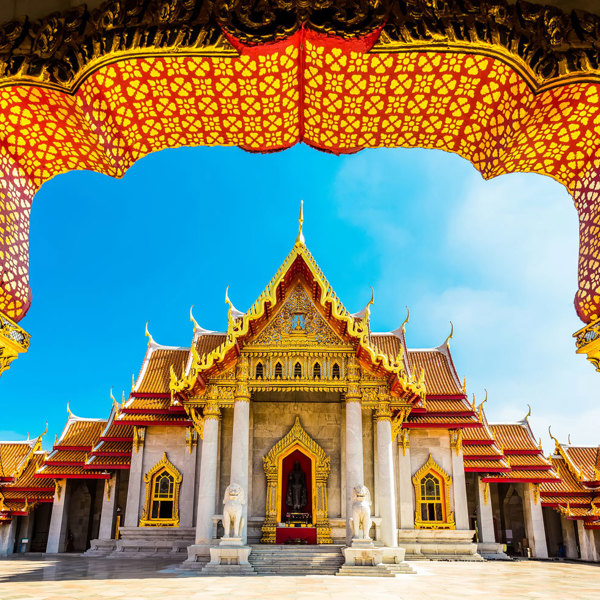
Bangkok: Visit one of Bangkok’s oldest and largest temple complexes, home to the 46 m (151 ft) Reclining Buddha and long recognized as a center of traditional Thai learning. As you explore the grounds, you’ll see one of the city’s most important religious sites at close hand.
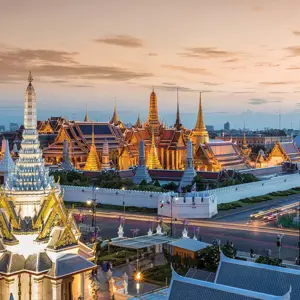
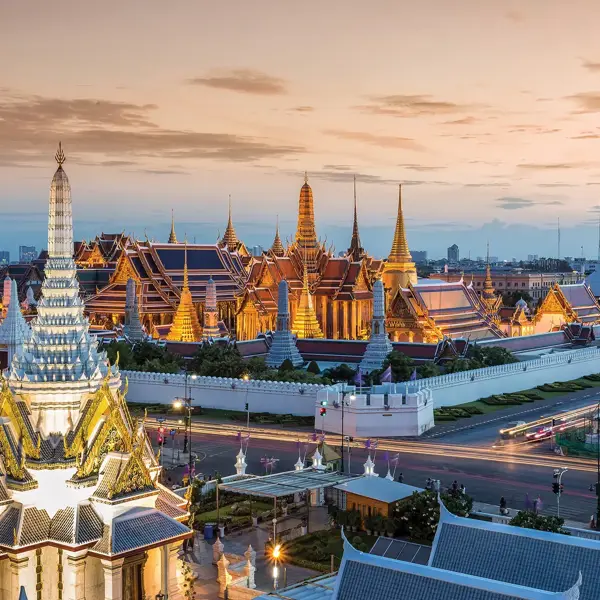
Bangkok: Explore the Grand Palace, established in 1782 at the heart of Bangkok. This vast walled complex served as the official royal residence from 1782 to 1925 and is still used for major royal ceremonies today.
Kanchanaburi: Board a local train for one of the most memorable stretches of the historic Death Railway. As you travel through Kanchanaburi, you’ll cross wooden viaducts including the Wang Po Viaduct, one of the line’s best-known surviving sections, built during the Second World War as part of the Thailand-Burma Railway.
Kanchanaburi: Arrive at FloatHouse River Kwai Resort by longtail boat and step straight into your floating villa on the river. Reached only by water, the resort brings a different side of Kanchanaburi into view from the moment you arrive.
Death Railway Museum: Visit one of the most challenging sections of the Thailand-Burma Railway, where prisoners of war and Asian laborers cut through the rock by hand in 1943. The pass and memorial site bring into focus the scale of the railway’s construction and the human cost behind it.
Phra Nakhon Si Ayutthaya: Discover Ayutthaya, where ruined palaces, monasteries and temple compounds reveal the scale of the Siamese kingdom at its height. Once a major trading capital with links across Asia, Europe and the Middle East, it shows how influential Old Siam became.
Chiang Rai: Visit Chiang Rai’s best-known contemporary landmark, created by Thai artist Chalermchai Kositpipat and opened to visitors in 1997. Its white exterior and mirrored decoration set it apart from Thailand’s older temple architecture and make it one of the country’s most distinctive modern religious sites.
Chiang Mai: Visit Wat Chedi Luang, one of Chiang Mai’s most important Old City temples, known for its vast brick stupa completed in 1481. Once home to the Emerald Buddha, it remains one of the city’s most significant religious landmarks.
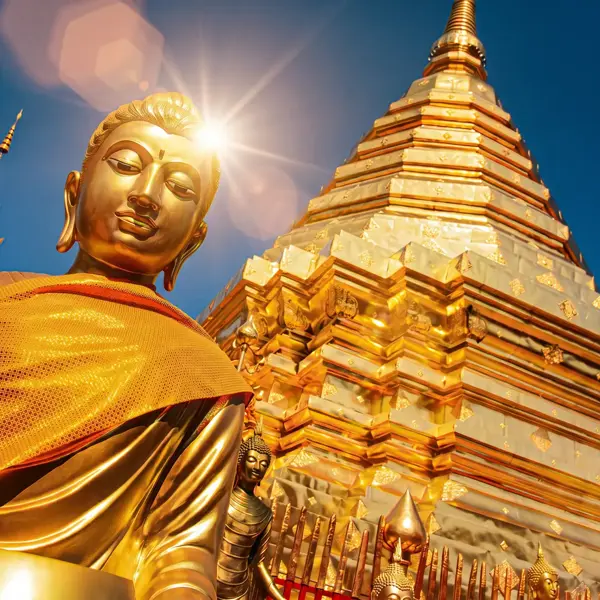
Chiang Mai: Visit Wat Phra That Doi Suthep, Chiang Mai’s most important temple, in time for sunset. Known for its golden pagoda and hilltop setting above the city, it remains one of northern Thailand’s most sacred religious sites.
Bangkok: Meet a Buddhist monk at Wat Pho and receive a traditional blessing, a practice still part of Thai Buddhist life today. After presenting your offering, you’ll take part in a temple ritual observed for protection, good fortune and respect.
Bangkok: Visit Wat Arun, one of Bangkok’s best-known riverside temples, in time for sunset. Rising above the Chao Phraya River, its central prang is decorated with porcelain and colored ceramics, giving this important Bangkok landmark a distinctive silhouette as the light begins to change.
Chiang Rai: Visit a tea plantation in Chiang Rai and see how another side of northern Thailand is shaped by the land. Learn about the history of Thai tea, watch green tea and first flush black tea being processed, then compare tastings, try brewing your own and sample local honey, homemade pastries and tea ice cream along the way.
Chiang Mai: Walk along Chiang Mai’s old town walls and explore the streets of the former Lanna capital from within its historic center. This route reveals how the city’s temples, gates and old layout still shape Chiang Mai today.
Chiang Mai: Visit the Lanna Folklife Museum for a closer look at the history, culture and traditions of the former Lanna Kingdom. Housed in Chiang Mai’s former Provincial Court, the museum explores everyday life, craftsmanship, belief and identity in northern Thailand.
Chiang Mai: Visit Elephant Nature Park, one of northern Thailand’s leading rescue and rehabilitation centers, where a no-riding policy supports a more natural environment for the elephants. As you explore the sanctuary, you’ll observe their behaviour and learn more about their rescue and ongoing care. Your visit directly supports United Nations Sustainable Development Goal 15: Life on Land.
Bangkok: Sit down to dinner at the hotel and take in your first views across Bangkok from the rooftop.
Chiang Mai: Try khao soi, one of northern Thailand’s best-known dishes, made with egg noodles in a rich coconut curry broth and topped with crisp noodles. Long associated with Chiang Mai, it reflects the flavors and culinary traditions that define the region.
Chiang Mai: Meet Mr Prapat and his family for a hosted village visit outside Chiang Mai, where you’ll join a hands-on cooking class using herbs and ingredients from the garden. As you prepare northern Thai dishes together, you’ll see how home cooking remains closely tied to local produce and family tradition.
Chiang Mai: Enjoy your creations with the locally produced ingredients, which might include coconut-infused noodle soup and red and green curries (you’ll make the pastes from scratch) Sit down with Mr Prapat and his family for a farm-to-table lunch served in their village home. Shared around the family table, the meal reflects northern Thai hospitality and offers a direct experience of how food brings family and guests together in everyday village life.
Chiang Mai: Come together for dinner at 137 Pillars House, a restored teak residence in Chiang Mai’s Wat Ket district with roots in the 19th-century teak trade. Set around the historic Baan Borneo house, it preserves the timber architecture and grounds of a former trading compound for one last meal with your small group.
Bangkok: Join local vendors in a Bangkok flower market to make a traditional phuang malai garland before bringing your handmade offering into Wat Pho, where floral garlands are presented as a sign of respect in Buddhist worship.
Bangkok: Visit one of Bangkok’s oldest and largest temple complexes, home to the 46 m (151 ft) Reclining Buddha and long recognized as a center of traditional Thai learning. As you explore the grounds, you’ll see one of the city’s most important religious sites at close hand.
Bangkok: Explore the Grand Palace, established in 1782 at the heart of Bangkok. This vast walled complex served as the official royal residence from 1782 to 1925 and is still used for major royal ceremonies today.
Kanchanaburi: Board a local train for one of the most memorable stretches of the historic Death Railway. As you travel through Kanchanaburi, you’ll cross wooden viaducts including the Wang Po Viaduct, one of the line’s best-known surviving sections, built during the Second World War as part of the Thailand-Burma Railway.
Kanchanaburi: Arrive at FloatHouse River Kwai Resort by longtail boat and step straight into your floating villa on the river. Reached only by water, the resort brings a different side of Kanchanaburi into view from the moment you arrive.
Death Railway Museum: Visit one of the most challenging sections of the Thailand-Burma Railway, where prisoners of war and Asian laborers cut through the rock by hand in 1943. The pass and memorial site bring into focus the scale of the railway’s construction and the human cost behind it.
Phra Nakhon Si Ayutthaya: Discover Ayutthaya, where ruined palaces, monasteries and temple compounds reveal the scale of the Siamese kingdom at its height. Once a major trading capital with links across Asia, Europe and the Middle East, it shows how influential Old Siam became.
Chiang Rai: Visit Chiang Rai’s best-known contemporary landmark, created by Thai artist Chalermchai Kositpipat and opened to visitors in 1997. Its white exterior and mirrored decoration set it apart from Thailand’s older temple architecture and make it one of the country’s most distinctive modern religious sites.
Chiang Mai: Visit Wat Chedi Luang, one of Chiang Mai’s most important Old City temples, known for its vast brick stupa completed in 1481. Once home to the Emerald Buddha, it remains one of the city’s most significant religious landmarks.
Chiang Mai: Visit Wat Phra That Doi Suthep, Chiang Mai’s most important temple, in time for sunset. Known for its golden pagoda and hilltop setting above the city, it remains one of northern Thailand’s most sacred religious sites.
Phuket: Explore Phuket Old Town, where Sino-Portuguese shop-houses, Chinese shrines and Buddhist temples reflect the island’s trading past and mixed cultural heritage. Walk along streets such as Thalang, Dibuk and Soi Romanee, visit Baan Chinpracha and the Thai Hua Museum, then stop to sample local snacks and coffee in one of the town’s restored historic buildings.
Bangkok: Meet a Buddhist monk at Wat Pho and receive a traditional blessing, a practice still part of Thai Buddhist life today. After presenting your offering, you’ll take part in a temple ritual observed for protection, good fortune and respect.
Bangkok: Visit Wat Arun, one of Bangkok’s best-known riverside temples, in time for sunset. Rising above the Chao Phraya River, its central prang is decorated with porcelain and colored ceramics, giving this important Bangkok landmark a distinctive silhouette as the light begins to change.
Chiang Rai: Visit a tea plantation in Chiang Rai and see how another side of northern Thailand is shaped by the land. Learn about the history of Thai tea, watch green tea and first flush black tea being processed, then compare tastings, try brewing your own and sample local honey, homemade pastries and tea ice cream along the way.
Chiang Mai: Walk along Chiang Mai’s old town walls and explore the streets of the former Lanna capital from within its historic center. This route reveals how the city’s temples, gates and old layout still shape Chiang Mai today.
Chiang Mai: Visit the Lanna Folklife Museum for a closer look at the history, culture and traditions of the former Lanna Kingdom. Housed in Chiang Mai’s former Provincial Court, the museum explores everyday life, craftsmanship, belief and identity in northern Thailand.
Chiang Mai: Visit Elephant Nature Park, one of northern Thailand’s leading rescue and rehabilitation centers, where a no-riding policy supports a more natural environment for the elephants. As you explore the sanctuary, you’ll observe their behaviour and learn more about their rescue and ongoing care. Your visit directly supports United Nations Sustainable Development Goal 15: Life on Land.