
17-Day Journeys: Explore India & Nepal
From
US$4849 ¥32325 €4413 C$6939 Rs.452855
New customer offer
Save up to $100 on your first order
Sign up to get your coupon
Price a Trip, Book Now
traveler-based
Adult and child counts are sent to the cart for final traveler-based pricing.
Age 0-12
Highlights
On this exciting South Asia journey, explore the three cities that form northern India's famed "Golden Triangle"-Delhi, Agra, and Jaipur-and get a taste of mountain air and Buddhist culture in Nepal. Take in the ethereal beauty of the Taj Mahal and delve into the vibrant bazaars of rose-hued Jaipur. Then head to the Himalaya to discover ornately carved palaces and Buddhist monasteries, learn how to cook Nepalese dumplings with locals, and search for tigers and elephants in Chitwan National Park.
- Highlights Walk the backstreets of Delhi with a local guide, experience the essence of serenity with an overnight stay at a Buddhist Monastery, learn how to make Nepalese momos (dumplings), enjoy local living with an overnight homestay in a rural village. Enjoy an immersive sound bath wellness demonstration and a six-course vegetarian meal featuring Nepalese falvours.
Dates & Prices
Price in USD (per person)
Itinerary
On this exciting South Asia journey, explore the three cities that form northern India's famed "Golden Triangle"-Delhi, Agra, and Jaipur-and get a taste of mountain air and Buddhist culture in Nepal. Take in the ethereal beauty of the Taj Mahal and delve into the vibrant bazaars of rose-hued Jaipur. Then head to the Himalaya to discover ornately carved palaces and Buddhist monasteries, learn how to cook Nepalese dumplings with locals, and search for tigers and elephants in Chitwan National Park.
Arrive at any time; your arrival transfer is included through Women With Wheels, a TakeTours-supported project.
There are no planned activities until an evening welcome meeting, so check into to the hotel and enjoy the city. We highly recommend booking a pre-night in Delhi to get over your jetlag and be ready for this very busy trip.
Today's activities
Women With Wheels
Transfer by a TakeTours-supported project, Women With Wheels. This program provides safe and reliable transport for travellers, while providing a dignified livelihood for local women who once lacked financial opportunities.
Many women in India are often marginalized, undeserved, and underprivileged. They have a more challenging time accessing resources such as education, and will be the first in their families to be pulled out of educational institutions when families resources' become limited. Many girls grow to be women that are dependent on their partners to provide income to their households, keeping them in the cycle of vulnerability to be dependent on others and not themselves. WoW provide them with independence.
Welcome Moment - Meet Your Expedition Leader and Group
Your opportunity to meet your National Geographic Expedition Leader and fellow travellers, and learn more about your tour. Opt to join the group for a local meal afterwards. Don't forget to see the notice in the lobby (or ask reception) for the official time and place to meet up with the group.
Duration: 1 hour(s)
Delhi, India
Delhi encapsulates two very different worlds, the 'old' and the 'new', each presenting deliciously different experiences. Rambunctious Old Delhi, the Muslim Indian capital between the 17th and 19th century, has many mosques, monuments, forts and bazaars with a distinctive mediaeval flavour. New Delhi, the imperial city created by the British, flaunts a surprising number of impressive monuments reflecting the glory of the Mughal, Turk, Persian and ultimately the British rulers.

New Delhi, India
National Geographic described India's Capital as "one of the Ultimate Cities of a Lifetime to visit and explore." New Delhi is known for its amazing buildings and blossoming economy. It is also home to two World Heritage Sites.
Delhi, India
Delhi encapsulates two very different worlds, the 'old' and the 'new', each presenting deliciously different experiences. Rambunctious Old Delhi, the Muslim Indian capital between the 17th and 19th century, has many mosques, monuments, forts and bazaars with a distinctive mediaeval flavour. New Delhi, the imperial city created by the British, flaunts a surprising number of impressive monuments reflecting the glory of the Mughal, Turk, Persian and ultimately the British rulers.
Set out to discover Delhi, the capital of India, which consists of two cities: historic Delhi and New Delhi, built by the British in the early 20th century. Explore New Delhi's lively Paharganj district with a youth guide from the TakeTours-supported City Walk project, and hear about how the program provides opportunities to disadvantaged street youth. Then delve into the narrow, winding lanes of Old Delhi, visiting the 17th-century Jama Masjid-the largest mosque in India-and the Sikh temple Gurdwara Sis Ganj Sahib, located close to a busy shopping area. Drive to Agra this afternoon.
Today's activities
Delhi City Walk
Explore the streets of Delhi with a youth-led tour guide from the TakeTours-supported City Walk project. As a former at-risk youth, your local guide will have a unique perspective on the city and can provide more information on the life of a child in India. The guided tour helps support the guide's college or university tuition.
Duration: 1-2 hour(s)
Distance: 2 km
Old Delhi Guided Walk
Visit historic Old Delhi. Explore Jama Masjid, the "Great Mosque," and enjoy its massive courtyard, which can hold up to 25,000 worshippers. Also, visit the ancient Sikh temple of Gurdwara SisGanj, which was established in 1783.
Duration: 1 hour(s)
Private Vehicle
Settle in and scan the scenery from the convenience of a private vehicle.
Duration: 4-5 hour(s)
Distance: 200 km
Delhi, India
Delhi encapsulates two very different worlds, the 'old' and the 'new', each presenting deliciously different experiences. Rambunctious Old Delhi, the Muslim Indian capital between the 17th and 19th century, has many mosques, monuments, forts and bazaars with a distinctive mediaeval flavour. New Delhi, the imperial city created by the British, flaunts a surprising number of impressive monuments reflecting the glory of the Mughal, Turk, Persian and ultimately the British rulers.
Agra, India
Agra, situated on the banks of the river Yamuna, is part of the popular Golden Triangle tourist circuit, along with Delhi and Jaipur. It is also home to UNESCO World Heritage Sites like the Taj Mahal, Agra Fort, and Fatehpur Sikri.
Spend the day in historic Agra, which served as the capital of the Delhi sultanate and later of the Mughal Empire. Discover the Taj Mahal, one of the New Seven Wonders of the World; widely considered the finest example of Mughal architecture, this breathtaking mausoleum was built by the emperor Shah Jahan for his favourite wife, Mumtaz Mahal. Afterward, visit the exquisite tomb of Mumtaz Mahal's grandfather, often referred to as the "baby Taj," and explore Agra Fort, an impressive red sandstone citadel which conceals palaces of white marble within.
Today's activities
Taj Mahal Visit
Cross one off your bucket list as you visit one of the Seven Wonders of the World. Explore the gorgeous white marble mausoleum, built by the Mughal Emperor Shah Jahan as a testament of his love for his favorite wife, Mumtaz Mahal.
Duration: 2-3 hour(s)
Baby Taj Visit
Visit this mausoleum that looks like a jewel box, built before the Taj Mahal by Queen Nur Jahan for her father. Enjoy the intricate details of the structure; it was the first Mughal building faced with white marble and where "pietra dura" (precious stones inlaid into marble) was first used.
Agra Fort Visit
Enjoy a visit to this impressive Mughal fort made of red sandstone and white marble.
Duration: 1-3 hour(s)
Agra, India
Agra, situated on the banks of the river Yamuna, is part of the popular Golden Triangle tourist circuit, along with Delhi and Jaipur. It is also home to UNESCO World Heritage Sites like the Taj Mahal, Agra Fort, and Fatehpur Sikri.
Travel to Jaipur, the capital of the state of Rajasthan. On the way, stop at the magnificent Mughal city of Fatehpur Sikri, a masterpiece of red sandstone, and hear about its fascinating history. The emperor Akbar built a short-lived capital here in the 16th century to honour a Muslim saint from the village of Sikri who had predicted the birth of his son, Jehangir. Then visit the Rajasthani village of Abhaneri for a walk around the Chand Baori-an ornately decorated stepwell or water tank constructed over a thousand years ago-learning about ancient Indian methods of water conservation. Before arriving to your hotel, visit the Anoothi Project, a collective of women from a marginalised community outside Jaipur who have mastered the traditionally-male technique of block printing. Travelers will engage in a hands-on block printing experience and spend time with the women leading this experience to speak with them about the purpose of the collective and its impact on the community.
Today's activities
Private Vehicle
Settle in and scan the scenery from the convenience of a private vehicle.
Duration: 5-6 hour(s)
Distance: 240 km
Fatehpur Sikri Visit
Explore the magnificent red sandstone fort city that was once the capital of India's Mughal Empire and is a UNESCO World Heritage site. Keep an eye out for elements of different religions, as King Akbar built three palaces for each of his favourite wives-a Hindu, a Muslim, and a Christian-in the city.
Abhaneri Stepwell Visit
Walk around the amazing Chand Baori, a tenth century water tank that's an impressive 30m (100 ft) deep. Learn about ancient Indian environmentalism-a "baori" is a unique Indian invention for harvesting rainwater.
Duration: 0.50-1 hour(s)
Agra, India
Agra, situated on the banks of the river Yamuna, is part of the popular Golden Triangle tourist circuit, along with Delhi and Jaipur. It is also home to UNESCO World Heritage Sites like the Taj Mahal, Agra Fort, and Fatehpur Sikri.
Jaipur, India
Jaipur is a major tourist destination in northern India, and the capital and largest city of the Indian state of Rajasthan. Known for its architecture, cuisine, and culture, popular attractions in Jaipur include Amer Fort, Birla Mandir, Hawa Mahal, and Garh Ganesh Temple.
Fatehpur Sikri, India
A UNESCO-listed Mughal city near Agra, built by Emperor Akbar in the 16th century. Highlights include the grand Buland Darwaza, Jama Masjid, and the marble Tomb of Salim Chishti. Abandoned due to water shortages, it remains a stunning example of Indo-Islamic architecture. A must-visit for history lovers!
Dausa, India
Dausa is a historic city in Rajasthan, India, known for its rich cultural heritage, traditional handicrafts, and ancient stepwells, serving as a gateway to explore rural Rajasthan.
Jaipur, India
Jaipur is a major tourist destination in northern India, and the capital and largest city of the Indian state of Rajasthan. Known for its architecture, cuisine, and culture, popular attractions in Jaipur include Amer Fort, Birla Mandir, Hawa Mahal, and Garh Ganesh Temple.
Explore Jaipur, known as the "Pink City" for its rose-coloured buildings. Take a tour of the sprawling Amber Fort, the former residence of Jaipur's Rajput rulers; and visit Hawa Mahal, or the Palace of Winds, a stunning five-story sandstone building with distinctive honeycombed windows. The next stop in Jaipur today is at Anoothi. Here, you'll discover the artistry of traditional block printing while supporting a meaningful local women's initiative. Tonight, consider going to the cinema to watch a Bollywood movie-a truly unique experience.
Going to see a Bollywood film in India is much more than what we are accustomed to in the west. The atmosphere, energy, and pure fun (not to mention volume!) has to be experienced to be believed.
Today's activities
Amber Fort Visit
Take in the Hindu and Muslim architecture of the beautiful Amber Fort. Wander through the halls and courtyards and admire the intricate details.
City Palace Visit
Explore the courtyards, gardens, and buildings that make up the City Palace. Located in the heart of the Old City, it is a striking blend of Mughal and Rajasthani architecture. Visit the palace's museum to look at ancient carriages and the former maharaja's gold-embroidered wedding outfit.
Duration: 1 hour(s)
Anoothi Block Printing Experience
Women from marginalised communities outside Jaipur came together to create the Anoothi Project. In Hindi, Anoothi means 'unique and extraordinary' and by teaching these women to master the traditionally male handicraft of block printing, the collective shines a light on the unique and extraordinary within each individual. At this TakeTours for Good visit, engage in a hands-on block printing activity with the local women as you indulge in some local snacks prepared by your hosts.
2 optional activities
Jaipur Cooking Class with A Local Family
Join a local family in Jaipur as they welcome you into their home and share their recipes and best-loved dishes with you. Get hands-on with the ingredients and learn how to prepare Pakoda (Pakora), vegetable dishes and Indian breads such as chapatis and puris. Once the hard work is done, get to know your hosts over lunch. Savor the flavours of your creations with the additions of other vegtable dishes, daal and raita, and finish the meal with a sweet treat.
Movie at Raj Mandir
Visit this spectacular cinema and watch a song-and-dance Bollywood film.
Admission: approx. INR 200-400 per person
Duration: approx. 3 hour(s)
Jaipur, India
Jaipur is a major tourist destination in northern India, and the capital and largest city of the Indian state of Rajasthan. Known for its architecture, cuisine, and culture, popular attractions in Jaipur include Amer Fort, Birla Mandir, Hawa Mahal, and Garh Ganesh Temple.
Start your day with a local historian and sociology scholar, diving into India's intricate social fabric-from its ancient belief systems to its iconic architecture. Afterward, travel into rural Rajasthan and join your Expedition Leader to explore Alsisar, a village famed for its stunning heritage havelis (mansions). The evening concludes with dinner at our own haveli accommodations.
Today's activities
Beyond the Pink City
In Jaipur, known as the "Pink City," meet with a local historian and sociology scholar to learn about India's complex social fabric and traditions, and discuss a range of topics from the country's belief systems to its architecture.
Private Vehicle
Settle in and scan the scenery from the convenience of a private vehicle.
Duration: 4.50 hour(s)
Distance: 205 km
Local Village Immersion
Step back in time and explore the traditional village of Alsisar to get a glimpse of life in rural India. Topics of discussion along the way can include how urbanization affect village life, information technology, and modernization in its benefits and disadvantages, as well as simple village customs and traditions.
Jaipur, India
Jaipur is a major tourist destination in northern India, and the capital and largest city of the Indian state of Rajasthan. Known for its architecture, cuisine, and culture, popular attractions in Jaipur include Amer Fort, Birla Mandir, Hawa Mahal, and Garh Ganesh Temple.
Alsisar, India
Alsisar is a town or city in India.
Drive back to bustling Delhi. After checking into the hotel, enjoy the rest of the day free to explore the city. This evening, opt to join the group for a farewell dinner.
Today's activities
Private Vehicle
Settle in and scan the scenery from the convenience of a private vehicle.
Duration: 4.75-5 hour(s)
Distance: 226 km
Alsisar, India
Alsisar is a town or city in India.
Delhi, India
Delhi encapsulates two very different worlds, the 'old' and the 'new', each presenting deliciously different experiences. Rambunctious Old Delhi, the Muslim Indian capital between the 17th and 19th century, has many mosques, monuments, forts and bazaars with a distinctive mediaeval flavour. New Delhi, the imperial city created by the British, flaunts a surprising number of impressive monuments reflecting the glory of the Mughal, Turk, Persian and ultimately the British rulers.
Transfer to the airport and catch a flight to Kathmandu, the capital of Nepal. After our welcome meeting, experience a sound bath wellness demonstration and enjoy a six-course dinner featuring organic Nepali cuisine.
Please note this flight is unescorted. You will be dropped off and picked up by your National Geographic Expedition Leader but independently navigate the airport.
Today's activities
Plane
Sit back and enjoy the views from above on a flight from Delhi to Kathmandu.
Duration: 2 hour(s)
Nepalese Welcome Experience at Avata Wellness
Enjoy an immersive and meditative full body and mind wellness experience during a sound bath demonstration at Avata Wellness in Kathmandu. Since ancient times, people have been using sound to heal and wash away mental distress. It may even help with the jet lag from a long flight to Nepal so you can begin your adventure feeling refreshed. Brass singing bowls will be used during the session to create a comforting and meditative atmosphere. Afterwards, a six-course vegetarian meal will be served at Nourish by Avata. All dishes are prepared using traditional Nepali herbs and spices, a perfect blend of delicacies that will introduce you to the many different flavours of Nepal.
Duration: 0.50-1 hour(s)
Welcome Meeting for Travellers on Combos
You may be a seasoned pro at group travel by now, but there will likely be some new travellers joining the group. Sit in on the welcome meeting to meet the newest members of your group and learn about the next leg of your tour.
Delhi, India
Delhi encapsulates two very different worlds, the 'old' and the 'new', each presenting deliciously different experiences. Rambunctious Old Delhi, the Muslim Indian capital between the 17th and 19th century, has many mosques, monuments, forts and bazaars with a distinctive mediaeval flavour. New Delhi, the imperial city created by the British, flaunts a surprising number of impressive monuments reflecting the glory of the Mughal, Turk, Persian and ultimately the British rulers.
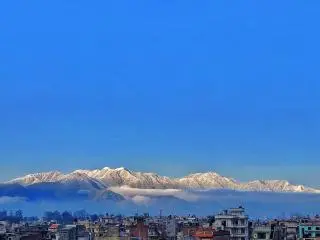
Kathmandu, Nepal
Kathmandu, the capital of Nepal, is rich in UNESCO World Heritage sites and a unique spiritual atmosphere, serving as a gateway to Himalayan culture and adventure.
Spend the day exploring Kathmandu, the colourful capital of this Himalayan nation. Pay a visit to Bodhnath Stupa, the holiest Tibetan Buddhist shrine outside of Tibet, and explore the wood-carved temples, pagodas, and palaces of Bhaktapur, Nepal's medieval capital.
Today's activities
Private Vehicle
Settle in and scan the scenery from the convenience of a private vehicle.
Bodhnath Stupa Visit
Enjoy a visit to the Bodhnath Stupa, one of the largest Buddhist stupas in the world. Built in the 5th century, this UNESCO World Heritage site still attracts many pilgrims, particularly Tibetan Buddhists and local Nepalis. Take in the peaceful atmosphere and observe Buddhist monks in prayer in the monasteries surrounding the stupa.
Bhaktapur Excursion
Visit this unique old town known as the City of Devotees. Explore Hindu temples, pagodas, palaces, and monuments, including the beautiful wood-carved palace in Durbar Square. You can pick up clay pots and other souvenirs in the colourful open markets and taste home made yogurt, known as khopa dhau, which Bhaktapur is famous for.
Duration: 3-4 hour(s)
1 optional activities
Everest Flight
Get a close look at awesome Mt Everest, the highest mountain in the world, without having to do any climbing; this one-hour plane tour will give you an unforgettable experience. At times, the weather may cover Everest, but the surrounding view is still worth the ride!
Duration: approx. 1 hour(s)
Kathmandu, Nepal
Kathmandu, the capital of Nepal, is rich in UNESCO World Heritage sites and a unique spiritual atmosphere, serving as a gateway to Himalayan culture and adventure.
Bhaktapur, Nepal
An ancient city in the Kathmandu Valley, renowned for its exquisite woodcarvings and traditional architecture.
Kathmandu, Nepal
Kathmandu, the capital of Nepal, is rich in UNESCO World Heritage sites and a unique spiritual atmosphere, serving as a gateway to Himalayan culture and adventure.
Venture to the ancient hilltop temple of Swayambhunath, decorated with vibrant prayer flags and home to troops of rhesus monkeys. Later, we'll hear about National Geographic Grantee Chhing Lhomi's efforts to preserve the weaving traditions of the Upper Mustang region through her work with the Himalayan Indigenous Society, a Kathmandu-based nonprofit. Then depart for nearby Pharping, known for its Buddhist pilgrimage sites, and settle into a tranquil monastery guesthouse for the night. Get an insider's view of monastery life, and enjoy a chanting and prayer service; or opt to take a walk in the monastery's peaceful grounds. Enjoy a cooking demonstration at local community restaurant and learn how to make Nepalese momos (dumplings). Afterwards, taste your delicious creations.
Experience the serenity of a Tibetan Buddhist monastery. The monastery guest house offers comfortable accommodations in a peaceful setting with balconies and private western-style bathrooms. There are approximately 200 monks in residence following the Nyingmapa tradition. This is a new monastery (2006), and income from the guest house directly supports it.
Please note that on select departures, the itinerary may be re-ordered to have the Monastery visit at the end of the itinerary.
Today's activities
Swayambhunath Temple Visit
Visit Swayambhunath Buddhist temple and Unesco World Heritage Site, the most ancient and enigmatic of all the holy shrines in Kathmandu. Explore the structure and be sure to check out the Buddha's eyes painted on each side of the Stupa. The site is also known as the monkey temple, for the vast amount of creatures who call the complex home.
Stories from the Himalayas
In Kathmandu, National Geographic grantee Chhing Lhomi works to preserve the ancient traditions of the Lowa community of the Upper Mustang region. We'll take the unique opportunity to visit a local home of a family from this region and enjoy a lecture from Chhing or one of her colleagues on traditional weaving methods, and hear about ongoing efforts with the Himalyan Indigenous Society.
Private Vehicle
Settle in and scan the scenery from the convenience of a private vehicle.
Duration: 1-2 hour(s)
Distance: 25 km
Overnight at a Buddhist Monastery
Experience the serenity of a Buddhist monastery. The monastery guest house offers comfortable accommodations in a peaceful setting with balconies and private western-style bathrooms. Opt to participate in the life of the monks: take tea alongside them and enjoy the early morning chanting before experiencing the sunrise from the roof of this stunning monastery. There are approximately 200 young monks in residence, training in the Nyingmapa tradition. This is a new monastery (2006), and income from the guesthouse directly supports it.
Nepalese Dumplings Cooking Demonstration
Enjoy a cooking demonstration at a local establishment and learn how to make momos (traditional dumplings). Afterwards, taste the delicious dishes made during a Nepali lunch.
Kathmandu, Nepal
Kathmandu, the capital of Nepal, is rich in UNESCO World Heritage sites and a unique spiritual atmosphere, serving as a gateway to Himalayan culture and adventure.
Patan, Nepal
The city of arts in the Kathmandu Valley, famous for its Buddhist temples and metalwork.
Kathmandu, Nepal
Kathmandu, the capital of Nepal, is rich in UNESCO World Heritage sites and a unique spiritual atmosphere, serving as a gateway to Himalayan culture and adventure.
Patan, Nepal
The city of arts in the Kathmandu Valley, famous for its Buddhist temples and metalwork.
Rise at dawn to listen to the monks' morning chanting, and witness a stunning sunrise. Then drive to the small riverside village of Kurintar and hike to our lodge, nestled on a forested hill overlooking the Trishuli River. Opt to relax by the pool or take a guided walk through the surrounding countryside, stopping at local villages.
Arrive at our remote lodge, which sits on a ridge amidst the hills overlooking sandy beaches and a river. Forests cascade down the hillsides, enclosing tiny settlements of tribal people.
The lodge is only accessed by foot, so please expect a walk of approx. 30 to 45 minutes. Porters will be hired to carry our bags but please pack what you need for the night, as we will leave our larger bags in the vehicle.
Today's activities
Neydo Monastery Sunrise Chant
Rise before sunrise and enter the main hall of the Monastery to listen to the monks practicing their chanting. After, we enjoy the sunrise over the Valley from the Monastery roof.
Private Vehicle
Settle in and scan the scenery from the convenience of a private vehicle.
Duration: 3.50-4 hour(s)
Distance: 125 km
Walking
Lace up your shoes and get to the next stop under your own power.
Duration: 0.50-0.75 hour(s)
1 optional activities
Kurintar Nature walk and Village visit
Take a guided walk through the forests that cascade down the hillsides of Kurintar. Visit local villages inhabited by tribal people: Chepang, Dorai, Magar, some Brahman, and Chettri, making a living from foraging in the forests.
Admission: approx. null 0 per person
Duration: approx. 0.50-1 hour(s)
Patan, Nepal
The city of arts in the Kathmandu Valley, famous for its Buddhist temples and metalwork.
Bharatpur, Nepal
Bharatpur is a major city in Nepal's Chitwan District, serving as the gateway to Chitwan National Park. It features vibrant markets and rich cultural heritage in the Terai plains.
Today, we travel towards Chitwan National Park, Nepal's oldest wildlife reserve and a UNESCO World Heritage site. The park is home to 68 recorded mammal species, including the one-horned rhino and the Bengal tiger, as well as hundreds of species of birds. Check in to our lodge, located on the banks of the East Rapti River. After lunch, board a traditional flat-bottomed boat for a river safari, keeping your eyes out for aquatic birds, crocodiles, and other riverine fauna.
Spend two nights enjoying cultural and wildlife excursions in and around Royal Chitwan National Park (RCNP), the oldest national park in Nepal. Established in 1973, it became a UNESCO World Heritage site in 1984. Within its area of 932km2 (579 mi2), RCNP is home to at least 43 species of mammals, 450 species of birds, and 45 species of amphibians and reptiles, including sambars, chitals, rhesus monkeys, tigers, and langurs.
The specifics and order of activities may change, depending on the season and local conditions. Your National Geographic Expedition Leader will confirm the exact activities and timing with the naturalists upon arrival at the lodge.
Today's activities
Walking
Lace up your shoes and get to the next stop under your own power.
Duration: 0.50-0.75 hour(s)
Private Vehicle
Settle in and scan the scenery from the convenience of a private vehicle.
Duration: 2.50-3.50 hour(s)
Chitwan Area Boat Excursion
Embark in traditional patela boats on a silent trip down the Rapti River, which boarders the National Park to view aquatic birds, crocodiles, gharials, and the animals along the river banks.
Duration: 1-1.50 hour(s)
Bharatpur, Nepal
Bharatpur is a major city in Nepal's Chitwan District, serving as the gateway to Chitwan National Park. It features vibrant markets and rich cultural heritage in the Terai plains.
Chitwan National Park, Nepal
Chitwan National Park is Nepal's first national park and a UNESCO World Heritage Site. Renowned for its rich wildlife, it's a key conservation area for one-horned rhinoceroses and Bengal tigers.
Spend the day exploring Chitwan National Park on a variety of excursions; activities differ depending on the season. Set out on a jeep safari through the grasslands and forests, seeking out rhinos, leopards, elephants, monkeys, and the elusive Bengal tiger. Meet with a "tiger technician" from the Nepal Tiger Trust, a nonprofit dedicated to the protection and conservation of these majestic cats. Visit a farming village bordering the park for a glimpse of rural life, and return to our lodge this evening in time for a dance performance by the local Tharu people.
The jeep safari is often prohibited during monsoon season by the park authorities; monsoon season is from June-September, and sometimes it can last till October. When the park is inaccessible, we will search out wildlife in the surrounding forest which is unfenced and just as likely to view animals. Boating is also subject to the water levels and local conditions on the Rapti River.
Today's activities
Jeep Safari
Enjoy a jeep safari that begins in open grassland and moves into the dense Sal Forest, crossing the Reu River to see different wildlife. Continue down to the banks of Narayani River and spot gharials (freshwater alligators) basking in the sun. Also, view wildlife from Bhimle Machan (a wooden platform).
Duration: 3-3.50 hour(s)
Chitwan Village Visit
Enjoy a visit to the farming Village bordering the National Park. Learn about the social and cultural aspects of the village people, what they farm, and see how they live day-to-day.
Chitwan Tiger Experience
Nepal Tiger Trust is a nonprofit organization dedicated to the protection of tigers in Nepal and is run by researchers and local community volunteers. Their Tiger Corridors Project has been monitoring these amazing cats in Chitwan National Park and adjacent areas for over five years. On this experience, meet with a local tiger "technician" who will give a presentation about the work here and its importance to conservation, tourism, and the community at large. He or she will then join us on a jeep safari to teach us how tigers are tracked and monitored. If we're lucky, we'll catch a glimpse of an elusive tiger.
Chitwan National Park, Nepal
Chitwan National Park is Nepal's first national park and a UNESCO World Heritage Site. Renowned for its rich wildlife, it's a key conservation area for one-horned rhinoceroses and Bengal tigers.
Drive to Pokhara, an enchanting town set on the shores of turquoise-hued Phewa Lake against a backdrop of snowcapped Himalayan peaks. Enjoy a guided walk around the city, and opt to have dinner at a popular local restaurant.
Nestled in a tranquil valley at an altitude of 827m (2,713 ft), beautiful Pokhara lies on a once vibrant trade route between India and Tibet. To this day, mule trains can be seen bringing goods to trade from remote regions of the Himalayas. This enchanting city has several beautiful lakes and offers stunning panoramic views of Himalayan peaks. It's a popular place to relax and enjoy the beauty of nature.
Today's activities
Private Vehicle
Settle in and scan the scenery from the convenience of a private vehicle.
Duration: 8 hour(s)
Pokhara Orientation Walk
Breathe in the fresh air and take in the views of the Himalayas and Phewa Lake while getting your bearings around this scenic city.
Chitwan National Park, Nepal
Chitwan National Park is Nepal's first national park and a UNESCO World Heritage Site. Renowned for its rich wildlife, it's a key conservation area for one-horned rhinoceroses and Bengal tigers.
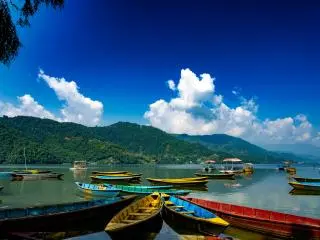
Pokhara, Nepal
Pokhara is a popular tourist city in Nepal, nestled at the foot of the Annapurna mountain range. It's famous for Phewa Lake and views of Machhapuchhre, serving as the gateway to the Annapurna Circuit trek.
Venture to Sarangkot village early this morning and hike to the famed Sarangkot lookout to witness a breathtaking sunrise over the Annapurna Himalaya. Back in Pokhara, climb up a lush forest path to the gleaming white Peace Pagoda, built by Japanese monks after World War II. Later, visit a Tibetan refugee settlement, established by the United Nations in 1964. Learn about the history of the community on a walk through their photo gallery, and enjoy a traditional Tibetan lunch. In your free time, opt to take a boat tour of Phewa Lake.
The hike up to the World Peace Pagoda can be quite strenuous and is all steps up and back down. If you are not feeling so energetic, please let the National Geographic Expedition Leader know and you can opt out of this activity.
Today's activities
Sunrise at Sarangkot
Rise early and experience a spectacular sunrise with a panoramic view of the surrounding Himalayas. The highest altitude on this trek is at 1600 meters.
Rise early and experience a spectacular sunrise view of the surrounding the Annapurna Himalayas.
World Peace Pagoda Excursion
Walk up to the World Peace Pagoda, which was constructed by Buddhist monks. Enjoy the structure and the beautiful view around it.
Duration: 2-3 hour(s)
Distance: 4 km
Tibetan Refugee Settlement
Visit the Tashiling Tibetan Refugee Camp, established by the United Nations in 1964 as a temporary settlement for the large number of refugees fleeing Tibet. Walk through this friendly quarter, now home to over 500 people. Visit the celebrated photo gallery here and then enjoy a traditional momo lunch at the local restaurant to support this incredible community.
1 optional activities
Phewa Lake Boat Tour
Enjoy a boat ride on Phewa Lake and take in the serene environment and natural beauty, including the magnificent fish-tailed summit of Machhapuchhre (6,977m, 22,890 ft) rising behind it.
Admission: approx. NPR 600 per person
Duration: approx. 1 hour(s)
Pokhara, Nepal
Pokhara is a popular tourist city in Nepal, nestled at the foot of the Annapurna mountain range. It's famous for Phewa Lake and views of Machhapuchhre, serving as the gateway to the Annapurna Circuit trek.
Catch a flight back to the capital, Kathmandu. Enjoy time to shop in the bustling Thamel district, or choose to visit Pashupatinath Temple, the most sacred Hindu temple complex in Nepal.
Enjoy free time in the afternoon for exploring. Visit the burning ghats at Pashupatinath and Swayambhunath, or the monkey temple. Kathmandu is fascinating at every turn, and some travelers prefer to just wander, seeing where the city may lead them.
Today's activities
Plane
Sit back and enjoy the views from above on a flight from Pokhara to Kathmandu.
Duration: 1 hour(s)
Free Time
Take some time to explore on your own or do some last minute shopping.
1 optional activities
Pashupatinath Ghats and Temple Visit
Visit Pashupatinath, one of the most sacred Hindu temple complexes in Nepal. Located on the banks of the Bagmati River, this is the final stop for many Hindus, who's families bring them here to set funeral pyres on the ghats to cremate their loved ones. Respectful viewing from across the river is culturally acceptable, you also will see sadhus (Hindu holy men) and pilgrims perform bathing rituals.
Please note the inclusion of a taxi costs extra.
Please note the inclusion of a taxi costs extra.
Admission: approx. NPR 1,000 per person
Duration: approx. 0.50-1 hour(s)
Pokhara, Nepal
Pokhara is a popular tourist city in Nepal, nestled at the foot of the Annapurna mountain range. It's famous for Phewa Lake and views of Machhapuchhre, serving as the gateway to the Annapurna Circuit trek.
Kathmandu, Nepal
Kathmandu, the capital of Nepal, is rich in UNESCO World Heritage sites and a unique spiritual atmosphere, serving as a gateway to Himalayan culture and adventure.
Depart at any time.
Feel free to depart at any time today, but remember that check out time from the hotel is 12:00pm.
Today's activities
Departure Day
Not ready to leave? Your Expedition Leader can help with travel arrangements to extend your adventure.
Kathmandu, Nepal
Kathmandu, the capital of Nepal, is rich in UNESCO World Heritage sites and a unique spiritual atmosphere, serving as a gateway to Himalayan culture and adventure.
Includes & Excludes
Price Includes
Price Excludes
Additional Notes
- Changeover Communication New - Meet a Local Historian
In Jaipur, known as the "Pink City," meet with a local historian and sociological scholar to learn about India's complex social fabric and traditions, and discuss a range of topics from the country's belief systems to its architecture.
New - Traditional Weaving Experience
In fabled Kathmandu, meet National Geographic grantee Chhing Lhomi, who works to preserve the ancient weaving traditions of the Upper Mustang region, by transferring skills to younger generations. Visit Chhing's Himalayan Indigenous Society and learn about these ongoing efforts.
Expanded - Sawarda Village
Step back in time and explore the traditional culture of the rural village of Sawarda. Meet with town elders to discuss how modernization is affecting village life before joining a family in aarti, a Hindu prayer session.
Expanded - Sasane Walk
Take a walk with a woman who has graduated from the SASANE program, which trains victims of human trafficking to be paralegals who, in turn, fight trafficking. Gain valuable insight and learn about the struggles these brave women face in helping others.
Tibetian Refugee Settlement
Visit the Tashiling Tibetan Refugee Camp, established as a temporary settlement in 1964. Walk through this friendly quarter (now home to over 500 people) before enjoying a traditional lunch at its restaurant to support the community.
Discover Village Life
Meet with the elders of the village of Chandelao for a personal view of daily life in rural India. Learn about various aspects of the culture and economy here during an unforgettable conversation. - Checklist Cold Weather:
* Long-sleeved shirts or sweater
* Scarf
* Warm gloves
* Warm hat
* Warm layers
* Warm waterproof jacket
Conservative Dress:
* Modest clothing that covers knees and shoulders (Long pants, long skirts, shirts that cover shoulders)
* Shawl or scarf (for temple visits)
Documents:
* Flight info (required) (Printouts of e-tickets may be required at the border)
* Insurance info (required) (With photocopies)
* Passport (required) (With photocopies)
* Vouchers and pre-departure information (required)
* Visas or vaccination certificates (With photocopies)
Essentials:
* Footwear (required) (Closed toe suggested)
* Toiletries (required) (Shampoo, bodywash, soap, etc.)
* Binoculars (optional)
* Camera (With extra memory cards and batteries)
* Cash, credit and debit cards
* Day pack (Used for daily excursions or short overnights)
* Ear plugs
* First-aid kit (should contain lip balm with sunscreen, sunscreen, whistle, Aspirin, Ibuprofen, bandaids/plasters, tape, anti-histamines, antibacterial gel/wipes, antiseptic cream, Imodium or similar tablets for mild cases of diarrhea, rehydration powder, water purification tablets or drops, insect repellent, sewing kit, extra prescription drugs you may be taking)
* Flashlight/torch (Headlamps are ideal)
* Fleece top/sweater
* Hat
* Headphones (Noise-cancelling recommended)
* Locks for bags
* Long pants/jeans
* Moneybelt
* Outlet adapter
* Personal entertainment (Reading and writing materials, cards, music player, etc.)
* Reusable water bottle
* Shirts/t-shirts
* Sleepwear
* Small travel towel
* Sunglasses
* Swimwear
* Watch and alarm clock
* Waterproof backpack cover
* Windproof rain jacket
Health & Safety:
* Face masks (Clients will be only be required to wear a face mask where it is mandated by local regulations.)
* Hand sanitizer
* Pen (Please bring your own pen for filling out documents.)
Light Hiking:
* Hiking boots/sturdy walking shoes
* Hiking pants (Convertible/Zip-off and quick dry recommended)
* Walking poles
Smart Dress:
* Smart outfit (For evenings out)
Warm Weather:
* Sandals/flip-flops
* Shorts/skirts (Longer shorts/skirts are recommended)
* Sturdy water shoes/sandals
* Sun hat/bandana
* Swimwear
Note: During the colder months (Oct-Apr) the mountains can be cold, so please make sure you pack warm clothes. During the months of Jul-Sep is the rainy season, so please make sure to pack waterproof clothes. - Group Size Notes Max 16, Avg 10
- International Flights No, international flights are generally not included in the price of your tour.
However, on some combo tours travelling between two different countries, international flights are included as part of the itinerary and price of the tour. Please speak to your National Geographic Signature Specialist or booking agent for further details.
In addition, check-in times and baggage allowances/restrictions vary by airline and can change at any time. For the most up-to-date information for your flight, please contact your airline. We recommend checking in online in advance to avoid potential delays at the airport. - Optional Activities Jaipur
- Jaipur Cooking Class with A Local Family
- Movie at Raj Mandir (200-400INR per person)
Mount Everest
- Everest Flight
Kurintar
- Kurintar Nature walk and Village visit (Free)
Phewa Tal
- Phewa Lake Boat Tour (600NPR per person)
Kathmandu
- Pashupatinath Ghats and Temple Visit (1000NPR per person) - Packing Note During the colder months (Oct-Apr) the mountains can be cold, so please make sure you pack warm clothes. During the months of Jul-Sep is the rainy season, so please make sure to pack waterproof clothes.
- Start / Finish Delhi to Kathmandu
Policies
Minimum Age You must be 18 to travel unaccompanied on a TakeTours tour. For minors travelling with a guardian over 21 years old, the minimum age is 12.
Q & A
Popular FAQs
Walk the backstreets of Delhi with a local guide, experience the essence of serenity with an overnight stay at a Buddhist Monastery, learn how to make Nepalese momos (dumplings), enjoy local living with an overnight homestay in a rural village. Enjoy an immersive sound bath wellness demonstration and a six-course vegetarian meal featuring Nepalese falvours.
The information in this trip details document has been compiled with care and is provided in good faith. However it is subject to change, and does not form part of the contract between the client and the operator. The itinerary featured is correct at time of printing. It may differ slightly to the one in the brochure. Occasionally our itineraries change as we make improvements that stem from past travellers, comments and our own research. Sometimes it can be a small change like adding an extra meal along the itinerary. Sometimes the change may result in us altering the tour for the coming year. Ultimately, our goal is to provide you with the most rewarding experience. Please note that our brochure is usually released in November each year. If you have booked from the previous brochure you may find there have been some changes to the itinerary.
VERY IMPORTANT: Please ensure that you print a final copy of your Trip Details to review a couple of days prior to travel, in case there have been changes that affect your plans.
VERY IMPORTANT: Please ensure that you print a final copy of your Trip Details to review a couple of days prior to travel, in case there have been changes that affect your plans.
While it is our intention to adhere to the route described below, there is a certain amount of flexibility built into the itinerary and on occasion it may be necessary, or desirable to make alterations. The itinerary is brief, as we never know exactly where our journey will take us. Due to our style of travel and the regions we visit, travel can be unpredictable. The Trip Details document is a general guide to the tour and region and any mention of specific destinations or wildlife is by no means a guarantee that they will be visited or encountered. Aboard expedition trips visits to research stations depend on final permission.
Additionally, any travel times listed are approximations only and subject to vary due to local circumstances.
Additionally, any travel times listed are approximations only and subject to vary due to local circumstances.
Want to experience the sights and sounds of Holi? Make sure you're in India on March 22, 2027 or March 11, 2028 for the nation's most colourful festival.
1. CULTURE
India is a country which is very different to anything you will have experienced before. Although this means it is not the easiest place to travel, this is also what makes it so special. Pollution, poverty and the crowds can result in initial culture shock but should be seen as an exciting new challenge. During our time here we have come to love this large and wonderfully different country but we know that we should always expect to encounter some difficulties along the way.
In India there are very different attitudes to time keeping, public cleanliness, privacy and service. Trains will sometimes be late, plumbing can sometimes be temperamental and power will often just vanish. Optimistic menus turn out to have only one dish available and everyone, just everyone, will want to know your name. If you are able to travel with a lot of patience and a healthy sense of humour, then we know that you - like all of us - will be captivated by what India has to offer.
2. COMBO TRIP
Please note that this tour combines with other TakeTours tours. As such, the staff and some travel companions on your tour may have previously been traveling together with TakeTours, prior to Day 1 of your tour. Likewise, some staff and travel companions may be continuing together on another TakeTours tour, after your trip concludes.
3. INTERNAL FLIGHTS
Please note this tour has a flight that is unescorted. You will be dropped off and picked up by your National Geographic Expedition Leader but independently navigate the airport.
4. WEATHER
Weather conditions in the Himalayas can change rapidly and our Expedition Leader may be forced to change the trip itinerary accordingly. Travellers need to be prepared for all weather conditions. For more information please read the "what to take" section of this trip notes.
5. FITNESS
While there are no treks on this trip this will be a fair amount of walking, so you should have an average level of fitness.
6. DRONES IN NEPAL
Please note that drones and the flying of drones are prohibited in Nepal. If you violate these regulations the police may take you into custody.
7. ACCOMMODATIONS
Please be aware that properties we stay in with only two stories may not have elevators installed and climbing the stairs with your luggage will be necessary.
8. EXPEDITION LEADER
When traveling across different countries, islands, or regions, travellers can expect multiple Expedition Leaders throughout their trip to ensure experiences are authentic and locally specialized.
All TakeTours group trips are accompanied by one of our National Geographic Expedition Leader throughout. The aim of the Expedition Leaders is to take the hassle out of your travels and to help you have the best trip possible. They will provide information on the places you are travelling through, offer suggestions for things to do and see, recommend great local eating venues and introduce you to our local friends. While not being guides in the traditional sense you can expect them to have a broad general knowledge of the countries visited on the trip, including historical, cultural, religious and social aspects. We also use local guides where we think more specific knowledge will add to the enjoyment of the places we are visiting- we think it's the best of both worlds.
Max 16, Avg 10
16 breakfasts, 5 lunches, 5 dinners
Eating is a big part of travelling. Travelling with TakeTours you experience the vast array of wonderful food that is available out in the world. Generally meals are not included in the trip price when there is a choice of eating options, to give you the maximum flexibility in deciding where, what and with whom to eat. It also gives you more budgeting flexibility, though generally food is cheap. Our groups tend to eat together to enable you to taste a larger variety of dishes and enjoy each other's company. There is no obligation to do this though. Your Expedition Leader will be able to suggest favourite restaurants during your trip. Vegetarians will be able to find a huge range of different foods - India is vegetarian heaven. For all trips please refer to the meals included and budget information for included meals and meal budgets.
Van, bus, auto-rickshaw, cycle-rickshaw, walking, plane, boat, 4x4.
ROAD
Road travel in India is certainly not what people are used to in Western countries. Rules are not always followed, drivers appear to speed, do not stay in their lanes, overtake in seemingly dangerous situations, and rarely use their mirrors or driving lights at night. The horn however is used frequently and can range from the latest Bollywood tune to Britney Spears! Although the government is investing large sums of money to improve the road infrastructure, there is a lot more to be done. As a result some of the roads are poorly maintained, pot holed and uneven. This gets even more pronounced particularly during and after the monsoon. Travel time is very long in comparison to Western countries and short distances can take much longer than at home.You have the comfort of an air-conditioned Private vehicle, but be prepared to take an odd ride in a local transport for the experience.
Road travel in India is certainly not what people are used to in Western countries. Rules are not always followed, drivers appear to speed, do not stay in their lanes, overtake in seemingly dangerous situations, and rarely use their mirrors or driving lights at night. The horn however is used frequently and can range from the latest Bollywood tune to Britney Spears! Although the government is investing large sums of money to improve the road infrastructure, there is a lot more to be done. As a result some of the roads are poorly maintained, pot holed and uneven. This gets even more pronounced particularly during and after the monsoon. Travel time is very long in comparison to Western countries and short distances can take much longer than at home.You have the comfort of an air-conditioned Private vehicle, but be prepared to take an odd ride in a local transport for the experience.
Please be advised that any flights noted on the TakeTours Itinerary for this tour are included in the tour services provided. Flight tickets are provided by TakeTours during the tour. The date for this service will match the day of the itinerary, for which Day 1 is equal to the start date noted on the Invoice under Land Services: Tour. If flight information is required in advance for visa purposes, please contact TakeTours.
We believe single travellers should not have to pay more to travel so our group trips are designed for shared accommodation and do not involve a single supplement. Single travellers joining group trips are paired in twin or multi-share accommodation with someone of the same sex for the duration of the trip. Some of our Independent trips are designed differently and single travellers on these itineraries must pay the single trip price.
Hotels (14 nts), heritage hotel (1 nt), monastery guesthouse (1 nt)
Please note that if you have booked the "My Own Room" option for this tour, you will receive your own single room for all night stops
A variety of styles of hotels/guest houses are used in India. These can vary in terms of service, efficiency and cleanliness. In many instances they might not be like what you are used to back home. Power cuts can and are a regular occurrence in many places, especially throughout North and Central India. Although a number of hotels have generators there may be times when these won't work. It is also recommended when you are in your room to lock the door, as staff will sometime enter without reason.
We don't expect any problems, and nor should you, but if for any reason you are unable to commence your trip as scheduled, as soon as possible please contact your starting point hotel, requesting that you speak to or leave a message for your Expedition Leader (if you are not on a group tour please refer to the emergency contact details provided in this dossier). If you are unable to get in touch with your Expedition Leader, please refer to our emergency contact details. If you have pre-booked an airport transfer and have not made contact with our representative within 30 minutes of clearing customs and immigration, we recommend that you make your own way to the Starting Point hotel, following the Joining Instructions. Please apply to your travel agent on your return for a refund of the transfer cost if this occurs.
If you would like to book an airport Departure transfer for your tour, please contact our Sales Team or your Travel Agent in advance of travel.
What you need to bring depends on the trip you have chosen and the countries or regions you are planning to visit. We suggest that you pack as lightly as possible as your are expected to carry your own luggage. As a rule we try not to have to walk more than 15-20 mintues with your bags which is why we recommend keeping the weight of your bags between 10-15kg/22-30lb. Hard suitcases are not recommended for TakeTours trips! Most travellers carry a backpack or rolling bag of small to medium size (no XXL ones please!) as they need to fit under the beds when travelling on sleeper trains. You will also need a day pack/bag to carry water, cameras and other electronics like ipods and mobile phones.
Standard luggage allowance for internal flights is 15kg (33lb) for checked luggage, and is 7kg (15lb) for carry-on luggage. Any charges for additional luggage or weight is the responsibility of the passenger.
Standard luggage allowance for internal flights is 15kg (33lb) for checked luggage, and is 7kg (15lb) for carry-on luggage. Any charges for additional luggage or weight is the responsibility of the passenger.
Cold Weather:
* Long-sleeved shirts or sweater
* Scarf
* Warm gloves
* Warm hat
* Warm layers
* Warm waterproof jacket
Conservative Dress:
* Modest clothing that covers knees and shoulders (Long pants, long skirts, shirts that cover shoulders)
* Shawl or scarf (for temple visits)
Documents:
* Flight info (required) (Printouts of e-tickets may be required at the border)
* Insurance info (required) (With photocopies)
* Passport (required) (With photocopies)
* Vouchers and pre-departure information (required)
* Visas or vaccination certificates (With photocopies)
Essentials:
* Footwear (required) (Closed toe suggested)
* Toiletries (required) (Shampoo, bodywash, soap, etc.)
* Binoculars (optional)
* Camera (With extra memory cards and batteries)
* Cash, credit and debit cards
* Day pack (Used for daily excursions or short overnights)
* Ear plugs
* First-aid kit (should contain lip balm with sunscreen, sunscreen, whistle, Aspirin, Ibuprofen, bandaids/plasters, tape, anti-histamines, antibacterial gel/wipes, antiseptic cream, Imodium or similar tablets for mild cases of diarrhea, rehydration powder, water purification tablets or drops, insect repellent, sewing kit, extra prescription drugs you may be taking)
* Flashlight/torch (Headlamps are ideal)
* Fleece top/sweater
* Hat
* Headphones (Noise-cancelling recommended)
* Locks for bags
* Long pants/jeans
* Moneybelt
* Outlet adapter
* Personal entertainment (Reading and writing materials, cards, music player, etc.)
* Reusable water bottle
* Shirts/t-shirts
* Sleepwear
* Small travel towel
* Sunglasses
* Swimwear
* Watch and alarm clock
* Waterproof backpack cover
* Windproof rain jacket
Health & Safety:
* Face masks (Clients will be only be required to wear a face mask where it is mandated by local regulations.)
* Hand sanitizer
* Pen (Please bring your own pen for filling out documents.)
Light Hiking:
* Hiking boots/sturdy walking shoes
* Hiking pants (Convertible/Zip-off and quick dry recommended)
* Walking poles
Smart Dress:
* Smart outfit (For evenings out)
Warm Weather:
* Sandals/flip-flops
* Shorts/skirts (Longer shorts/skirts are recommended)
* Sturdy water shoes/sandals
* Sun hat/bandana
* Swimwear
Note: During the colder months (Oct-Apr) the mountains can be cold, so please make sure you pack warm clothes. During the months of Jul-Sep is the rainy season, so please make sure to pack waterproof clothes.
Laundry facilities are offered by some of our hotels for a charge. There will be times when you may want to or have to do your own laundry so we suggest you bring non-polluting/biodegradable soap.
In India English is widely spoken and transportation and infrastructure is good, but please remember that this is India- expect the unexpected! If you are able to bring with you a lot of patience, a great sense of humour and a willingness to try and interact with the local people, your travel experience wil be greatly enhanced.
Every traveller is different and therefore spending money requirements will vary. Some travellers may drink more than others while other travellers like to purchase more souvenirs than most. Please consider your own spending habits when it comes to allowing for drinks, shopping and tipping. Please also remember the following specific recommendations when planning your trip.
As currency exchange rates in Asia fluctuate often we ask that you refer to the following website for daily exchange rates: www.xe.com
As of May 2023 the exchange rate for INDIA was 1 USD = 81.76 INR (Indian Rupees) and NEPAL was 1 USD = 130.90 1NPR (Nepalese Rupees). There are many ATM machines that accept both Visa and Mastercard but these are limited to major cities. We also recommend the use of cash in USD currency. Major credit cards are accepted in most shops but they may charge a 2-4% transaction fee.
As of May 2023 the exchange rate for INDIA was 1 USD = 81.76 INR (Indian Rupees) and NEPAL was 1 USD = 130.90 1NPR (Nepalese Rupees). There are many ATM machines that accept both Visa and Mastercard but these are limited to major cities. We also recommend the use of cash in USD currency. Major credit cards are accepted in most shops but they may charge a 2-4% transaction fee.
Please also make sure you have access to at least an additional USD $200 (or equivalent) as an 'emergency' fund, to be used when circumstances outside our control (ex. a natural disaster) require a change to our planned route. This is a rare occurrence!
All departure taxes should be included in your international flight ticket.
It is customary in Asia to tip service providers such as waiters, at approximately 10%, depending on the service. Tipping is expected - though not compulsory - and shows an expression of satisfaction with the people who have assisted you on your tour. Although it may not be customary to you, it is of considerable significance to the people who will take care of you during your travels. There are several times during the trip where there is opportunity to tip the local guides or drivers we use. You may do this individually, or your Expedition Leader will offer to collect the money and tip as a group. Recommendations for tipping drivers and local guides would range from $4-5 USD per person per day depending on the quality and length of the service; ask your Expedition Leader for specific recommendations based on the circumstances and culture.
Also at the end of each trip if you felt your National Geographic Expedition Leader did an outstanding job, tipping is appreciated. The amount is entirely a personal preference; however as a guideline $10-15 USD per person, per day can be used.
Also at the end of each trip if you felt your National Geographic Expedition Leader did an outstanding job, tipping is appreciated. The amount is entirely a personal preference; however as a guideline $10-15 USD per person, per day can be used.
Jaipur
- Jaipur Cooking Class with A Local Family
- Movie at Raj Mandir (200-400INR per person)
Mount Everest
- Everest Flight
Kurintar
- Kurintar Nature walk and Village visit (Free)
Phewa Tal
- Phewa Lake Boat Tour (600NPR per person)
Kathmandu
- Pashupatinath Ghats and Temple Visit (1000NPR per person)
- Jaipur Cooking Class with A Local Family
- Movie at Raj Mandir (200-400INR per person)
Mount Everest
- Everest Flight
Kurintar
- Kurintar Nature walk and Village visit (Free)
Phewa Tal
- Phewa Lake Boat Tour (600NPR per person)
Kathmandu
- Pashupatinath Ghats and Temple Visit (1000NPR per person)
Please note inoculations may be required for the country visited. It is your responsibility to consult with your travel doctor for up to date medical travel information well before departure.
You should consult your doctor for up-to-date medical travel information well before departure. We recommend that you carry a First Aid kit and hand sanitizers / antibacterial wipes as well as any personal medical requirements. Please be aware that sometimes we are in remote areas and away from medical facilities, and for legal reasons our Expedition Leaders are prohibited from administering any type of drug including headache tablets, antibiotics, etc. In Asia pharmacies tend to stock the same western drugs as you get at home but they are usually produced locally so please bring the full drug name with you when trying to purchase a prescription drug. When selecting your trip please carefully read the brochure and itinerary and assess your ability to cope with our style of travel. Please refer to the Physical and Culture Shock ratings for trip specific information. TakeTours reserves the right to exclude any traveller from all or part of a trip without refund if in the reasonable opinion of our Expedition Leader they are unable to complete the itinerary without undue risk to themselves and/or the rest of the group.
You should consult your doctor for up-to-date medical travel information well before departure. We recommend that you carry a First Aid kit and hand sanitizers / antibacterial wipes as well as any personal medical requirements. Please be aware that sometimes we are in remote areas and away from medical facilities, and for legal reasons our Expedition Leaders are prohibited from administering any type of drug including headache tablets, antibiotics, etc. In Asia pharmacies tend to stock the same western drugs as you get at home but they are usually produced locally so please bring the full drug name with you when trying to purchase a prescription drug. When selecting your trip please carefully read the brochure and itinerary and assess your ability to cope with our style of travel. Please refer to the Physical and Culture Shock ratings for trip specific information. TakeTours reserves the right to exclude any traveller from all or part of a trip without refund if in the reasonable opinion of our Expedition Leader they are unable to complete the itinerary without undue risk to themselves and/or the rest of the group.
Many national governments provide a regularly updated advice service on safety issues involved with international travel. We recommend that you check your government's advice for their latest travel information before departure. We strongly recommend the use of a neck wallet or money belt while travelling, for the safe keeping of your passport, air tickets, travellers' cheques, cash and other valuable items. Leave your valuable jewellery at home - you won't need it while travelling. Many of the hotels we use have safety deposit boxes, which is the most secure way of storing your valuables. A lock is recommended for securing your luggage. When travelling on a group trip, please note that your Expedition Leader has the authority to amend or cancel any part of the trip itinerary if it is deemed necessary due to safety concerns. Your Expedition Leader will accompany you on all included activities. During your trip you will have some free time to pursue your own interests, relax and take it easy or explore at your leisure. While your Expedition Leader will assist you with options available in a given location please note that any optional activities you undertake are not part of your itinerary, and we offer no representations about the safety of the activity or the standard of the operators running them. Please use your own good judgment when selecting an activity in your free time. Although the cities visited on tour are generally safe during the day, there can be risks to wandering throughout any major city at night. It is our recommendation to stay in small groups and to take taxis to and from restaurants, or during night time excursions.
Protests and Demonstrations- Protests and demonstrations, even those that are well intended, have the potential to turn violent with no warning. Counter protests can also turn violent. Action by security forces to disperse demonstrators and protesters may occur at any time. If you are in an area where demonstrators or protesters are gathering, avoid the temptation of staying for a good photo opportunity and leave the area immediately.
Water based activities have an element of danger and excitement built into them. We recommend only participating in water based activities when accompanied by a guide(s). We make every reasonable effort to ensure the fun and adventurous element of any water based activities (in countries with varying degrees of operating standards) have a balanced approach to safety. It is our policy not to allow our Expedition Leaders to make arrangements on your behalf for water based activities that are not accompanied by guide(s).
Swimming, including snorkeling, is always at your own risk.
We take all prudent measures in relation to your safety. For ways to further enhance your personal safety while traveling, please visit:
https://www.taketours.com
No matching FAQ found.
Customer Q & As
Ask a QuestionReviews
Please post your review to earn 100 points and help other travelers make confident decisions.
Photos
Upload Your Trip Photos & Earn Rewards
Upload 3 or more approved trip photos and earn 300 Loyalty
Points.
Selected photos may receive an additional 200 point bonus.
Maximum photo reward per tour: 500 points.
Please check the Loyalty Program FAQ for more information.