Visit Isabela Island (Campo Duro, Flamingos Lagoon, Los Tunneles, Sierra Negra Volcano, Volcan Chico, Wall of Tears), Santa Cruz Island (Las Grietas, Lava Tunnels, Los Gemelos, Rancho Primicias, Tortuga Bay), Guayaquil.
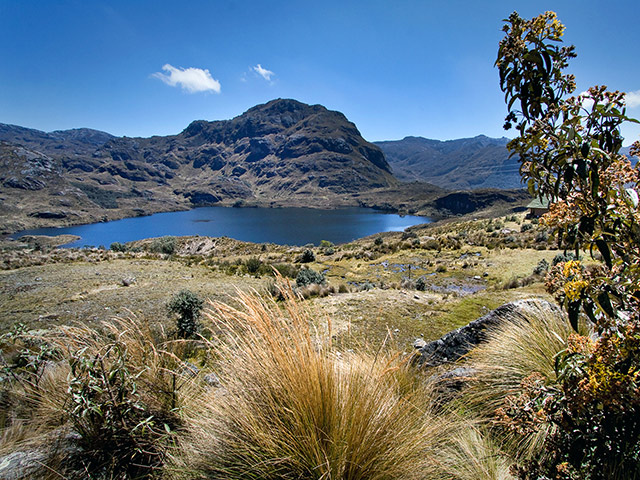
You will be picked up at the hotel at the agreed time. After that will be transferred to the El Cajas National Park, where you can observe the natural beauty of its mountains, lakes and forest quinoa. If required, you can visit the Garden of the Virgin of Cajas, famous for the apparitions of the Virgin Mary to late 90s.
Enjoy a short walk along the Laguna La Toreadora and the visit to the bottom of the park, called Llaviucu, ideal place to observe birds is performed.After we will return to Cuenca.
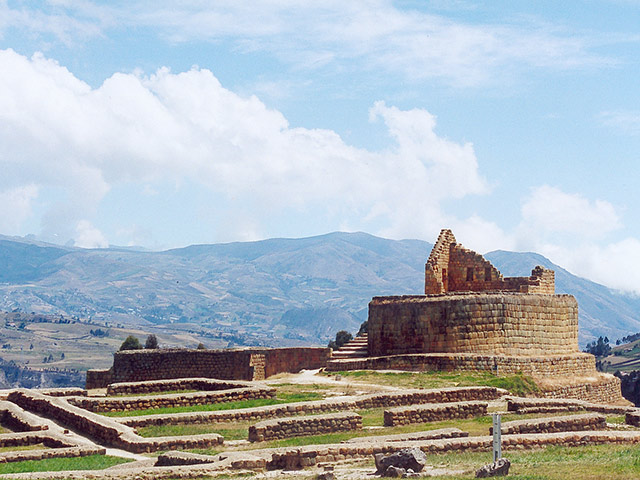
The day starts early in the morning to Ingapirca. Along the way, tourists will have the opportunity to observe craftsmen engaged in weaving straw shawl.
Once in Ingapirca to visit the archaeological complex and museum is made. Our guide will explain the history of our ancestors Canar- Incas and how the complex was built . Walk between the archaeological ruins(Approximately 2 hours. ).
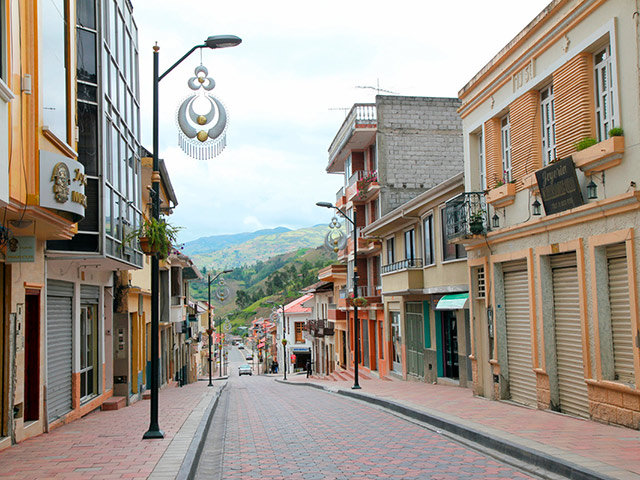
Lunch at Hosteria place. Returning to a stop at Biblian Cuenca , a place where the Church of the Virgen del Rocio, known for its architecture , old and building on top of the mountain is made. After lunch, return to Cuenca, visit the main attractions of the city: Parque Calderon, New and Old Cathedrals and El Barranco, el Puente Roto, a hat factory and Ron Cava de San Miguel (optional - additional cost). Return to hotel.
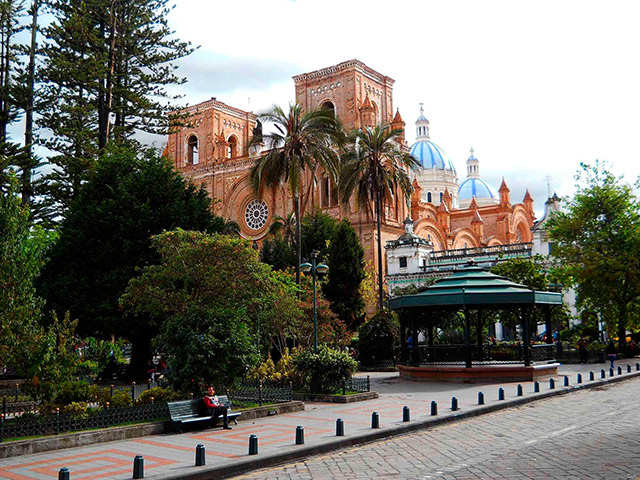
Tour of the historic center on foot . Visit the Calderon Park, the majestic New and Old Cathedrals , Plaza de las Flores , El Barranco , El Puente Roto, Mirador de Turi, with its breathtaking panoramic view of the city.
After this visit we head towards gardens Uzhupud the best hostelry in southern Ecuador, to take lunch. Visit the handicraft villages of Gualaceo and Chordeleg continues. In Gualaceo Central Park, fruit markets and "" pigs "" hornados, typical dish of the area is covered. Visit a craft workshop of the famous "" Macanas "" or "" Shawls IKAT "" typical dress of our Cuencana Chola.
And tour the banks of the Rio Santa Barbara. Tourist is then moved to the town of Chordeleg where you can observe abundance of works in gold, silver, ceramics and wood. Gualaceo and Chordeleg are surrounded by beautiful landscapes and welcoming.
The day begins with the trip to the Cajas National Park, where you can observe the natural beauty of its mountains, lagoons and its quinoa forest. If required, the Garden of the Virgin of Cajas can be visited, well-known for the Virgin Mary's apparitions at the end of the 90s. We take a walk by the Toreadora lagoon. Lunch at a restaurant of the area where you can also observe the fish farming of the region.
After lunch, return to Cuenca where you visit the main tourist attractions of the city: Calderon Park, Old and New Cathedral as well as the Barranco, Puente Roto, a hat factory.
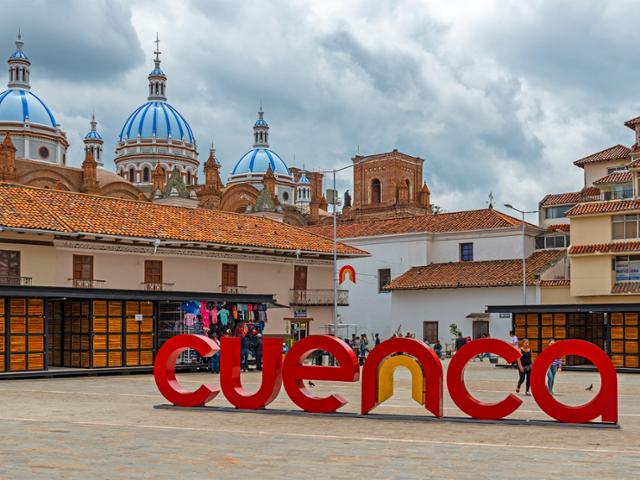
The tour of the beautiful city of Cuenca includes places such as the picturesque and traditional Barrio de San Sebastian, the Museum of Modern Art, the beautiful Plaza de las Flores, and its traditional Central Parkcalled "Parque Calderon," surrounded by important and beautiful buildings such as the Cathedral of the Tabernacle(Old Cathedral), the Cathedral of the Immaculate Conception (New Cathedral), considered the largest in Latin America, the Court of Justice, and other buildings in a French-inspired republican style.
The tour also includes a visit to the famous Homero Ortega Toquilla Straw Hat Factory, where you can see how the finest hats are made. In addition, we tour the "Barranco" where traditional and modern architecture meet the natural environment on the banks of the Tomebamba River. Finally, we arrive at the "Mirador de Turi" from where you can see the landscape of a valley full of red roofs and blue domes framed by imposing mountains.
The neighborhood Las Penas has become a source of inspiration for painters and sculptors, who also choose it to display their creations, we will find the old and restored building where 145 years ago the French musician Antonio Neumane was inspired to compose the music of the National Anthem from Ecuador. The house nestled in the historical Las Penas, which preserves the architecture of this port city where she was born, is now restored and converted into a gallery thanks to the work of local and national authorities to rescue the cultural heritage of the city. In this gallery visitors will find crafts, handicrafts made of wood, ceramic, tagua, leather, coconut and other natural materials, as well as clothing with indigenous models and figures of the legendary painter Oswaldo Guayasamin and appreciated Montecristi hats.
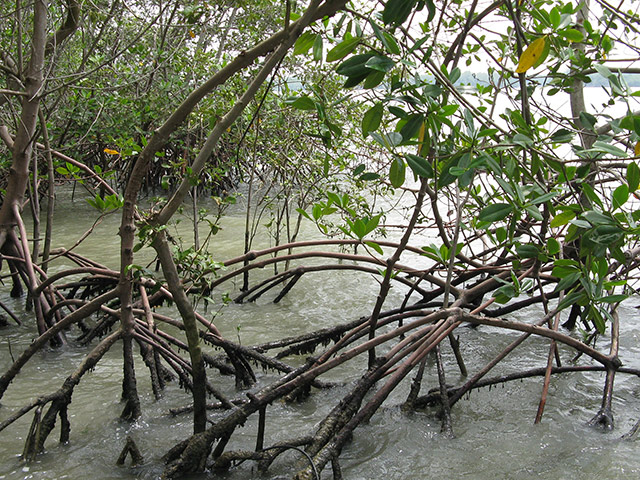
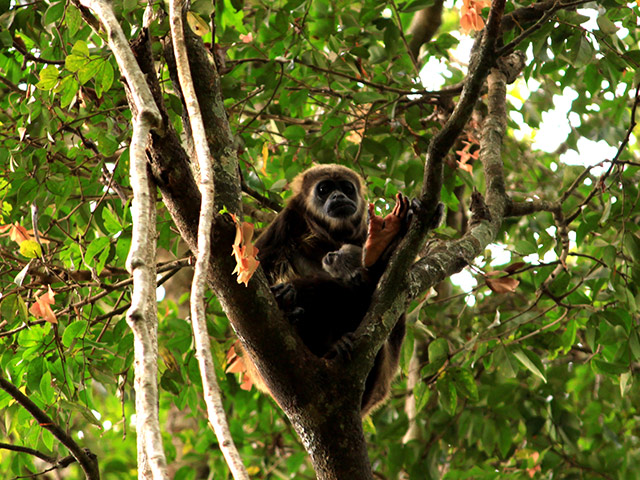
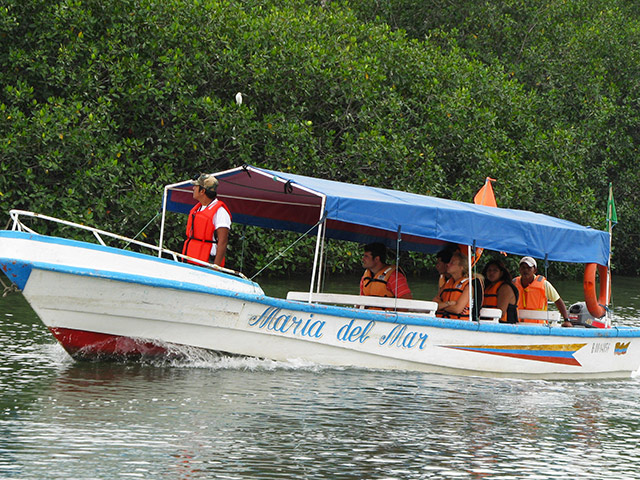
The tour begins visiting Churute The Mangroves Ecological Reserve. Located in the canton Naranjal, Guayas province 40 kilometers from the city of Guayaquil, this reserve is one of the most important in the country due to the amount of freshwater birds that inhabit the site. Upon reaching booking tourists do a canoe trip for 40 minutes in which they can visualize the formation of the largest in the Pacific coast of South America estuary. Then they perform a walk along the path of the Howlers. It is 1.4 kilometers walking through the tropical dry forest and you can see monkeys and birds native to the area. The tour is average.
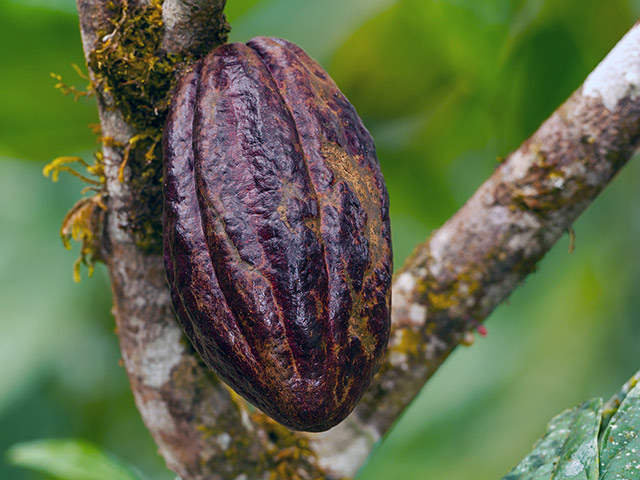
After the visit to Mangroves Churute we went to a farm cocoa plantation where we will learn about the types of planting, a bit of history of the estate, will walk through the plantations and elaborate homemade chocolate. After the tour we expect the typical lunch made with ingredients from the farm.
Tourists will be picked up at the hotel at the agreed time. After that will be moved to a ranch Cacao plantation where they will learn about the types of planting, a bit of history of the estate, will walk through the plantations and have the opportunity of making homemade chocolate. After the tour will receive a typical lunch made with ingredients from the farm. At the end of the tour visitors are transported back to their hotel.
The Churute Mangrove Reserve is located just one hour from the city of Guayaquil. Here you will know one of the best natural treasures of our city. Get to know and learn about community tourism practices and their endeavours to save everyone's resources.
This reserve was created in 1979, covers an area of 49,383 hectares, with the objective of protecting one of the few remaining coastal and tropical mangrove forests in our country, of great importance for biodiversity and conservation. Of income for local communities living directly by catching "mangrove crab" and that is why local conservation efforts to generate more sustainable activities such as community tourism.
We headed to the interpretation centre before entering the park. Here you can find information material such as brochures, maps, and water bottles and insect repellent. We will travel in canoe (approximately 1 hour) through different mangrove rivers; this course aims to observe many species of birds, their interaction in this ecosystem and the economic and ecological importance of this environment.
Then we offer a walk in the woods. Here you can see animals like howler monkeys, squirrels, birds. You learn about plants in the jungle; Its medicinal value, and the differences between endemic plants. You can also enjoy a refreshing swim in one of the waterfalls of the reserve depending on the season (only in the rainy season)
Tourists will be picked up at the hotel at the agreed time. The tour begins by visiting the Seminary Park - popularly called Iguanas Park, for the reptiles that live there; the site has its natural charm, with trees and an artificial pond in which to swim goldfish.
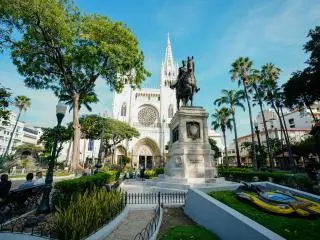
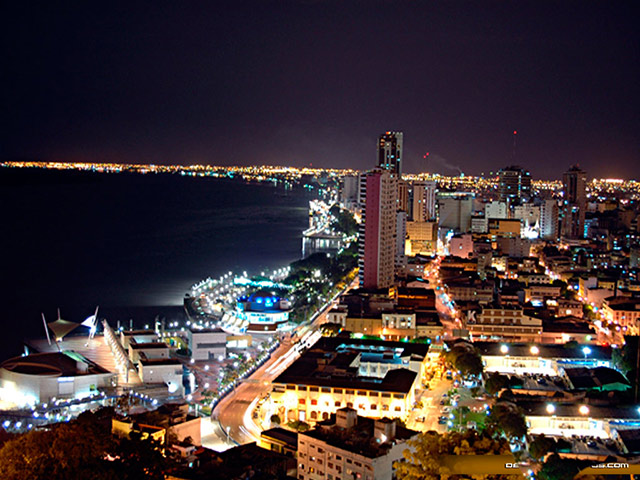
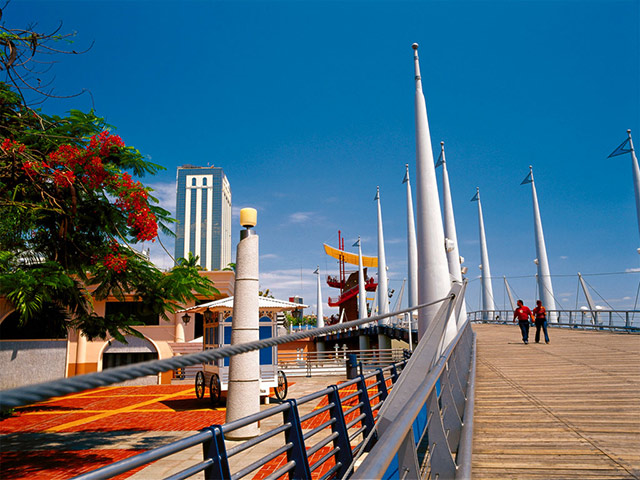
We go to the Metropolitan Cathedral - The cathedral is located where the first mother church of the new city was located. Then we went to the Plaza de Gestion - The passage of Arosemena is one of the urban values of the square. It crosses the Municipal Palace, in a route in which the visitor can admire the cover of iron and glass with decorative glass of color; and the images of the caryatids flash their columns, made by the artist Emilio Soro Lenti. Around it we can see the Nahim Isaias Museum, and monuments such as: A Sucre, La Fragua de Vulcano, the Fountain of Glory and Grace. Morica overlook the tower known as Torre and the monument to Simon Bolivar and San Martin Libertadores - La Rotonda along the Malecon 2000.
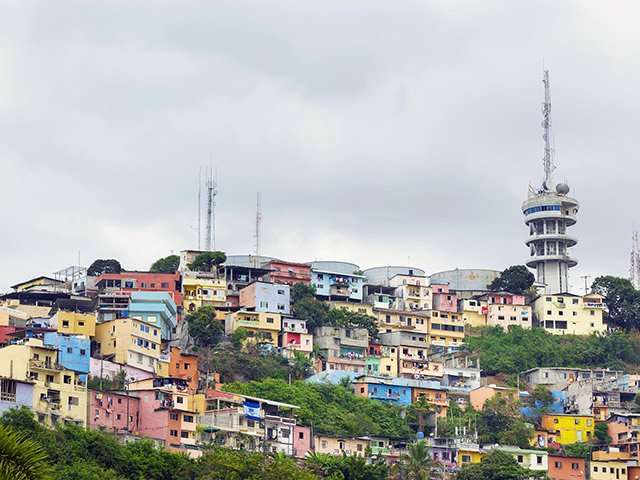
Guayaquil Las Penas - El Cerro Santa Ana is also a tourist area, whose access is through the steps Diego Noboa, which has 444 steps, where there are squares, viewpoints, museums, art Galleries, Craft shops, cafes, bars and restaurants. When arriving to the best tourists you can visit the chapel of Cerro Santa Ana and the lighthouse located at the top of the hill, whose height is 18.75 meters, this is 85.90 meters above sea level, which allows A 360-degree visual tour. It has an interior staircase that leads to a terrace that offers a strategic point from where you can see the city at its best.
Finally, we went to the hillside of the Hill Santa Ana, where is located Colon Fort Fort of Planchada, where at the moment two great arms of the republican time of Ecuador are presented. Once the tour ended the tourists will be transferred back to the hotel.
Tourists will be picked up at the hotel at the agreed time. After that will be transferred to the Puerto El Morro, located 9 km from the spa General Villamil-Beaches and 2 hours from Guayaquil. Despite being a small rural parish this town has kept over the years the secret of possessing extensive natural attractions where visitors can enjoy sightseeing, nature, customs and traditions of its people. It is a magical place that offers adventure and nature, and where you can enjoy the breeze of the estuary, watching dolphins dance and beauty of the mangrove.
Tourists will have the opportunity to go on tourist boats escorted by dolphins found in nature and unique wildlife in the world that cannot be missed to watch. After this you can visit the bird island which is a center for nesting, reproduction and permanent refuge for several species of birds such as pelicans, herons, gulls, blue-footed boobies, pintail, frigates and countless birds. The Bird Island has become a special attraction for ecological tourism, scientific, recreational and adventure. At the end of the tour visitors are transported back to their hotel in Guayaquil.