
7-Day Climb Mt Toubkal
From
US$629.10 ¥4194 €573 C$901 Rs.58753
New customer offer
Save up to $100 on your first order
Sign up to get your coupon
Price a Trip, Book Now
traveler-based
Adult and child counts are sent to the cart for final traveler-based pricing.
Age 0-12
Highlights
Jebel Toubkal, North Africa's highest peak, has captivated mountaineers for centuries. Our ascent up the rocky giant of North Africa - the tallest in the region - is no picnic, but is accessible to anyone in good shape and hungry for a thrilling high-altitude adventure. Traditional Amazigh communities line the route on this trip and you'll have plenty of time to learn their customs through village visits and overnight camping with hearty home-cooked meals. The views on the way up are spectacular, but nothing compares to what you'll see (and feel) at the top.
- Highlights Walk in spectacular mountain scenery, taste delicious local cuisine, camp in the great outdoors, summit the spectacular peak of Mt. Toubkal.
Dates & Prices
Price in USD (per person)
Itinerary
Jebel Toubkal, North Africa's highest peak, has captivated mountaineers for centuries. Our ascent up the rocky giant of North Africa - the tallest in the region - is no picnic, but is accessible to anyone in good shape and hungry for a thrilling high-altitude adventure. Traditional Amazigh communities line the route on this trip and you'll have plenty of time to learn their customs through village visits and overnight camping with hearty home-cooked meals. The views on the way up are spectacular, but nothing compares to what you'll see (and feel) at the top.
Arrive at any time.
If you intend to add the Jardin Majorelle and Yves Saint Laurent Museum activity, please arrive one day prior to ensure sufficient timing.
Today's activities
Meet Your CEO and Group
Your opportunity to meet your CEO and fellow travellers, and learn more about your tour. Opt to join the group for a local meal afterwards. Don't forget to see the notice in the lobby (or ask reception) for the official time and place to meet up with the group.
Duration: 1 hour(s)
4 optional activities
El Badi Palace
Visit the ruins of what was once the most ornate palace of the 16th-century. Its sunken gardens and pools give a glimpse into its former glory.
Admission: approx. MAD 70 per person
Jardin Majorelle and Yves Saint Laurent Museum
One of Marrakech's most iconic sites, Jardin Majorelle was a masterpiece from French artist Jacques Majorelle and later restored by Yves Saint Laurent and Pierre Berge. Take in the beautifully designed botanical gardens, exotic plants, fountains, and the famous cobalt-blue architecture known as "Majorelle Blue". Next, visit the Yves Saint Laurent Museum located next to the striking gardens, dedicated to the life and work of Yves Saint Laurent. The museum showcases a rotating collection of the designer's iconic creations, sketches, photographs, and personal archives, highlighting his connection to Morocco and his influence on fashion and art.
**Please note - This activity cannot be purchased locally due to limited availability and must be confirmed in advance
**Please note - This activity cannot be purchased locally due to limited availability and must be confirmed in advance
Duration: approx. 2-3 hour(s)
Dar Si Said
Standing as a monument to master Moroccan artisans, this complex houses the Museum of Moroccan arts. Here, you will find displays of ancient weaponry, carpets, Amazigh (also known as Berber) jewellery, granary doors and more. Make sure to see the highlight of a visit to this museum, the painted, domed wedding-reception chamber.
Admission: approx. MAD 30 per person
Djemaa el Fna Market Square Visit
Wander past fresh orange juice stalls and water sellers in colourful costumes reminiscent of an era past. See storytellers, magicians, and peddlers of traditional medicines as the day progresses. When the sun sets, the square fills with dozens of food stalls, and is packed with locals, entertaining chefs, and waiters. Grab a spot on a bench with other diners and try the "tanjia" (slow cooked lamb), harira soup, grilled seafood, famous Moroccan couscous, tajine, snails, or even sheep's head (for the truly adventurous). Wash it all down with some spiced tea.
Admission: approx. null 0 per person
Duration: approx. 1-3 hour(s)
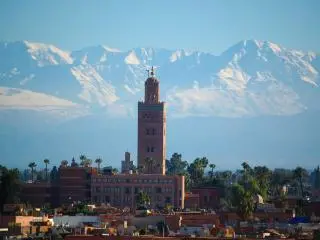
Marrakech, Morocco
Marrakech is a major city in the northwest African nation of Morocco. It is the fourth largest city in the country after Casablanca, Fes and Tangier, and is the capital of the mid-southwestern region of Marrakesh-Tensift-El Haouz.
Toubkal National Park, Morocco
Toubkal National Park is a national park in Morocco.
Transfer to Imi Oughlad and enjoy a long walk up to the Tizi 'n Tacht Pass. Descend into the Azzadene Valley and spend the night at the village of Tizi Oussem.
Leave the plains around Marrakech, wind your way through the Moulay Brahim Gorge and the foothills of the western High Atlas Mountains. Pass the village of Asni to Imi Oughlad, where we meet our mules and muleteers to begin the trekking adventure.
Our trekking mules will carry your larger bags as well as tents and equipment. Luggage is limited to 12kg (26 lbs) per person for the trek and bags must be soft duffle bags or frameless backpacks.
You will carry only your own daypack when trekking (for water, camera, jacket, sunscreen, etc.). Sometimes the mules take a slightly different track at some points, or go faster than we walk. As you may not see them for long stretches, you should be prepared to carry the things you need with you while walking between stops.
Gites are accommodation in family houses, or mountain huts, usually in mountain villages and are very, very simple. If you have this expectation in mind we are sure you will be pleasantly surprised. Sleeping arrangements are multi-share. Matresses are provided. You will need to have your own sleeping bag, sleeping sheet, and bath towel. Bathroom facilities are basic and shared, and hot water is not always available.
Today's activities
Private Vehicle
Settle in and scan the scenery from the convenience of a private vehicle.
Duration: 1.50 hour(s)
High Atlas Trek: Tizi 'n Tacht
Wind your way up past cornfields and woods of juniper and pine to the Tizi N'Tacht pass (2000m/ 1243 ft). Be sure to stop and admire the views back down to Imlil and the Ait Oussaden valley. Descend to the Azzadene Valley, passing red-clay terraced villages to reach the village of Tizi Oussem (1720m/1069 ft) where we stay in a mountain gite for the night.
Duration: 6 hour(s)
Marrakech, Morocco
Marrakech is a major city in the northwest African nation of Morocco. It is the fourth largest city in the country after Casablanca, Fes and Tangier, and is the capital of the mid-southwestern region of Marrakesh-Tensift-El Haouz.
Toubkal National Park, Morocco
Toubkal National Park is a national park in Morocco.
Marrakech, Morocco
Marrakech is a major city in the northwest African nation of Morocco. It is the fourth largest city in the country after Casablanca, Fes and Tangier, and is the capital of the mid-southwestern region of Marrakesh-Tensift-El Haouz.
Today is a full day of walking through villages on the northern slopes of Mt Toubkal.
We stay in another village gite for the night.
Today's activities
Mount Toubkal Trek
Eat a good breakfast because this is a full day of walking that takes us through the villages of this grand valley to high passes with stunning views. Trek over the Tizi N'Tizikert pass (2,930m/9613 ft) and be rewarded with magnificent views over the Mt Toubkal summit, the Tazaghart Pass, and the peak of Taddat (3,800m/12,467 ft). Once refreshed, descend to Armed (1,900m/6,234 ft)).
Duration: 7 hour(s)
Marrakech, Morocco
Marrakech is a major city in the northwest African nation of Morocco. It is the fourth largest city in the country after Casablanca, Fes and Tangier, and is the capital of the mid-southwestern region of Marrakesh-Tensift-El Haouz.
Ascend the beautiful Mizane Valley, passing the shrine of Sidi Chamharouch, before arriving at our Mt Toubkal base camp.
Time permitting, enjoy either a 2-hour optional climb to the summit of Ouanoums (3,650m/11,975 ft) or simply relax at base camp for the night.
For the next two nights, you'll camp in two-person tents near the busy Mt Toubkal refuges, which sit at an altitude of 3,207m/10,522 ft.
Foam mattresses are provided for you to sleep on during our camping. If you would like more comfort, please bring a light weight self-inflating mattress such as a thermarest. Pillows are not provided so you may also wish to bring an inflatable pillow. You will need to bring a sleeping bag and we recommend a lightweight sleeping sheet as well (for extra warmth or for when hot).
Bathroom facilities are "au naturelle", we hide our "hole in the ground" toilet with a tent, and ask that all toilet paper is burnt. You can also make use of the toilets and showers at the base camp refuge, but you will be asked to pay and the camp may be some distance from the refuge.
In addition, please ensure you carry a supply of toilet paper for your comfort.
Today's activities
Mizane Valley Trek
Ascend the beautiful Mizane Valley via the pilgrimage hamlet of Sidi Chamharouch, with the shrine of a marabout (please note that only Muslims may cross the bridge to visit the shrine). From here our trail continues to zigzag steadily upwards to reach the Mt Toubkal base camp. Time permitting, we can either enjoy a 2-hr optional climb to the summit of Ouanoums (3,650m/11,975 ft) or simply relax at our base camp for the night. Tonight we camp in two-person tents near the busy Mt Toubkal refuges, located at an altitude of 3,207m/10,522 ft.
Duration: 5 hour(s)
Marrakech, Morocco
Marrakech is a major city in the northwest African nation of Morocco. It is the fourth largest city in the country after Casablanca, Fes and Tangier, and is the capital of the mid-southwestern region of Marrakesh-Tensift-El Haouz.
Toubkal National Park, Morocco
Toubkal National Park is a national park in Morocco.
Savour the satisfaction of the ascent and the spectacular views across the valleys below when summitting the 4,167m (13,671 ft) Mt Toubkal today. Return to base camp for the night.
Today's activities
Mt Toubkal Summit
Set your alarm early for the start of this challenging trek to the summit of Mt Toubkal. The route ascends through scree fields, over boulders and rocks. The hiking is not too difficult, but the effect of the altitude can make this trek tougher. Take your time, drink lots of water, and rest along the way. Your reward? Once up and over the ridge, the views from the summit and downwards are spectacular! Elevation: Mt Toubkal Base Camp (3207m) - Mt Toubkal summit (4167m)
Duration: 7 hour(s)
Toubkal National Park, Morocco
Toubkal National Park is a national park in Morocco.
Descend to the village of Imlil before travelling back to Marrakech for a free afternoon.
Take advantage of a few hours in the early evening to explore this wonderful city - perhaps for some serious bargaining for souvenirs.
Today's activities
Imlil Trek
The 4-5 hr descent back to Imlil takes a route via Sidi Chamharouch, a small settlement on the side of the mountain. Cross a stream and continue to descend down towards Aroumd (Aremd) and on to Imlil.
Duration: 5 hour(s)
Private Vehicle
Settle in and scan the scenery from the convenience of a private vehicle.
Duration: 1.75 hour(s)
Free Time
Enjoy wandering in the souks, sipping mint tea or just kicking back and enjoying this great city.
4 optional activities
Musee de Marrakech
Wander around the salons of the ornate Mnebhi Palace displaying various collections of Moroccan art forms.
Admission: approx. MAD 50 per person
El Badi Palace
Visit the ruins of what was once the most ornate palace of the 16th-century. Its sunken gardens and pools give a glimpse into its former glory.
Admission: approx. MAD 70 per person
Dar Si Said
Standing as a monument to master Moroccan artisans, this complex houses the Museum of Moroccan arts. Here, you will find displays of ancient weaponry, carpets, Amazigh (also known as Berber) jewellery, granary doors and more. Make sure to see the highlight of a visit to this museum, the painted, domed wedding-reception chamber.
Admission: approx. MAD 30 per person
Djemaa el Fna Market Square Visit
Wander past fresh orange juice stalls and water sellers in colourful costumes reminiscent of an era past. See storytellers, magicians, and peddlers of traditional medicines as the day progresses. When the sun sets, the square fills with dozens of food stalls, and is packed with locals, entertaining chefs, and waiters. Grab a spot on a bench with other diners and try the "tanjia" (slow cooked lamb), harira soup, grilled seafood, famous Moroccan couscous, tajine, snails, or even sheep's head (for the truly adventurous). Wash it all down with some spiced tea.
Admission: approx. null 0 per person
Duration: approx. 1-3 hour(s)
Toubkal National Park, Morocco
Toubkal National Park is a national park in Morocco.
Marrakech, Morocco
Marrakech is a major city in the northwest African nation of Morocco. It is the fourth largest city in the country after Casablanca, Fes and Tangier, and is the capital of the mid-southwestern region of Marrakesh-Tensift-El Haouz.
Toubkal National Park, Morocco
Toubkal National Park is a national park in Morocco.
Depart at any time.
Opt to get up early and catch the sunrise over Marrakech by pre-booking the Hot Air Balloon excursion. Please ensure you allow enough time to return from the activity when planning your onward journey.
Today's activities
Departure Day
Not ready to leave? Your CEO can help with travel arrangements to extend your adventure.
1 optional activities
Hot Air Balloon Marrakech
Get an early start and watch the sunrise over the red dust, palm groves, and majestic open landscapes of Marrakech from a hot air balloon. After soaking up the sights, refuel with an authentic Amazigh breakfast in a Moroccan tent.
Duration: approx. 4 hour(s)
Marrakech, Morocco
Marrakech is a major city in the northwest African nation of Morocco. It is the fourth largest city in the country after Casablanca, Fes and Tangier, and is the capital of the mid-southwestern region of Marrakesh-Tensift-El Haouz.
Toubkal National Park, Morocco
Toubkal National Park is a national park in Morocco.
Includes & Excludes
Price Includes
Price Excludes
Additional Notes
- Trip Specific Responsible Travel Things to consider when trekking
The mountains of Morocco are a relatively sheltered domain. The environment is fragile and the socio-cultural traditions should be respected. We ask that you take note of the following guidelines:
*Trekkers' clothing should be modest (covered shoulders, upper arms and upper legs) especially in or around villages.
*Always ask permission before photographing local people and respect their wishes if they refuse.
*Please do not distribute sweets, pens, money and other items to children as it encourages begging.
*Please do not give medicines to local people without consulting your trek guide.
*Degradable refuse should be safely burnt and the remains buried. Other refuse (tins, bottles, etc) should be carried out of the area to an appropriate place for disposal.
*Crops and plantations should be respected and only dead wood used for fires.
*Water supplies are drawn from local streams, so please limit the use of soaps and detergents and make sure you use those that are biodegradable/eco-friendly. When toileting in the wild, please keep away from water sources.
*Where there is a toilet, please use it. Where there is none, keep away from water sources and make sure you bury your waste. Toilet paper should be used sparingly and be burned and buried safely or taken out of the area for disposal. - Checklist Additional Items:
* Sleeping bag (required)
Cold Weather:
* Long-sleeved shirts or sweater
* Scarf
* Warm gloves
* Warm hat
* Warm layers
* Warm waterproof jacket
Conservative Dress:
* Modest clothing that covers knees and shoulders (Long pants, long skirts, shirts that cover shoulders)
* Shawl or scarf (for temple visits)
Documents:
* Flight info (required) (Printouts of e-tickets may be required at the border)
* Insurance info (required) (With photocopies)
* Passport (required) (With photocopies)
* Vouchers and pre-departure information (required)
* Visas or vaccination certificates (With photocopies)
Essentials:
* Footwear (required) (Closed toe suggested)
* Toiletries (required) (Shampoo, bodywash, soap, etc.)
* Binoculars (optional)
* Camera (With extra memory cards and batteries)
* Cash, credit and debit cards
* Day pack (Used for daily excursions or short overnights)
* Ear plugs
* First-aid kit (should contain lip balm with sunscreen, sunscreen, whistle, Aspirin, Ibuprofen, bandaids/plasters, tape, anti-histamines, antibacterial gel/wipes, antiseptic cream, Imodium or similar tablets for mild cases of diarrhea, rehydration powder, water purification tablets or drops, insect repellent, sewing kit, extra prescription drugs you may be taking)
* Flashlight/torch (Headlamps are ideal)
* Fleece top/sweater
* Hat
* Headphones (Noise-cancelling recommended)
* Locks for bags
* Long pants/jeans
* Moneybelt
* Outlet adapter
* Personal entertainment (Reading and writing materials, cards, music player, etc.)
* Reusable water bottle
* Shirts/t-shirts
* Sleepwear
* Small travel towel
* Sunglasses
* Swimwear
* Watch and alarm clock
* Waterproof backpack cover
* Windproof rain jacket
Health & Safety:
* Face masks (Clients will be only be required to wear a face mask where it is mandated by local regulations.)
* Hand sanitizer
* Pen (Please bring your own pen for filling out documents.)
Hiking/Trekking:
* Gloves
* Hat
* Hiking boots/sturdy walking shoes
* Hiking pants (Convertible/Zip-off and quick dry recommended)
* Snacks (Protein bars, chocolate, dried fruits, candies, energy sweets)
* Socks (Trekking socks - woollen or synthetic, not cotton)
* Thermal base layer (Woollen or synthetic, not cotton)
* Walking poles (Highly recommended)
Note: Please note a three season sleeping bag is recommended,
Note: The best clothing for trekking is either wool or synthetic materials in layers, as this is quick-drying and can keep heat in better. We suggest a base-layer, then a mid-layer such as a light fleece jacket or similar, then a windproof and waterproof layer. - Group Size Notes Max 12, Avg 10.
- International Flights No, international flights are generally not included in the price of your tour.
However, on some tours travelling between two different countries, international flights are included as part of the itinerary and price of the tour. Please speak to your GCO or booking agent for further details.
In addition, check-in times and baggage allowances/restrictions vary by airline and can change at any time. For the most up-to-date information for your flight, please contact your airline. We recommend checking in online in advance to avoid potential delays at the airport. - Optional Activities Marrakech
- El Badi Palace (70MAD per person)
- Jardin Majorelle and Yves Saint Laurent Museum
- Dar Si Said (30MAD per person)
- Djemaa el Fna Market Square Visit (Free)
- Musee de Marrakech (50MAD per person)
- Hot Air Balloon Marrakech - Packing Note Please note a three season sleeping bag is recommended,
- Start / Finish ex Marrakech
Policies
Minimum Age You must be 18 to travel unaccompanied on a TakeTours tour. For minors travelling with a guardian over 21 years old, the minimum age is 12.
Q & A
Popular FAQs
Walk in spectacular mountain scenery, taste delicious local cuisine, camp in the great outdoors, summit the spectacular peak of Mt. Toubkal.
The information in this trip details document has been compiled with care and is provided in good faith. However it is subject to change, and does not form part of the contract between the client and the operator. The itinerary featured is correct at time of printing. It may differ slightly to the one in the brochure. Occasionally our itineraries change as we make improvements that stem from past travellers, comments and our own research. Sometimes it can be a small change like adding an extra meal along the itinerary. Sometimes the change may result in us altering the tour for the coming year. Ultimately, our goal is to provide you with the most rewarding experience. Please note that our brochure is usually released in November each year. If you have booked from the previous brochure you may find there have been some changes to the itinerary.
VERY IMPORTANT: Please ensure that you view a final copy of your Trip Details a couple of days prior to travel, in case there have been changes that affect your plans.
VERY IMPORTANT: Please ensure that you view a final copy of your Trip Details a couple of days prior to travel, in case there have been changes that affect your plans.
While it is our intention to adhere to the route described below, there is a certain amount of flexibility built into the itinerary and on occasion it may be necessary, or desirable to make alterations. The itinerary is brief, as we never know exactly where our journey will take us. Due to our style of travel and the regions we visit, travel can be unpredictable. The Trip Details document is a general guide to the tour and region and any mention of specific destinations or wildlife is by no means a guarantee that they will be visited or encountered. Aboard expedition trips visits to research stations depend on final permission.
Additionally, any travel times listed are approximations only and subject to vary due to local circumstances.
Additionally, any travel times listed are approximations only and subject to vary due to local circumstances.
Please note that if you are travelling to Morocco between November and February, your tour will have a level of flexibility based off of winter weather conditions on roads in the mountains. Heavy snow is not uncommon, so plan on packing warmer clothing to suit conditions.
TREKKING AND CAMPING
Our trekking mules will carry your larger bags as well as tents and equipment. Luggage is limited to 12kg per person for the trek, and bags must be soft duffle bags or frameless backpacks. Any additional luggage you bring with you can be left in storage at the hotel in Marrakech (at your own risk) - come prepared with an additional bag for this. You will carry only your daypack when trekking - for water, camera, jacket, sunscreen, etc. It can be that sometimes the mules take a slightly different track at some points, or go faster, and you might not see them for long stretches so it is best not to rely on mules carrying the things you need with them between stops.
Foam mattresses are provided for you to sleep on during our camping. If you would like more comfort please bring a light weight self inflating mattress such as a thermarest. Pillows are not provided so you may also wish to bring an inflatable pillow. You will need to bring a sleeping bag (3-4 season depending on time of year) and we recommend a lightweight sleeping sheet as well (for extra warmth or for when hot).
As you will be trekking through remote areas, washing and toilet facilities are basic and may be limited, if non-existent. The toilet facilities are usually squat toilets, and in two locations it's back to nature for the bathroom facilities. Most often only cold water is available. Should heating facilities be available, you may have to pay a small additional charge for this to cover costs of the gas used to heat the water.
Hiking Poles can be rented locally, please speak to your tour leader on arrival and they can help you arrange this.
WEATHER
Please note that the climate in Morocco can be both very hot during the day in summer months (up to 50degC) and cold at night in the mountains in autumn, early spring and winter (down to -6degC). Summer months, from April to September are very hot throughout Morocco. Winter months November to March can be cool to cold, especially in the Atlas Mountains, with high probability of snowfall. Most Moroccan buildings are not equipped with heating, so without proper layers you will be cold at night. Please bring appropriate clothing for the months in which you are travelling and check temperatures before you leave. Bedding is provided in the desert camp and the gite, but in winter months if you feel the cold you may wish to bring a sleeping bag too.
RAMADAN
According to the lunar cycle, Ramadan will fall between Feb 8 - Mar 8, 2027. Please note that Ramadan is a month of fasting observed by Muslims throughout the world, during which time the followers of Islam should not eat or drink between sunrise and sunset. There may be some limitations to services and disruptions to schedules during Ramadan, but generally our tours still operate effectively during this period and food is available to non-Muslims throughout the day. It is very important to display increased cultural sensitivity during Ramadan. Please wear loose fitting clothes, that cover knees and shoulders, and try to avoid eating, drinking or smoking in public out of respect for those who can't at that time.
DRINKING WATER: It is advisable to drink bottled water in Morocco.
AID AL-ADHA
During your visit to this country, we would like to inform you about an important celebration called Aid Al-Adha. This holiday may impact your travel experience, as most shops and restaurants are closed during the celebration. Some of the historical places we visit might also be closed during this time. There will be a shorter number of staff at the hotels and less crowded streets on the day of the celebration.
**If you confirmed the My Own Room service, please see the FAQs for exception nights**
This TakeTours group trip is accompanied by one of our group leaders, otherwise known as a Chief Experience Officer (CEO). As the group coordinator and manager, the aim of the CEO is to take the hassle out of your travels and to help you have the best trip possible. You can expect them to have a broad general knowledge of Morocco, including historical, cultural, religious and social aspects. They will also offer suggestions for things to do and to see, recommend great local eating venues and introduce you to our local friends.
We also use certified local city guides where we think more specific knowledge will add to the enjoyment of the places we are visiting - we think it's the best of both worlds.
On this specific trip, your CEO will be an experienced mountain guide.
We also use certified local city guides where we think more specific knowledge will add to the enjoyment of the places we are visiting - we think it's the best of both worlds.
On this specific trip, your CEO will be an experienced mountain guide.
Max 12, Avg 10.
6 breakfasts, 4 lunches, 4 dinners
On this tour many of your meals are included. You can expect simple, healthy seasonal food. Breakfast is typically bread, jam, cheese, sometimes eggs, accompanied by tea/coffee. Lunches are usually salads sometimes with eggs or tinned fish, always with bread. Dinners usually start with a soup followed by tagine,rice or pasta dishes, again with plenty of bread.
We are able to cater for vegetarians. Please advise us of any other special dietary issues at time of booking.
You are accompanied by a cook who, together with your CEO and mule handlers, will prepare your hearty meals during your trek. If you'd like to lend a hand and learn some of the local techniques, you are more than welcome!
Water and other drinks are at your own expense. Your CEO will give advice about the quantity of water to take at the start of the tour, and availability of additional supplies during the trek.
Private air-conditioned van, walking.
On this trip we will travel by private van between Marrakech and Armed and on foot in the mountains on trekking days.
We believe solo travellers should not have to pay more to travel so our group trips are designed for shared accommodation and do not involve a single supplement. Single travellers joining group trips are paired in twin or multi-share accommodation with someone of the same sex for the duration of the trip. Some of our Independent trips are designed differently and solo travellers on these itineraries must pay the single trip price.
Hotels (2 nts), mountain gites (2 nts), camping (2 nts, 2-man tents).
Nights 2 and 3: local mountain gites.
Please note on nights 4 and 5 MORs are available, but on occasion, due to the weather, the group may spend the night inside the auberge, when this happens no MORs are available inside the auberge.
Please note on nights 4 and 5 MORs are available, but on occasion, due to the weather, the group may spend the night inside the auberge, when this happens no MORs are available inside the auberge.
Local mountain gites:
Gites are accommodation in family homes, or mountain huts, usually in mountain villages and are very, very simple. If you have this expectation in mind we are sure you will be pleasantly surprised. Sleeping arrangements are multi-share. Mattresses are provided. You will need to have your own sleeping bag and sleeping sheet, and bath towel. Bathroom facilities are basic and shared. Hot water is often not available. You will enjoy delicious homemade dinners of local produce, dining in a traditional manner, often sitting on the floor in a cozy salon.
Camping:
We sleep in modern two person tents which are easy to set up. Foam mattresses are provided for you to sleep on during our camping. If you would like more comfort please bring a light weight self-inflating mattress such as a thermarest. Pillows are not provided so you may also wish to bring an inflatable pillow. You will need to bring a sleeping bag and we recommend a lightweight sleeping sheet as well (for extra warmth or for when hot). Bathroom facilities are "au naturelle" We will hide our "hole in the ground" toilet with a tent, and ask that all toilet paper is burnt. You can also make use the toilets and showers at the Toubkal refuge, but you will be asked to pay and often the camp is some distance from the refuge. Don't forget your flashlight/torch. Those worn as "headlamps" are especially useful.
Hotel:
In Marrakech we will stay in a local hotel in the new town. This is approximately a 25 minute walk to the central medina.
Please note that Morocco is a developing country and as such the infrastructure is not as reliable as you would expect at home. Expect quirky plumbing and the odd cold shower!
For details of your joining hotel please refer to your tour voucher, TakeTours Account, the TakeTours App or contact your travel agent.
If you would like to book an airport Arrival transfer for your tour, please contact our Sales Team or your Travel Agent in advance of travel.
If you have paid in advance for an arrival transfer, a TakeTours representative will be at the airport (outside of Terminal 2) to meet you. If for any reason you are not met at the airport, please call our local support line. If you are unable to make contact for whatever reason, please make your way to the joining point hotel via taxi.
Please note that day 1 is an arrival day and no activities have been planned on this day.
Upon arrival to your Joining Hotel (note that check-in time will be in the afternoon), look for a note or bulletin board in the reception with a note from your CEO. This note will give the details of your Welcome Meeting on day 1 (usually between 5pm and 7pm), where you will get a chance to meet your CEO and other travellers, as well as learn more about how the tour will run. If you don't see a note, please ask reception for details!
If you are arriving later and will miss the Welcome Meeting, your CEO will leave a note at reception for you with any information you may need, and with morning instructions for the next day.
We are able to organize extra accommodation post-trip should you require it, as well as departure transfer. Please inquire at the time of booking.
If you'd like to book a departure transfer from Marrakech Hotel to Casablanca International Airport, please choose an 8am shuttle option for flights departing after 14:30, and a 13:30 shuttle option for flights departing after 19:30.
For departure to Marrakech International Airport: a taxi will cost spproximately MAD150. Ask the Hotel staff or your CEO for help in arranging a taxi.
For departure to Casablanca: Take the train from Marrakech to Casablanca. The train service is comfortable and fast (approx 3hrs 10 mins to Casablanca city centre and 4hrs 40 minutes to the airport). It is probably best to go to the Marrakech station and buy your ticket the day before travel. Ask your CEO if you need any advice.
Please note that Casablanca Airport is directly served by train so if you are going to the airport make sure you buy tickets to Casablanca Mohammed V Airport (approx MAD200 first class).
To give you sufficient time to catch your plane, please do not book a flight home which departs before 13:00 at the absolute earliest
Take a petit taxi from the hotel to the Gare (train station) in Marrakech (approx MAD20, may be more with luggage).
You will be on the move a lot, so our advice is to pack as lightly as possible. We highly recommend using a backpack or light sports bag, whichever you find easiest to carry, plus a small daypack. Luggage space on public transport is limited.
Additional Items:
* Sleeping bag (required)
Cold Weather:
* Long-sleeved shirts or sweater
* Scarf
* Warm gloves
* Warm hat
* Warm layers
* Warm waterproof jacket
Conservative Dress:
* Modest clothing that covers knees and shoulders (Long pants, long skirts, shirts that cover shoulders)
* Shawl or scarf (for temple visits)
Documents:
* Flight info (required) (Printouts of e-tickets may be required at the border)
* Insurance info (required) (With photocopies)
* Passport (required) (With photocopies)
* Vouchers and pre-departure information (required)
* Visas or vaccination certificates (With photocopies)
Essentials:
* Footwear (required) (Closed toe suggested)
* Toiletries (required) (Shampoo, bodywash, soap, etc.)
* Binoculars (optional)
* Camera (With extra memory cards and batteries)
* Cash, credit and debit cards
* Day pack (Used for daily excursions or short overnights)
* Ear plugs
* First-aid kit (should contain lip balm with sunscreen, sunscreen, whistle, Aspirin, Ibuprofen, bandaids/plasters, tape, anti-histamines, antibacterial gel/wipes, antiseptic cream, Imodium or similar tablets for mild cases of diarrhea, rehydration powder, water purification tablets or drops, insect repellent, sewing kit, extra prescription drugs you may be taking)
* Flashlight/torch (Headlamps are ideal)
* Fleece top/sweater
* Hat
* Headphones (Noise-cancelling recommended)
* Locks for bags
* Long pants/jeans
* Moneybelt
* Outlet adapter
* Personal entertainment (Reading and writing materials, cards, music player, etc.)
* Reusable water bottle
* Shirts/t-shirts
* Sleepwear
* Small travel towel
* Sunglasses
* Swimwear
* Watch and alarm clock
* Waterproof backpack cover
* Windproof rain jacket
Health & Safety:
* Face masks (Clients will be only be required to wear a face mask where it is mandated by local regulations.)
* Hand sanitizer
* Pen (Please bring your own pen for filling out documents.)
Hiking/Trekking:
* Gloves
* Hat
* Hiking boots/sturdy walking shoes
* Hiking pants (Convertible/Zip-off and quick dry recommended)
* Snacks (Protein bars, chocolate, dried fruits, candies, energy sweets)
* Socks (Trekking socks - woollen or synthetic, not cotton)
* Thermal base layer (Woollen or synthetic, not cotton)
* Walking poles (Highly recommended)
Note: Please note a three season sleeping bag is recommended,
Note: The best clothing for trekking is either wool or synthetic materials in layers, as this is quick-drying and can keep heat in better. We suggest a base-layer, then a mid-layer such as a light fleece jacket or similar, then a windproof and waterproof layer.
Laundry facilities are offered by some of our hotels for a charge. There will be times when you may want to or have to do your own laundry so we suggest you bring non-polluting/biodegradable soap.
All countries require a valid passport (with a minimum 6 months validity). Contact your local embassy or consulate for the most up-to-date visa requirements, or see your travel agent. It is your own responsibility to have the correct travel documentation. Visa requirements for your trip will vary depending on where you are from and where you are going. We keep the following information up to date as far as possible, but rules do change and sometimes without warning. While we provide the following information in good faith, it is vital that you check the information yourself and understand that you are fully responsible for your own visa requirements.
Please be aware that visa requirements vary by nationality; citizens of certain countries, such as South Africa, may be subject to additional documentation requests. Since these official requirements are determined on a case-by-case basis and can be unpredictable, we strongly recommend applying for your visa well in advance. Should the embassy or consulate request further supporting documents, please contact us immediately for assistance.
Visa information specific to your destination and nationality can be found in our Important Pre-Departure Information page here
REGIONAL INFORMATION.
Climate:
The climate in Morocco is Mediterranean along the coast, becoming more extreme towards the interior of the country. The winter months are from October to March and are characterized by cold nights and pleasant days. Summer is from April to September and starts off very pleasantly with moderate temperatures until mid-June when temperatures get extremely hot, to return to more moderate heat in late September. Inland, the climate is very dry and high temperatures predominate during the day for most of the year, except in the higher mountain areas. It rains generally only in short bursts in the period from the beginning of November until March.
Electricity:
Morocco uses 220V, 50Hz and plugs are two prong rounded (as for Europe).
Languages:
Arabic is the official language of Morocco, spoken in the distinctive Moroccan dialect. Approximately 40% of the population (mainly in rural areas) speak Amazigh (or Berber) in one of its three different dialects (Tarafit, Tashelhiyt and Tamazight). French is Morocco's unofficial second language and is taught universally, serving as the country's primary language in economics and commerce, as well as being widely used in education and government. Many Moroccans in the north of the country speak Spanish and English is widely spoken in tourist areas.
Capital city: Rabat
Principal ethnic groups: 30% Arab, 60% Amazigh
Religion: Islam is the official state religion with almost the entire population being Sunni Muslim. 1% are Christian and about 0.2% are Jewish.
Every traveller is different and therefore spending money requirements will vary. Some travellers may drink more than others while other travellers like to purchase more souvenirs than most. Please consider your own spending habits when it comes to allowing for drinks, shopping and tipping. Please also remember the following specific recommendations when planning your trip.
The local currency in Morocco is the Moroccan Dirham (MAD).
ATMs are very common in Morocco with Cirrus and Plus system cards are the most widely accepted debit cards. .While ATMs are commonly available, there are no guarantees that your credit or debit cards will actually work - it is important you check with your bank before departure and advisable to travel with more than one type of card.
Visa cards are the most widely accepted credit cards, but are generally only useful for larger/expensive purchases. You should be aware when purchasing products or services on a credit card, that a fee usually applies.
The foreign currency most commonly accepted in Morocco is the Euro. You will be able to exchange Euros, as well as GBP and USD at money exchange offices in major cities.
Do not rely on credit or debit cards as your only source of money. A combination of cash (Euro/GBP or USD) and cards is best.
As currency exchange rates can fluctuate often we ask that you refer to the following website for daily exchange rates: www.xe.com
Please also make sure you have access to at least an additional USD $200 (or equivalent) as an 'emergency' fund, to be used when circumstances outside our control (ex. a natural disaster) require a change to our planned route. This is a rare occurrence!
Usually included in your ticket, check with your air travel agent.
Tipping is a way of life in Morocco. Locals themselves will usually tip anyone who provides them with services. In many cases, people depend on the tips they receive to supplement the low salary and wages of Morocco.
While on tour in Morocco, it is customary and even expected to tip small service providers such as restaurant and bar waiters, hotel staff, reception, cleaning personnel, bell boys, taxis and van drivers. Tips are regarded as an essential means of supplementing income for those working in the tourism industry.
To make things as easy as possible and avoid embarrassing situations, TakeTours has developed a tipping kitty system where your CEO will collect a contribution from everybody at the start of your tour and use this kitty to tip anybody who has provided services to the group as a whole. On Day 1 of your tour, your CEO will be able to advise on the amount required from everybody to form the tipping kitty for your trip. (this does not include your TakeTours CEO). You can pay in USD or the equivalent local currency (preferably local currency MAD). The CEO will be able to advise you on the exchange rate and the total required in either currency.
If at any time you feel that any service provider failed in maintaining or delivering good service, please bring it immediately to the attention of your CEO so a deduction of tips can take place.
At the end of your trip if you felt that your TakeTours CEO did an outstanding job, tipping is also expected and appreciated. The precise amount is entirely a personal preference, however $8-11 USD per person per day can be used as a general guideline.
Marrakech
- El Badi Palace (70MAD per person)
- Jardin Majorelle and Yves Saint Laurent Museum
- Dar Si Said (30MAD per person)
- Djemaa el Fna Market Square Visit (Free)
- Musee de Marrakech (50MAD per person)
- Hot Air Balloon Marrakech
- El Badi Palace (70MAD per person)
- Jardin Majorelle and Yves Saint Laurent Museum
- Dar Si Said (30MAD per person)
- Djemaa el Fna Market Square Visit (Free)
- Musee de Marrakech (50MAD per person)
- Hot Air Balloon Marrakech
Please note inoculations may be required for the country visited. It is your responsibility to consult with your travel doctor for up to date medical travel information well before departure.
There are no specific health requirements for this trip. However, we recommend protection against typhoid, tetanus, infectious hepatitis and polio. You should consult your doctor for up-to-date medical travel information before departure. We recommend that you carry a First Aid kit, hand sanitizers / antibacterial wipes as well as any personal medical requirements. Please be aware that we are in remote areas and away from medical facilities for some time during this trip, and for legal reasons our leaders are prohibited from administering any type of drug including headache tablets, antibiotics, etc.
Please note that your adventure travels to high altitude. This is medically defined as anything over 8,000ft (2,440m). Most people can travel to 8,000ft with minimal effects. However, everyone reacts to altitude differently and altitude sickness can on set with some people irrespective of fitness and age. For details on how to best prepare and what to do in the unlikely event you are affected on your adventure, please consult your physician.
Many national governments provide a regularly updated advice service on safety issues involved with international travel. We recommend that you check your government's advice for their latest travel information before departure. We strongly recommend the use of a neck wallet or money belt while travelling, for the safe keeping of your passport, air tickets, travellers' cheques, cash and other valuable items. Leave your valuable jewellery at home - you won't need it while travelling. Many of the hotels we use have safety deposit boxes, which is the most secure way of storing your valuables. A lock is recommended for securing your luggage. When travelling on a group trip, please note that your CEO has the authority to amend or cancel any part of the trip itinerary if it is deemed necessary due to safety concerns. Your CEO will accompany you on all included activities. During your trip you will have some free time to pursue your own interests, relax and take it easy or explore at your leisure. While your CEO will assist you with options available in a given location please note that any optional activities you undertake are not part of your itinerary, and we offer no representations about the safety of the activity or the standard of the operators running them. Please use your own good judgment when selecting an activity in your free time. Although the cities visited on tour are generally safe during the day, there can be risks to wandering throughout any major city at night. It is our recommendation to stay in small groups and to take taxis to and from restaurants, or during night time excursions.
Protests and Demonstrations- Protests and demonstrations, even those that are well intended, have the potential to turn violent with no warning. Counter protests can also turn violent. Action by security forces to disperse demonstrators and protesters may occur at any time. If you are in an area where demonstrators or protesters are gathering, avoid the temptation of staying for a good photo opportunity and leave the area immediately.
Water based activities have an element of danger and excitement built into them. We recommend only participating in water based activities when accompanied by a guide(s). We make every reasonable effort to ensure the fun and adventurous element of any water based activities (in countries with varying degrees of operating standards) have a balanced approach to safety. It is our policy not to allow our CEOs to make arrangements on your behalf for water based activities that are not accompanied by guide(s). Swimming, including snorkeling, is always at your own risk.
We take all prudent measures in relation to your safety. For ways to further enhance your personal safety while traveling, please visit:
https://www.taketours.com
No matching FAQ found.
Customer Q & As
Ask a QuestionReviews
Please post your review to earn 100 points and help other travelers make confident decisions.
Photos
Upload Your Trip Photos & Earn Rewards
Upload 3 or more approved trip photos and earn 300 Loyalty
Points.
Selected photos may receive an additional 200 point bonus.
Maximum photo reward per tour: 500 points.
Please check the Loyalty Program FAQ for more information.