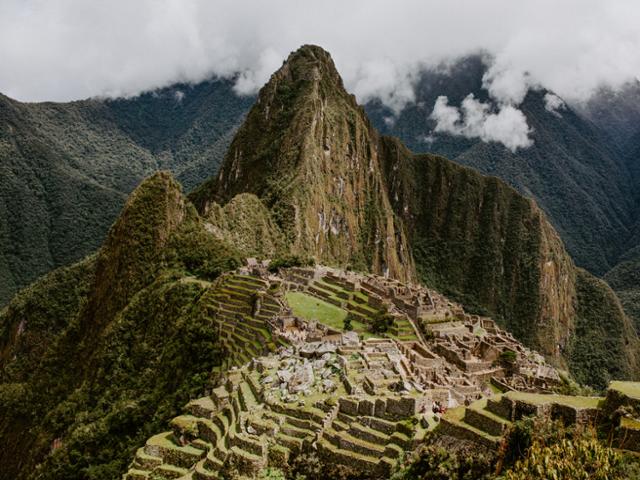
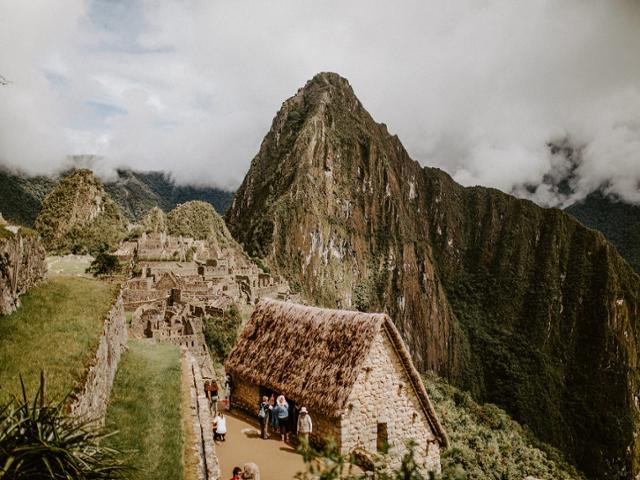
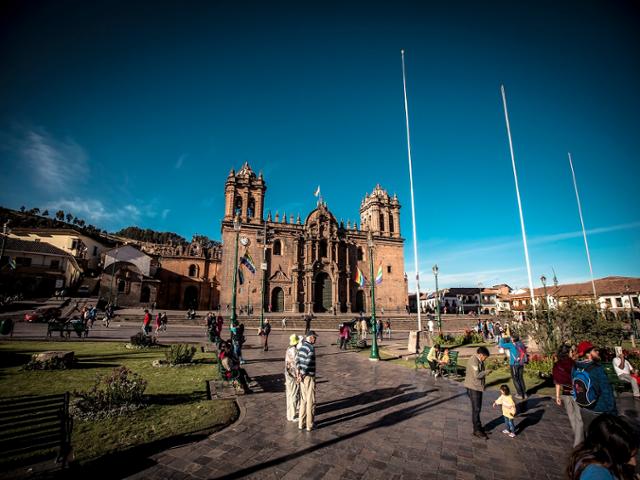
This exciting five-hour tour offers a glimpse into how great the capital of the Incas was and just how much was lost when it was conquered.
Highlights
Perfect introduction for first-time visitors.
Marvel at Coricancha religious complex
Unearth the riches of the Inca Empire with this tour.
Head uphill to the mega fortress of Sacsayhuaman.
Learn about Cusco history with this activity.
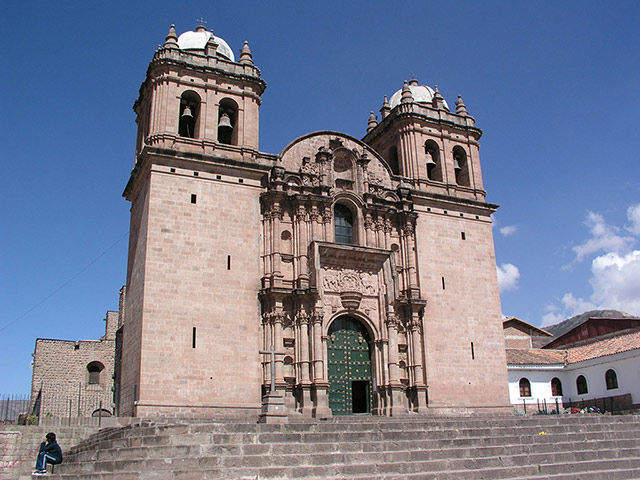
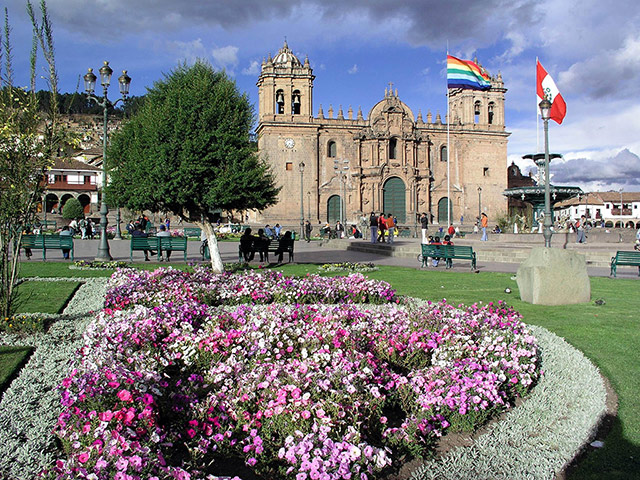
The tour starts with a visit to Santo Domingo Convent, a large Renaissance-baroque complex, which was built over the Inca Coricancha temple. It was one of the most important temples dedicated to worshipping the sun, and its foundations are still prominent at the base of the convent. Ancient chronicles say the temple was covered in gold leaf. Then, visit the Cathedral at the Main Square.
Head uphill to the mega fortress of Sacsayhuaman, which was built from large polished rocks and protected the entrance to the city. Continue to the ritual sites of Kenko, where sacrifices are believed to have taken place, and Tambomachay, where water was worshipped as a sacred element.
Then finally visit Puka Pukara (Red fortress in Quechua) an Inca military complex located on a prominent hill. Its dwellings, squares, bathrooms, aqueducts, walls, and towers can still be appreciated.
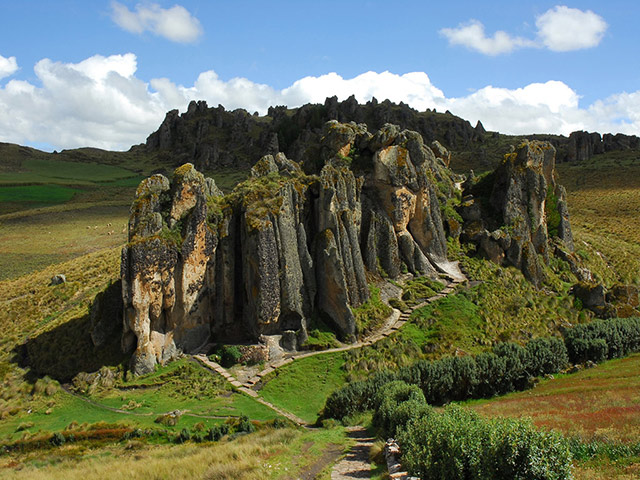
Visit Cumbemayo complex, discovered in 1937, it is surrounded by an interesting stone forest that seems to mimic the silhouettes of pious friars (for which it is popularly called ''frailones'' or giant friars). In addition, you find the Aqueduct (1000 B.C.), a unique work of hydraulic engineering, the Sanctuary, a cliff that looks like a giant human head, and the Caves, which include cave paintings and carvings.
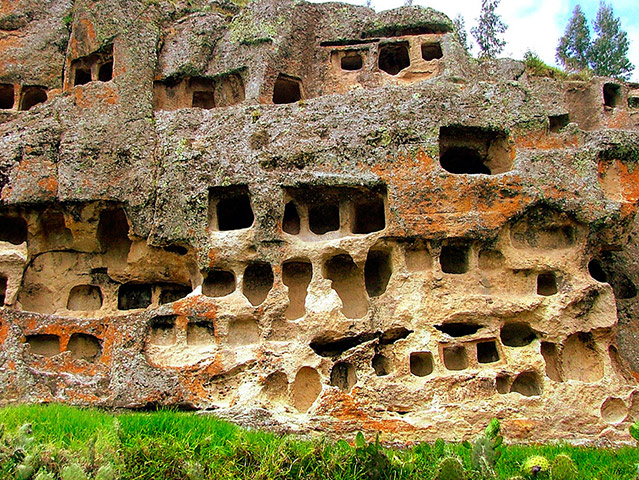
Visit the Ventanillas de Otuzco, located just 7 km. from the city, standing out amidst the countryside. The site is a pre-Inca cemetery which pre-dates the Caxamarca culture, probably influenced by the Wari empire. Hundreds of galleries and individual niches resembling windows were hewn into the volcanic stone. The niches probably were originally sealed with gravestones carved with figures in haut-relief, judging by fragments found nearby. The niches lead into a network of dark and mysterious galleries which appear to have no end, giving rise to myths of secret tunnels that linked Cajamarca to Cuzco. At the end of the visit, transfer back to the HOTEL.
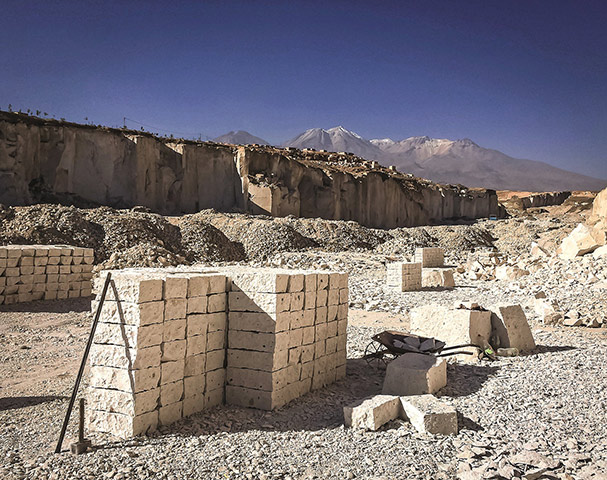
Today you will be picked up from your hotel to enjoy the Sillar Route and discover the impressive Anashuayco Quarries, located a few minutes from the city of Arequipa, where hundreds of men and youngsters extracted the white volcanic rock -called sillar- with which much of the city is built. You can enjoy watching the extraction of quarry stones, while beautiful natural landscape surrounds you. After the visit, you will be taken back to your hotel. The tour can be done in the morning or afternoon.
This excursion includes a visit to the Lady of Ampato or Juanita Mummy at "Santuario de Altura del Sur Andino" Museum in the Santa Maria Catholic University of Arequipa. This mummified female was found on the Mount Ampato and dates back from the Inca times. She was sacrificed at 14 years old to honor the Apus over 500 years ago. She was buried with jewelry, food and pottery. The body of the Mummy Juanita is the best preserved pre-hispanic mommy on the planet. Her discovery amazes the science due to her perfect state of preservation.
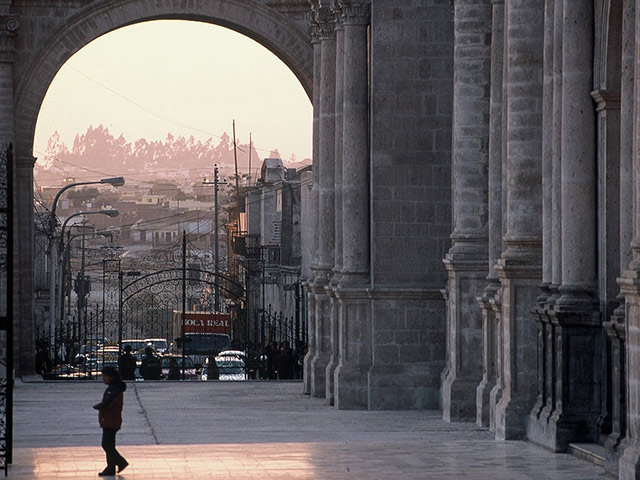
Begin your tour of Arequipa and Santa Catalina Monastery on a high at the majestic Mirador de Carmen Alto, located across the Chilli River, where you can have a panoramic view of Arequipa. You will continue to the exclusive and traditional neighbourhood of Yanahuara, surrounded by streets built with cobblestones and where one of the flagship churches of Cuzco mestizo baroque was built in 1750.
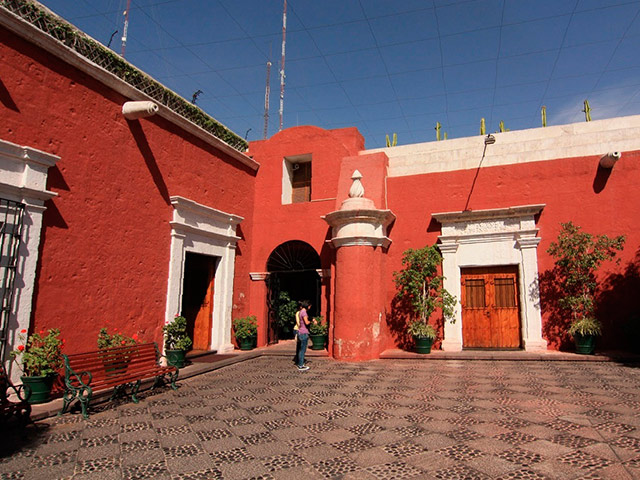
From here, you will head downtown to visit the Plaza de Armas (undoubtedly one of the most beautiful in its genre), the Jesuit Church of the Compania de Jesus (1590), see the Cathedral from outside (built in the 17th century and completely rebuilt after several earthquakes) and the Monastery of Santa Catalina (Saint Catherine) an enclosed religious town that remains in use to this day. The monastery belongs to the nuns of the Dominican Second Order. It is built mostly in the Mudejar style, and is notable for its colourfully painted walls.
The monastery was founded by Maria de Guzman, a rich widow, and the tradition suggested that the second son or daughter of a family would enter the service of the Church. This monastery accepted mostly women from upper-class Spanish families who would pay a dowry for admission. The monastery came to house a maximum of 450 people, between nuns and servants.
Begin your tour of Arequipa and Santa Catalina Monastery on a high at the majestic Mirador de Carmen Alto, located across the Chilli River, where you can have a panoramic view of Arequipa. You will continue to the exclusive and traditional neighbourhood of Yanahuara, surrounded by streets built with cobblestones and where one of the flagship churches of Cuzco mestizo baroque was built in 1750.
From here, you will head downtown to visit the Plaza de Armas (undoubtedly one of the most beautiful in its genre), the Jesuit Church of the Compania de Jesus (1590), see the Cathedral from outside (built in the 17th century and completely rebuilt after several earthquakes) and the Monastery of Santa Catalina (Saint Catherine) an enclosed religious town that remains in use to this day. The monastery belongs to the nuns of the Dominican Second Order. It is built mostly in the Mudejar style, and is notable for its colourfully painted walls.
The monastery was founded by Maria de Guzman, a rich widow, and the tradition suggested that the second son or daughter of a family would enter the service of the Church. This monastery accepted mostly women from upper-class Spanish families who would pay a dowry for admission. The monastery came to house a maximum of 450 people, between nuns and servants.
Highlights
Perfect introduction for first-time visitors.
Marvel at Coricancha religious complex
Unearth the riches of the Inca Empire with this tour.
Head uphill to the mega fortress of Sacsayhuaman.
Learn about Cusco history with this activity.
Enjoy a guided tour of this charming city, which was the capital of the Inca Empire. The tour starts with a visit to Santo Domingo Convent, a large Renaissance-baroque complex, which was built over the Inca Coricancha temple. It was one of the most important temples dedicated to worshipping of the sun, and its foundations are still prominent at the base of the convent.
Ancient chronicles say the temple was covered in gold leaf. Then, visit the Cathedral at the Main Square. Head to the hills above Cusco to visit the remains of the fortress of Sacsayhuaman, whose imposing ramparts offer a stunning panoramic view of Cusco, and the ruins of the temple and amphitheatre of Qenqo, where it is believed the Incas practised agricultural rituals.
Admire Qenqo and then visit Puka Pukara ('Red fortress' in Quechua) an Inca military complex located on a prominent hill. Finally, visit Tambomachay. Afterwards, return to your hotel.
You will start the tour at the Sacsayhuaman fortress, one of the emblematic Inca constructions (located a few minutes away from the built-up area), built by Inca Pachacutec in the 15th century. It is a huge fortress made of very large stones, and how they were transported and cut is still a mystery. The Inti Raymi Festival, which worships the Sun, is reenacted on June 24 of each year, during the winter solstice.
You will then go to Qenqo, located four kilometres away from Cusco city, which is a mainly religious archaeological complex where it is believed that propitiatory agricultural rituals were carried out.
You will continue to Puka Pukara, located seven kilometres away from Cusco. Puka Pukara, which means "red fortress", was an architectural complex presumably used for military purposes; it has many rooms, squares, bathrooms, aqueducts, walls and towers, and it is believed that the Inca's entourage used it while he rested at Tambomachay.
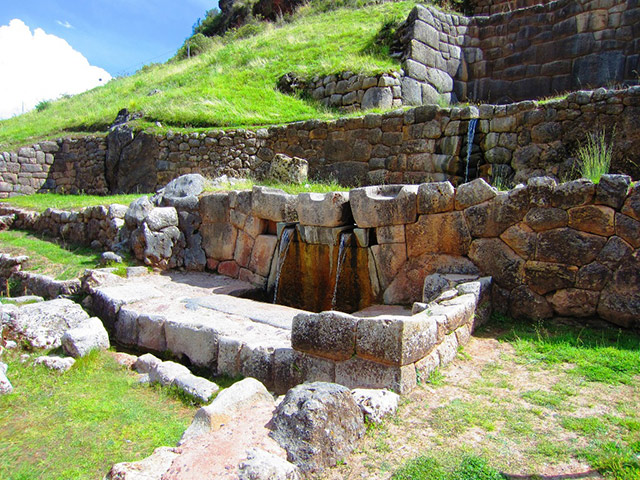
Next, you will explore the fountains of Tambomachay, a construction that has fine stone finishings and a high command of hydraulic engineering, with aqueducts that continue supplying clear water to this place. This archaeological complex is located eight kilometres away from Cusco City. Also known as the "Inca Bath", Tambomachay was probably the leisure place for the Inca and his entourage. The construction seems to have a special interest in water, which it worshipped, and fine aqueducts fed on groundwater aquifers and neighbouring hot springs.
Important information
The BTC tourist ticket is a pass that facilitates visits to historical sites, museums and monuments, thereby promoting the conservation and sustainable development of Cusco's heritage. This ticket is ideal for travellers eager to discover the majesty of the Inca civilisation and is a must-have for a complete experience in this fascinating city.
Please note that this ticket is not included and must be paid for by the client on-site.
Day Trips & Excursions, Gastronomy & nightlife+1 more
Service date
Over 6 hours
Full day
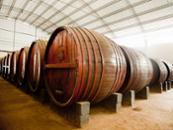
Visit artisanal wineries offered by the Ica Pisco Route tour and learn about the production process behind the liquor while enjoying the valley landscape.
Join this fun tour in which we will visit the most representative districts of the Campina Iquena to see its typical wine cellars. The Pisco, Wine and Cachinas tastings are very generous and are included.
We will get to know 3 of the main wineries in the region Pick up from your hotel.
We will begin the visit to the "Bodega El Catador", it is an artisanal winery, we will learn the process of making artisanal pisco (handmade pisco), while we taste and enjoy its various varieties. Winner of national awards thanks to its original products such as the semi-prepared Pisco Sour and the fine Pisco Cream.
We continue with the visit to the "Lazo" winery, you will taste the variety of wines and piscos that this winery produces. The Piscos Vinos and Cachinas are the main attraction of this tour. It should be noted that Bodega Lazo keeps in its authentic Spanish cava (wine cellar) from the 16th and 17th centuries, not only its wine products, but also another additional attraction: A rustic museum implemented in the same cellar spontaneously, where you can see collection pieces such as mummified trophy heads, ceramics, goldsmith work, remains of cloaks from Pre-Hispanic cultures and other pieces such as weapons of all types and from all periods; also paintings and stuffed animals among other collection artifacts
Visit to the "Tacama" winery, we will begin the visit there where we will be able to appreciate its bell tower where from the top we will have a panoramic view of a large part of its crop fields, we will also be able to appreciate the different instruments for making pisco and wines along the way. (Mondays Tacama is cloded, we will go to the "Caravedo" Winery, similar place)
Over time, we will see stills, botijas, etc. in their tasting room. The Tacama vineyard it is located in one of the oldest Hacienda Houses in the valley. It was built in the 16th century and has colonial architecture.
Excellent quality wines and piscos are produced here. When the Spanish arrived in Peru, they introduced the vine and its spread was rapid. Carabantes created the Tacama vineyard in the Ica oasis, which is the oldest in Peru.
The vineyard has a total area of 180 hectares and is located in the Ica valley, a fertile oasis surrounded by deserts 300 km away. from Lima and 400 meters above sea level. It is one of the most important in the country.
Art & culture, Outdoor activities & Adventure+1 more
Morning
Safe2Stay
Highlights
Explore stunning Inca sites within the Sacred Valley at leisure.
Step back in time through the cobblestone streets, ruins and quaint shops of Ollantaytambo.
The inhabitants of Ollantaytambo still maintain traditions inherited from their Inca ancestors.
The word Ollantaytambo derives from the Quechua word 'Ulla-nta-wi' which means "place to see down"
The Ollantaytambo archaeological complex was a religious, military and agricultural center.
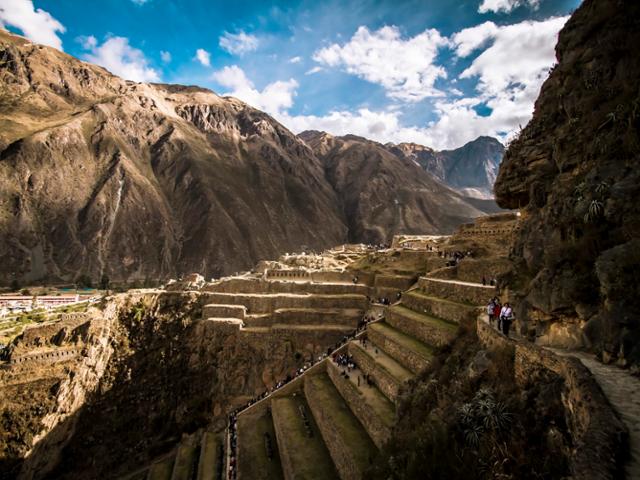
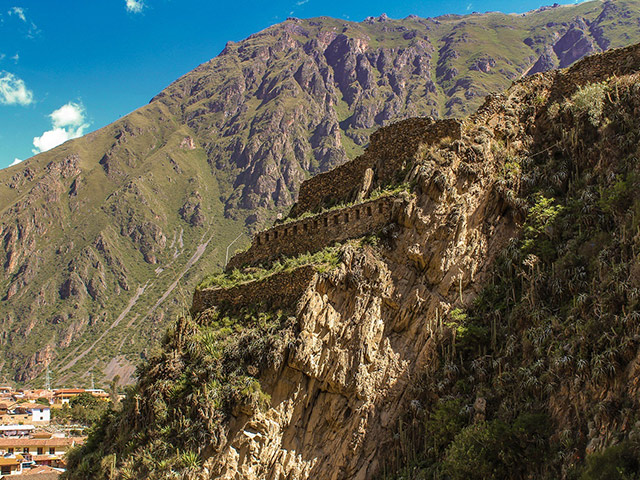
Accompanied by your guide, today you will venture to climb the 150 steps that separate the summit from the low part of the Ollantaytambo fortress, in which the Temple of the Sun (formed by six huge monoliths of pink granite, with a weight of more than 50 tons) and the Terrace of the Ten Niches stand out. The half day excursion ends with a short visit to the Ollantaytambo town, a typical example of the urban planning of the Incas, whose residents still live in accordance with their old traditions.