Barcelona starts routes in two very different directions. South and west run across Spain to Valencia, Toledo, Granada and Seville, with several continuing into Portugal for Lisbon. North crosses the Pyrenees through Andorra into France, reaching Lourdes, Bordeaux and Avignon — the only road route linking Spain to the rest of Western Europe here. The longest itinerary carries on through Switzerland to Italy.
Day tours stay in the city. Longer routes cross Spain toward Portugal, or head north over the Pyrenees.
| Trip | Days | You'll see | From | Best for |
|---|---|---|---|---|
| Day tours | 1 Day | The Gaudi sites, the Gothic Quarter and the waterfront | $1 | Only have a day |
| Spain and Portugal routes | 5-22 Days | Valencia, Toledo, Granada and Seville, with several continuing to Lisbon | $115 | Seeing the peninsula |
Two directions, and they lead to different kinds of trip. South and west cross Spain toward Valencia, Toledo, Granada and Seville, with several routes continuing into Portugal to reach Lisbon. North crosses the Pyrenees through Andorra into southern France, and one itinerary carries on from there through Switzerland into Italy. The southern routes cover the peninsula; the northern one connects it to the rest of the continent.
It sits at the eastern end of the Pyrenees, where the mountains meet the coast, which is the practical crossing point by road. Routes go through Andorra, a separate country in the mountains that counts as one on the itinerary, then drop into southwest France for Lourdes and Bordeaux. Madrid, further inland, does not start routes this way, so Barcelona is the choice if the trip continues into Europe.
Madrid sits in the centre and starts more of the Andalusia routes, since it is closer to the south. Barcelona sits on the coast and starts the routes that cross into France, which Madrid does not, as well as its own Spain and Portugal circuits. For a trip focused on southern Spain, Madrid usually gives the wider choice; for a trip continuing into Europe by road, Barcelona is the practical start.
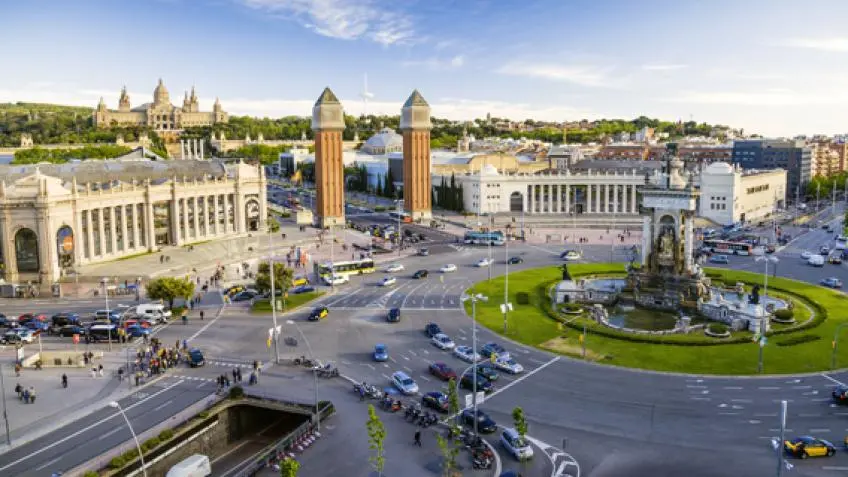
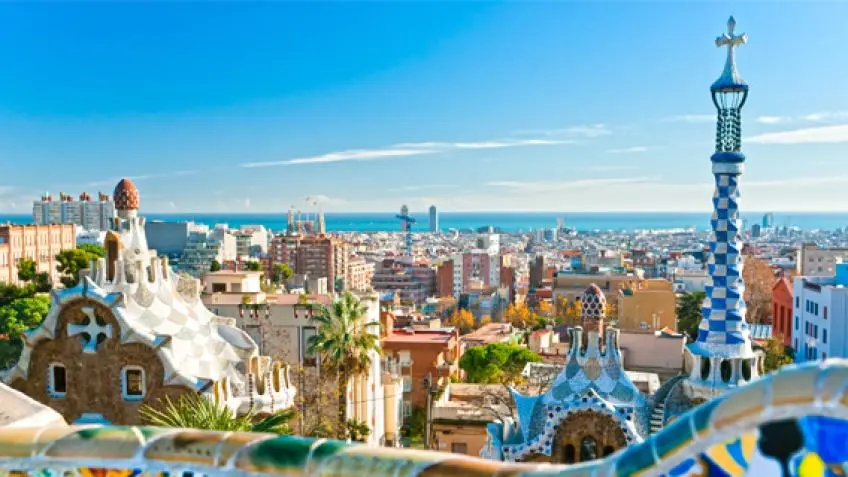
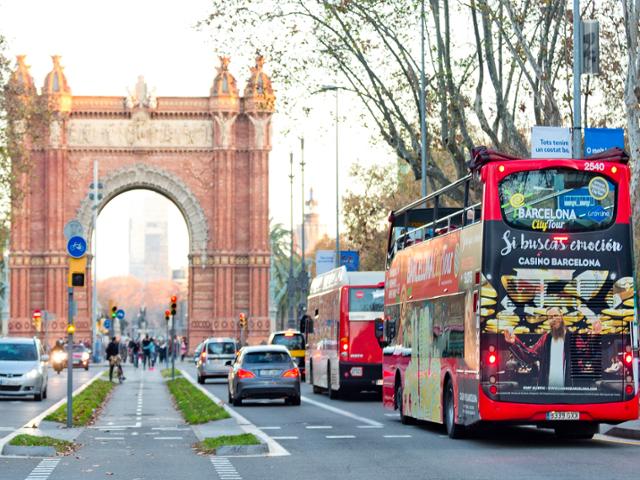
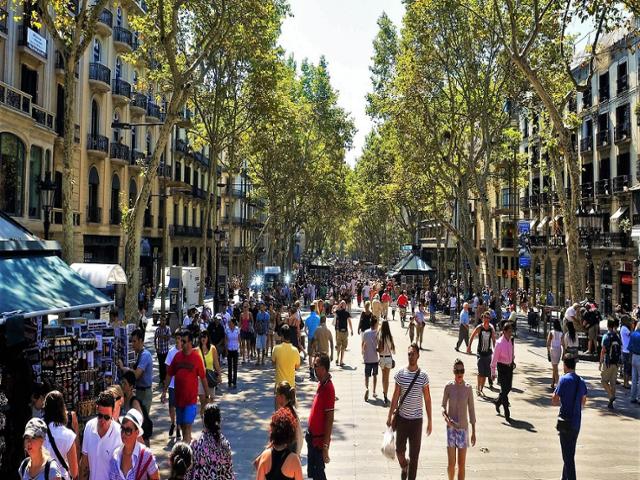
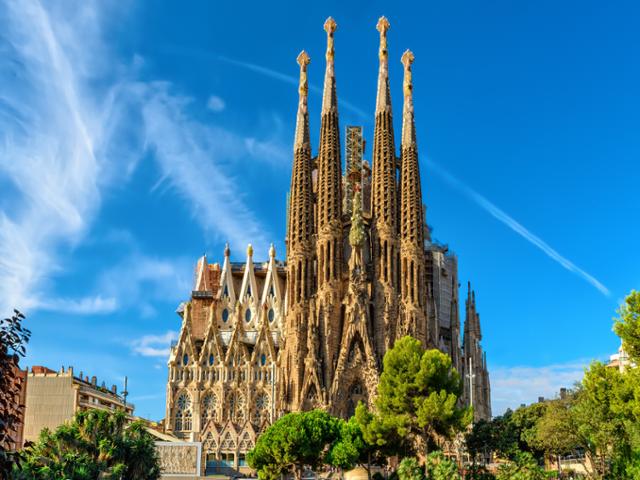
The city is known for the work of Antoni Gaudi, and the Sagrada Familia is the largest of those buildings and still unfinished after more than a century. The Gothic Quarter behind the waterfront is the medieval core, laid out in narrow lanes rather than blocks, with the Columbus Monument at the harbour end. The grid district north of it was planned in the nineteenth century and holds the rest of the Gaudi houses.
The best-known buildings here use timed entry and release tickets on their own schedule, so availability on a given day is not guaranteed. Where a route includes one of them, the operator arranges entry for the group rather than leaving it to individual travellers. Where it does not, the site is usually left as free time. Each tour page states which admissions are covered.
Catalan and Spanish are both official in this region, so street signs, menus and station announcements often appear in Catalan first, and place names can differ between the two. This catches people out when following directions or comparing an itinerary against a map. English is widely understood in the centre. The language your tour is guided in is separate and is listed on the tour page.
Spring, from March through May, and autumn, from September through November, are the most comfortable. The coast keeps summers milder here than inland, though routes heading south into Andalusia run into far higher temperatures, and the city itself is at its busiest then. Routes over the Pyrenees are more weather-dependent in winter than the southern ones. Available dates are on the tour page.
Most run as a loop back. One route finishes in Madrid instead, and flexible routes let you choose where to leave the loop. The tour page states where each route ends.
Yes. Routes cross the Pyrenees through Andorra and reach Lourdes, Bordeaux and Avignon, with longer ones continuing to Paris. The full stop list is on each tour page.
Yes. Several routes cross Spain and continue to Lisbon, usually taking in Madrid, Seville or Alicante on the way. Each tour page lists the countries on the route.
It varies by route. Some tours include entry, others view it from outside. Each tour page lists admissions before you book.
On some routes. Where it applies, the tour page sets out the arrangement. Some departures also list a specific pickup at the airport rather than a city meeting point.