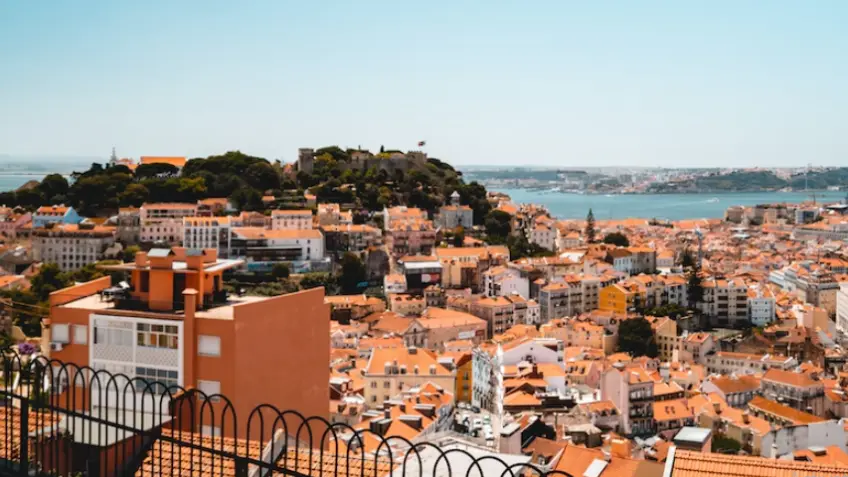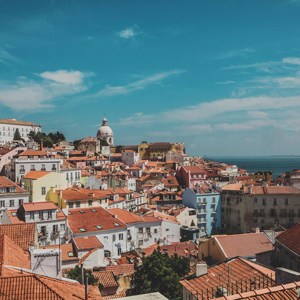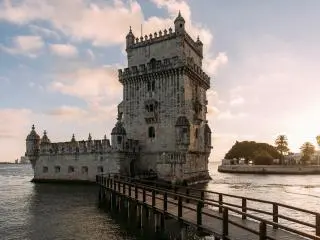
Lisbon is the westernmost starting point on these routes, and everything runs east or north from it. Routes that stay inside Portugal head north toward Porto and the Douro Valley or south to the Algarve. Iberian routes cross into Spain for Seville, Granada and Madrid. One route continues from Andalusia across to Morocco, and another runs one way north to Paris. In the city, tours cover the Belem waterfront and the downtown squares.
Day tours stay in and around the city. Longer routes cross Portugal, continue into Spain, or run one way north.
| Trip | Days | You'll see | From | Best for |
|---|---|---|---|---|
| Day tours | 1 Day | The Belem waterfront, the downtown squares and Cape Roca | $59 | Only have a day |
| Short trips | 2-4 Days | A few days across central Portugal or the south | $123 | A few days |
| Vacation packages | 5-22 Days | The country north to south, the Iberian circuit, or on to Morocco | $123 | Seeing more than one region |
Everything runs east or north, since Lisbon sits at the western edge of the network. North covers central Portugal and the Douro Valley toward Porto. South reaches the Algarve on the Atlantic. East crosses into Spain for Seville, Granada and Madrid, and one route continues from Andalusia across to Morocco. A separate route runs one way north through Spain and France, finishing in Paris.
Portugal routes stay inside the country and cover the smaller towns between Lisbon and Porto, or the coast to the south. Iberian routes treat the peninsula as one circuit and spend most of their days in Spain, with Lisbon as the western end rather than the focus. If Portugal is the point of the trip, the domestic routes cover far more of it.
The Belem waterfront, west of the centre, holds the monastery and the tower built when the city was the departure point for Atlantic voyages, and the two sit close enough to combine in one visit. The downtown grid around Praca de Pedro IV and Pombal Square was rebuilt to a single plan after the eighteenth-century earthquake, which is why it looks unlike the older hillside districts on either side.
Lisbon is built across steep hills, and the older districts are reached by stepped lanes rather than level streets, so walking distances understate the effort involved. Trams and funiculars cover the steepest climbs and are used as transport rather than only as sightseeing. Coaches cannot enter the narrow districts, so tours meet at set points and walk in from there.
Routes leave in the morning, so arriving the day before rather than the same morning removes the risk of a delay costing you the departure. A full day covers Belem and the downtown on foot. Cape Roca, the western tip of mainland Europe, takes a half day out of the city and is easier to fit before a route begins than after it returns.
Spring, from March through May, and autumn, from September through November, are the most comfortable, with mild weather and thinner crowds. The Atlantic keeps summers cooler here than inland Spain, though routes heading east into Andalusia run into far higher temperatures. Winter is mild and departures keep running, with shorter daylight the main limit.
Most run as a loop back to Lisbon. One route runs one way and finishes in Paris. The tour page states where each route ends.
Yes. Several routes from Lisbon stay inside the country, running north toward Porto and the Douro Valley or south to the Algarve. Each tour page lists the countries on the route.
One route continues from Andalusia into Morocco. It departs Lisbon and is the only itinerary here that leaves Europe. The tour page lists the full route.
On some day tours. It sits a short way west of the city and is usually combined with other stops rather than visited alone. Each tour page lists what is included.
On some routes. Where it applies, the tour page sets out the arrangement. Other routes use a city meeting point instead.